
Well Water Treatment & Filtration Systems in Southwestern Pennsylvania
Iron stains, rotten-egg odor, hard water, low pH, bacteria and sediment rarely show up alone. Cesare’s tests your water chemistry, flow and pressure first — then engineers one coordinated whole-house system around your actual well.
Most companies install equipment. Cesare’s engineers water.

What Is Wrong With Your Well Water?
Most Southwestern PA wells carry more than one problem, and the symptoms point to the causes. If any of these look familiar, a free water test pins down exactly what’s in the water.
Orange or Rust Stains
Sinks, tubs, toilets and laundry — the classic sign of dissolved iron in the well.
Black Stains or Specks
Dark deposits in toilet tanks and on fixtures usually mean manganese.
Rotten-Egg Smell
Hydrogen sulfide gas — at every tap, or only on the hot side.
White Scale or Spots
Crusty fixtures, spotted dishes and dry skin point to hard water.
Blue-Green Stains
Copper corrosion caused by acidic, low-pH well water.
Cloudy or Gritty Water
Sediment and turbidity — often worse after rain or heavy use.
Every Symptom Has a Cause — and a Fix
A private well can carry several of these at once — and treating the wrong one first is why so many homeowners have already paid for equipment that didn’t fix the water. Here’s how the symptoms map to causes, and where to go deeper:
| What You Notice | Likely Cause | Where to Go Deeper |
|---|---|---|
| Orange staining, metallic taste | Iron | Iron & Manganese Removal |
| Black specks or dark deposits | Manganese | Iron & Manganese Removal |
| Rotten-egg smell, hot or cold | Hydrogen sulfide | Sulfur & H₂S Removal |
| Scale, soap scum, dry skin | Hardness | Water Softener Systems |
| Blue-green staining | Low pH / corrosion | Acidic Water Guide |
| Positive bacteria test | Coliform / E. coli | Bacteria & UV Treatment |
| Cloudy or gritty after rain | Sediment / turbidity | Whole-House Filtration |
| Drinking-water concerns | Dissolved contaminants | Reverse Osmosis |
The free in-home water test measures iron, manganese, hardness, pH, sulfur, TDS and more — so the diagnosis comes from your tap, not a guess.
What Is the Best Treatment System for Well Water?
THE HONEST ANSWER
There is no single best treatment system for well water. The right system depends on what the well actually contains — iron, manganese, sulfur, hardness, pH, sediment, bacteria and dissolved contaminants — plus the home’s flow rate and pressure. Some wells need one treatment stage; others need several working in the correct order. Testing the water before choosing equipment is the only reliable way to design a whole-house system around the actual chemistry.
That’s why every Cesare’s design starts with measurement — ten factors, checked before any equipment is chosen:
Pennsylvania does not regulate private household wells — testing and treatment are the owner’s responsibility.
PA DEP recommends annual testing through a state-certified lab for total coliform bacteria, nitrate, TDS and pH. Cesare’s free in-home evaluation reads the treatment picture at your tap — and where lab-confirmed contaminants are a concern, we’ll identify the right certified testing path.
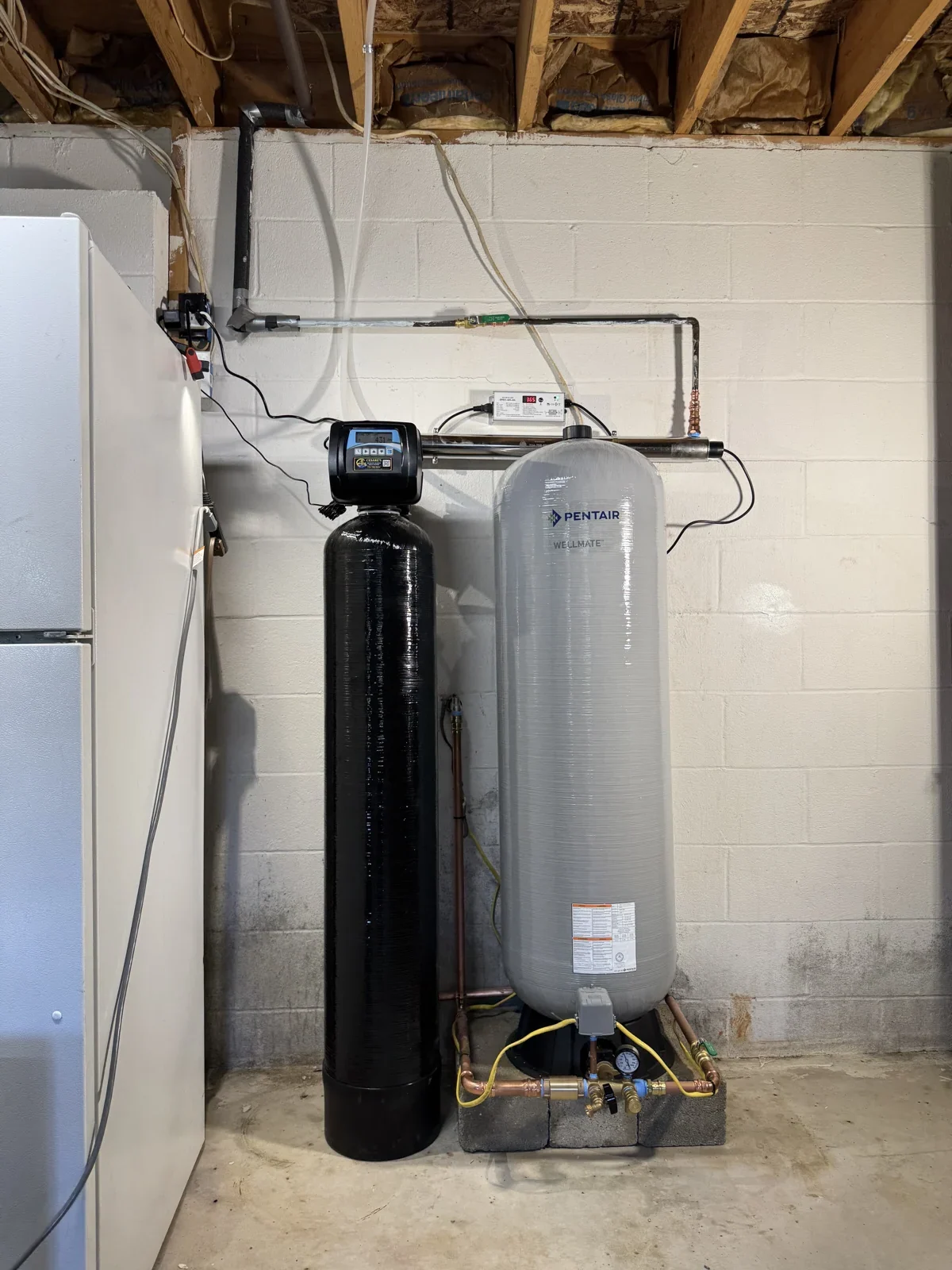
One Coordinated Whole-House System
- Treats every problem at the point of entry — the whole house, not one tap.
- Iron, sulfur, hardness and pH handled in one custom build, in the right order.
- Sized to your well’s flow rate and your home’s plumbing — not a boxed package.
- Protects plumbing, fixtures and appliances from staining, scale and corrosion.
Why Treatment Order Matters
- Heavy iron reaching a softener fouls the resin and shortens its life.
- Low pH undermines oxidation — correct it first or the staining and odor come back.
- Iron, manganese and turbidity coat UV sleeves — metals come out before disinfection.
- We stage each piece so every stage protects the next. The order comes from testing.
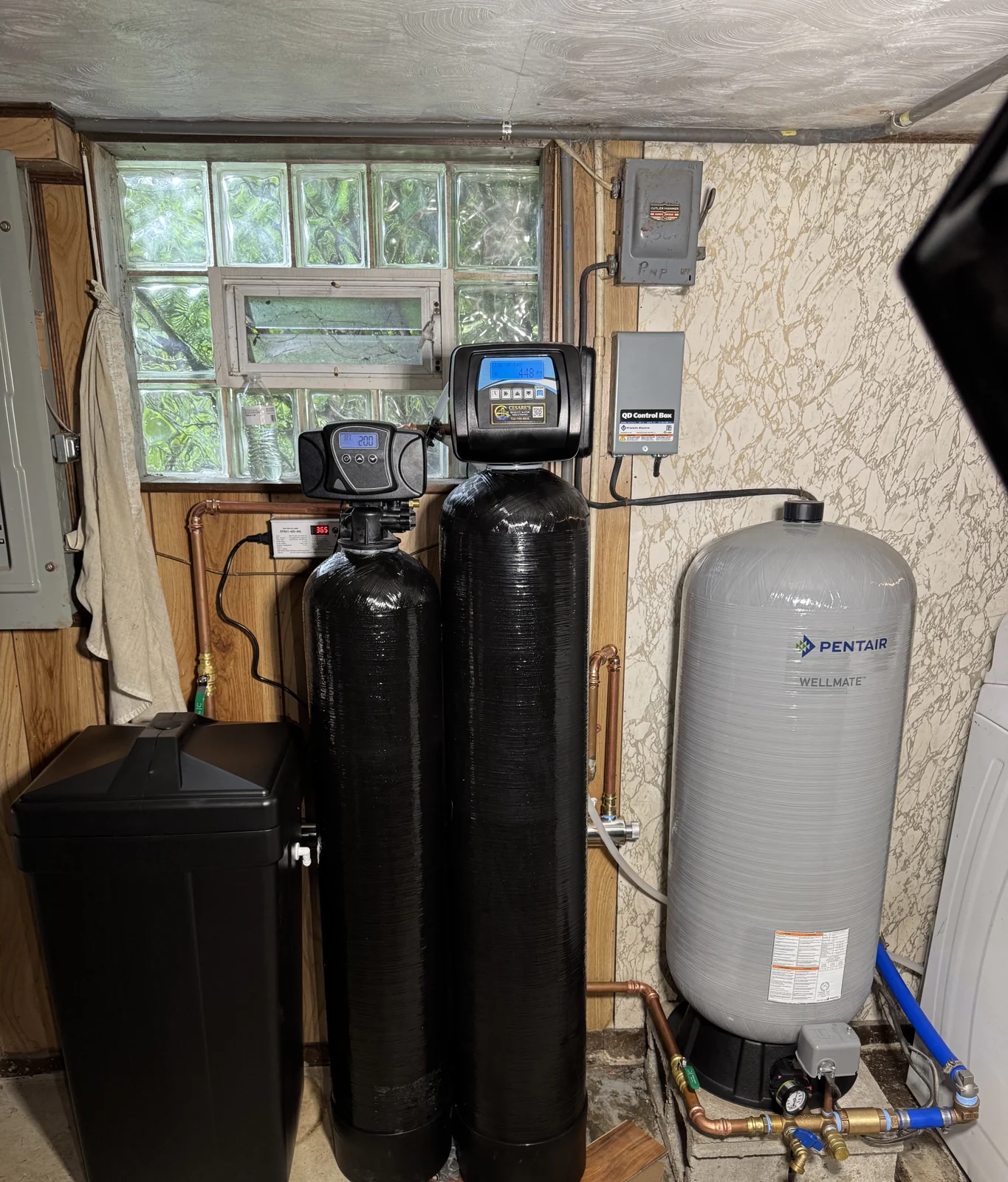
Cesare’s doesn’t stack equipment until the water looks complicated — we measure the whole water picture at your tap, determine what has to happen first, and build the one system your well actually needs. If the fix isn’t a treatment system, we’ll say so.
How Cesare’s Treats a Private Well
1. Free In-Home Water Test
Iron, manganese, sulfur, hardness, pH and TDS — measured right at your tap. Bacteria needs a separate certified lab test, and we’ll tell you which one.
2. Custom System Design
Stages selected and sequenced from your results, your well’s flow rate and your plumbing.
3. Professional Installation
Most single-system installs are completed in one day by the team that designed it.
4. Verify & Support
We re-test the finished water so you see the numbers — with local support for the life of the system.

Most wells don’t need every stage — and some need more than one. Wells with iron and manganese very often carry hardness or low pH too, and one custom build can treat all of it — from sulfur to softening. The test tells us what your well actually needs: nothing more, nothing less.
A Real Well, Measured Before and After
From a documented Cesare’s well install in Southwestern PA — one well carrying four problems at once, measured on-site before treatment and re-tested after:
— tested before, re-tested after. Every install is verified the same way. The full write-up lives in the full case study. And not every problem is visible: one Southwestern PA well tested coliform-positive alongside 10 ppm iron and 21 gpg hardness that had to be treated ahead of UV — that story is in the bacteria & UV guide.
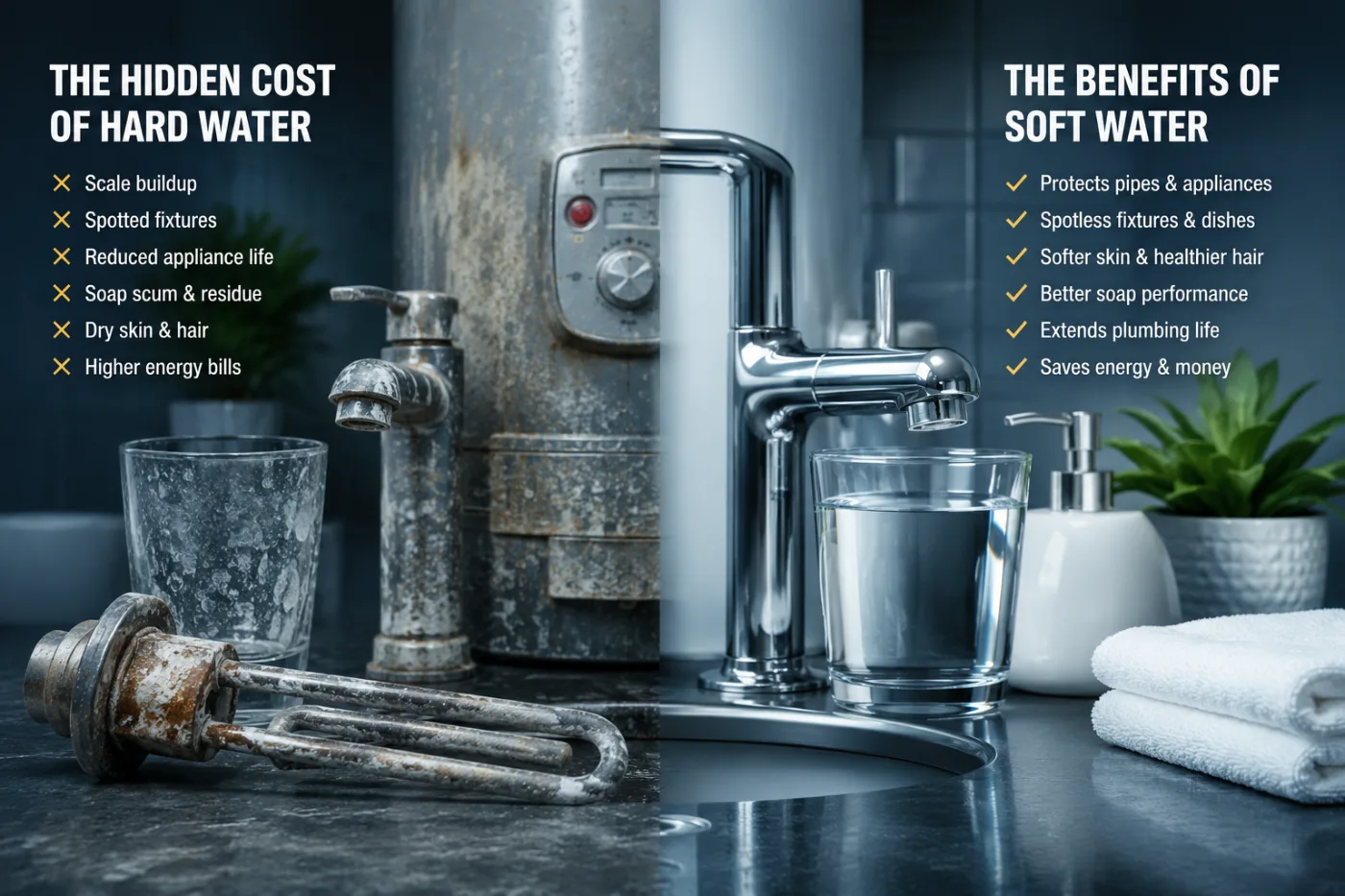
What Does Well Water Treatment Cost in Southwestern PA?
Every quote starts with a free water test — so you pay for the fix your well actually needs, not a one-size package price.
Installed cost comes down to three things:
That’s why Cesare’s tests first — so the quote reflects the fix your well actually needs. Straightforward pricing comes after testing, before any work begins.
Well Water Treatment Across Southwestern Pennsylvania
Cesare’s installs and services complete well water treatment systems across Pittsburgh and all thirteen Southwestern Pennsylvania counties — from single-stage softeners to multi-stage builds treating iron, sulfur, hardness, pH and bacteria together.
Allegheny / Pittsburgh Westmoreland County Butler County Somerset County Washington County Beaver County Mercer County Lawrence County Indiana County Armstrong County Fayette County Cambria County Greene County
Different corners of the region tend toward different problems. In submitted lab samples from our 13-county report, half of Indiana and Somerset County samples exceeded the manganese standard, 75.5% of Greene County samples tested positive for total coliform, 85.7% of Cambria County corrosivity samples fell outside the balanced range, and Washington County’s median hardness ran 13.8 grains per gallon. Those are submitted samples — not a prediction for any single well — which is exactly why every Cesare’s design starts at your tap. Explore the full 13-county water report.
Why Homeowners Call Us After Other Systems Fail.
Google Rating
5.0
We originally went with Specialty Water because Google showed them at the top. Within three years we had to replace the entire system. We've now been with Cesare's for three years and our water still tastes better than bottled water. Cesare's actually tested our water and built a system specifically for it instead of a one-size-fits-all setup. We wish we'd started with Cesare's.
— Jesse Steel
Fayette County
For anyone thinking of a home water purification system, this is the company to call. I'd had a system installed by Gillece only two years earlier; Lance came out, tested the water, and pointed out the issues. Within a week of my call, the new system already out-performed the old one, plus a reverse osmosis system. It's refreshing to see a third-generation owner who takes pride in his work and stands behind it 24/7.
— Charla Samolovitch
Irwin, PA
Other systems would only soften the water — to remove chlorine they required an additional unit. Cesare's custom build filtered out the chlorine from my township supply with the same unit that softens the water. Very pleased to have soft water and no chlorine. After installation they confirmed it by testing the water.
— Tony Martincic
Westmoreland County, PA
We originally went with Specialty Water because Google showed them at the top. Within three years we had to replace the entire system. We've now been with Cesare's for three years and our water still tastes better than bottled water. Cesare's actually tested our water and built a system specifically for it instead of a one-size-fits-all setup. We wish we'd started with Cesare's.
— Jesse Steel
Fayette County
For anyone thinking of a home water purification system, this is the company to call. I'd had a system installed by Gillece only two years earlier; Lance came out, tested the water, and pointed out the issues. Within a week of my call, the new system already out-performed the old one, plus a reverse osmosis system. It's refreshing to see a third-generation owner who takes pride in his work and stands behind it 24/7.
— Charla Samolovitch
Irwin, PA
Other systems would only soften the water — to remove chlorine they required an additional unit. Cesare's custom build filtered out the chlorine from my township supply with the same unit that softens the water. Very pleased to have soft water and no chlorine. After installation they confirmed it by testing the water.
— Tony Martincic
Westmoreland County, PA
We originally went with Specialty Water because Google showed them at the top. Within three years we had to replace the entire system. We've now been with Cesare's for three years and our water still tastes better than bottled water. Cesare's actually tested our water and built a system specifically for it instead of a one-size-fits-all setup. We wish we'd started with Cesare's.
— Jesse Steel
Fayette County
For anyone thinking of a home water purification system, this is the company to call. I'd had a system installed by Gillece only two years earlier; Lance came out, tested the water, and pointed out the issues. Within a week of my call, the new system already out-performed the old one, plus a reverse osmosis system. It's refreshing to see a third-generation owner who takes pride in his work and stands behind it 24/7.
— Charla Samolovitch
Irwin, PA
Other systems would only soften the water — to remove chlorine they required an additional unit. Cesare's custom build filtered out the chlorine from my township supply with the same unit that softens the water. Very pleased to have soft water and no chlorine. After installation they confirmed it by testing the water.
— Tony Martincic
Westmoreland County, PA
Already own treatment equipment that isn’t working? Cesare’s services well systems we didn’t install — including equipment from companies that guessed at the water. Cesare’s services odor-treatment systems we didn’t install — including equipment from companies that guessed at the source. We’ll measure what your system is actually producing and tell you honestly whether it needs service, resizing or a different approach entirely.
Well Water Treatment FAQs
Straight answers to the questions Southwestern PA well owners actually ask about the smell.
How do I know what is actually in my well water?
Testing is the only way. Staining, smell and taste give clues, but they can’t tell you levels — and some problems, like bacteria or low pH, have no look or smell at all. Cesare’s free in-home water test measures iron, manganese, sulfur, hardness, pH, TDS and more right at your tap, and where lab-confirmed contaminants are a concern we’ll identify the right certified testing path.
How often should a private well be tested in Pennsylvania?
PA DEP recommends testing every year through a state-certified laboratory for total coliform bacteria, nitrate, total dissolved solids and pH — and testing for other contaminants whenever you suspect them. Re-test immediately any time the water changes in taste, color or odor, or after work is done on the well.
Does Pennsylvania regulate private well water?
No. Pennsylvania does not regulate privately owned household wells — the well owner is responsible for monitoring the water and deciding whether treatment is needed. That’s why testing matters so much: nobody is checking your water unless you do.
Can one system treat iron, sulfur and hard water at the same time?
Yes — when it’s designed correctly. A single multi-stage build can address iron, manganese, sulfur, hardness and low pH together, as long as the stages run in the proper sequence for your water chemistry. That’s different from one filter doing everything; it’s several stages engineered to work as one system.
Can a water softener fix all well-water problems?
No. A softener is built for hardness. It can tolerate very low levels of dissolved iron, but it is not an iron, sulfur or bacteria treatment — moderate iron or hydrogen sulfide will overwhelm the resin and shorten its life. When those problems are present, dedicated treatment goes ahead of the softener.
What causes orange stains and rotten-egg smell at the same time?
Iron and hydrogen sulfide very often occur together in Southwestern PA wells — the same oxygen-poor groundwater chemistry carries both. The good news: they’re often oxidized and filtered in the same treatment stage, so one properly designed build can end the staining and the smell together.
Does UV make well water safe to drink?
UV is a disinfection stage — it helps inactivate microorganisms like coliform bacteria when the water reaching it is properly pre-treated. It does not remove iron, sulfur, hardness or chemicals, and metals or cloudiness can shield organisms from the light. That’s why UV comes last in the sequence, after the water has been cleaned up ahead of it.
How much does a whole-house well water treatment system cost?
Cost depends on what the water test finds: which contaminants are present and at what levels, how many treatment stages the fix requires, and your well’s flow rate and plumbing. Cesare’s tests first, then provides the design and straightforward pricing before any work begins — so you pay for the fix your well actually needs.
How is a well water treatment system sized?
From measurements, not square footage. The contaminant levels set how much treatment capacity each stage needs, and your well’s flow rate and household demand set the physical sizing — tank dimensions, contact time and backwash requirements. An undersized system is one of the most common reasons other companies’ installs fail.
Why did my well water suddenly change after rain?
Heavy rain can push surface water and sediment into a well — cloudiness, grit or a new odor after storms often signals surface intrusion, and it’s a good reason to test for bacteria too. If your water changes suddenly in any season, test before treating: the change is data about what’s really going on.
Ready to Fix Your Well Water for Good?
Start with the free water test — we’ll measure everything driving your well’s problems, explain the results clearly, and design the whole-house fix your well actually needs. Straightforward pricing after testing — no pressure.
What You’ll Get
- In-home water evaluation — free
- Clear explanation of your results
- A treatment plan built from the levels we measure at your tap
- Straightforward pricing (after testing)
- Professional installation & local support