
Water Testing & Analysis for Southwestern Pennsylvania Homes
Every fix starts with the numbers. Cesare’s measures iron, manganese, hardness, pH, sulfur, TDS and more right at your tap — free — and identifies the right state-certified lab path when regulated contaminants are the question.
Most companies install equipment. Cesare’s engineers water.

When Should You Test Your Water?
Some reasons are on the calendar, some are in the glass. If any of these fit, it’s time to get real numbers.
Buying a Home With a Well
Know what you’re inheriting before you close — not after you move in.
New Stain, Smell or Taste
A change in the water is data — test before treating anything.
Never Tested Annually
PA DEP recommends testing private wells every year. Nobody else is checking.
After Well Work or Flooding
Drilling, repairs and heavy storms can change what’s in the water.
Planning Treatment or RO
The right system can only be designed from measured water — never a guess.
Equipment Acting Up
Softener or filter underperforming? The water tells us why.
Two Kinds of Testing — and When Each Is Right
“Water testing” means two different things, and being straight about the difference matters. The free in-home evaluation reads the treatment picture at your tap the same visit. State-certified laboratory testing is a separate, paid analysis — and for some questions it’s the only honest answer.
| The Question | The Right Test | What You Get |
|---|---|---|
| Why is my water staining, smelling or scaling? | Free in-home evaluation | Iron, manganese, hardness, pH, sulfur, TDS and flow — measured at your tap, explained the same visit |
| Is there bacteria, lead, nitrate or PFAS? | State-certified laboratory | Accredited results for regulated contaminants — we’ll identify the right testing path |
| Is my treatment system actually working? | Free re-test at the tap | Before-and-after numbers — the same verification every Cesare’s install gets |
The in-home evaluation is free. Certified laboratory analysis is a separate service — never sold as free, never guessed at.
What Should You Test Well Water For?
Test well water for the things that decide treatment — iron, manganese, hardness, pH, sulfur, TDS, clarity and flow — plus the things PA DEP says to check every year through a state-certified lab: total coliform bacteria, nitrate, TDS and pH. The first group is measured free at your tap during Cesare’s in-home evaluation. The second is laboratory work, and any company that blurs that line is telling you something.
Here’s the full picture a proper test covers:
| We Measure | Why It Matters |
|---|---|
| Iron & manganese | The staining metals — and the load any treatment system has to carry. |
| Hardness | Scale, soap performance and softener sizing. |
| pH | Corrosion, blue-green staining — and the chemistry every other stage depends on. |
| Sulfur (H₂S) | The rotten-egg gas — it escapes bottled samples, so it’s measured at the tap. |
| TDS | The overall dissolved-mineral picture of the water. |
| Turbidity / clarity | Sediment load — and whether UV disinfection could work. |
| Flow & pressure | What your well can actually deliver — equipment is sized to it. |
| Total coliform & E. coli | Certified lab — PA DEP recommends this every year for private wells. |
| Nitrate | Certified lab — on PA DEP’s annual list alongside TDS and pH. |
| Lead & PFAS | Certified lab — accredited methods are the only honest answer here. |
Pennsylvania does not regulate private wells — testing is the owner’s responsibility, and PA DEP recommends annual state-certified lab testing for total coliform, nitrate, TDS and pH. Cesare’s free in-home evaluation covers the treatment picture, and we’ll identify the right certified path for everything that needs a lab.
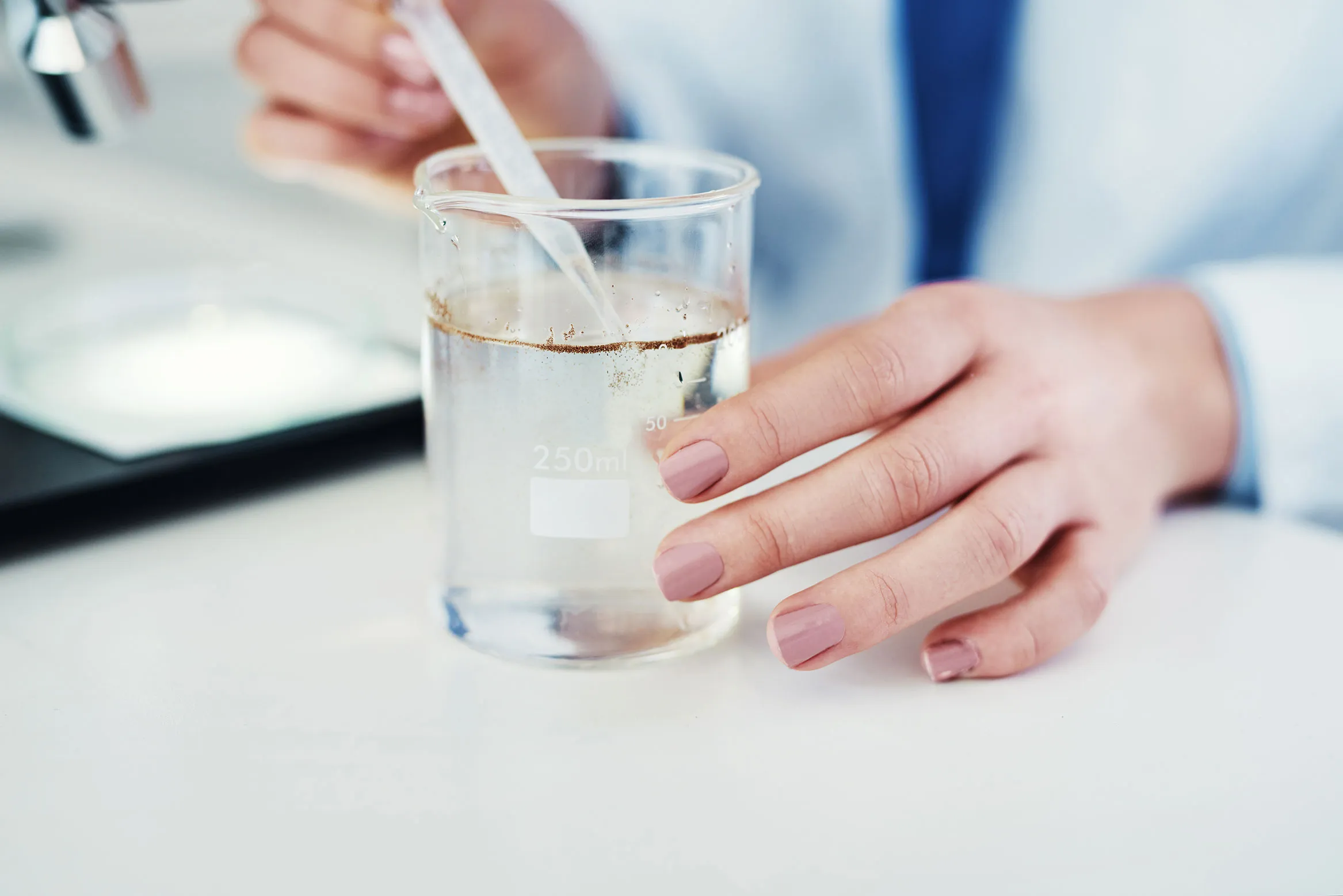
What the Free In-Home Test Covers
- Iron, manganese, hardness, pH, sulfur and TDS — measured right at your tap.
- Flow and pressure — the numbers that size any system correctly.
- Results explained plainly, the same visit — no jargon, no mystery.
- Education-first, no pressure — if you don’t need equipment, we’ll say so.
When Certified Lab Testing Is the Right Call
- Bacteria — coliform and E. coli confirmation is accredited lab work.
- Lead, nitrate and PFAS — regulated contaminants need accredited methods.
- Real-estate transactions — lenders and buyers need certified results.
- We identify the right testing path — and design treatment from real results.
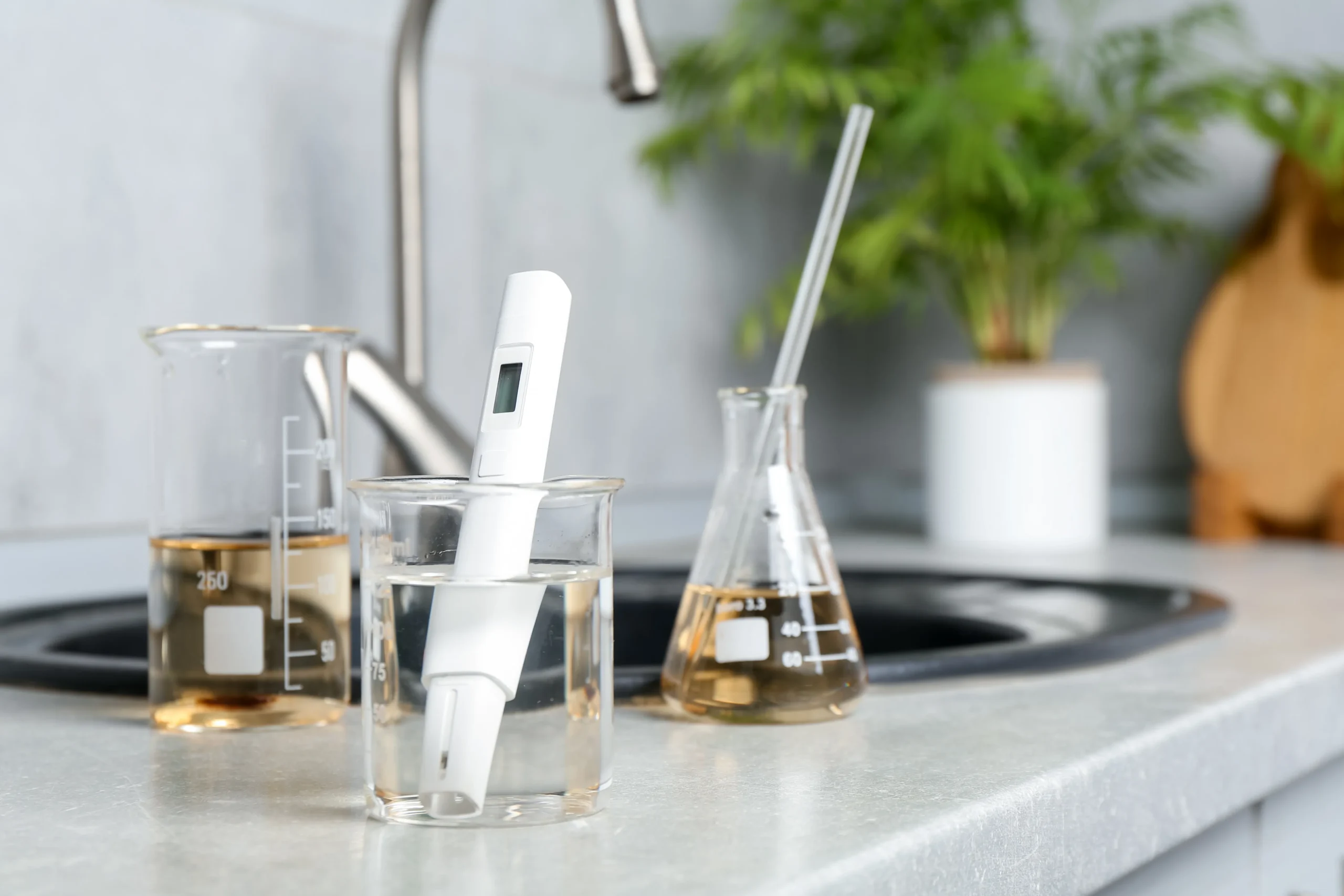
Cesare’s tests first and sells second — the evaluation is free, the explanation is plain, and the quote only covers what your water measurably needs. If the honest answer is “your water is fine,” that’s the answer you’ll get.
How the Free Water Test Works
1. Schedule Your Visit
Call, text or book online — we come to your home, on your schedule.
2. Measured at Your Tap
Iron, manganese, hardness, pH, sulfur, TDS, flow and pressure — real numbers, on the spot.
3. Explained Plainly
You see every result and what it means — education first, zero pressure.
4. A Plan Only If Needed
Straightforward pricing on a fix your water actually calls for — or an honest “you’re fine.”
The test is where every fix on this site begins. It’s how we design complete well water treatment, size softeners, and know whether iron, sulfur or bacteria & UV belong in the build at all.
A Real Well, Measured Before and After
What testing first actually finds: a documented Cesare’s well install in Southwestern PA, where earlier companies had treated symptoms without ever measuring the chemistry underneath —
— measured before, re-tested after. Every install is verified the same way. The full write-up lives in the sulfur guide.
What Does Water Testing Cost in Southwestern PA?
The in-home evaluation is free — and certified lab work is quoted honestly when the question calls for it.
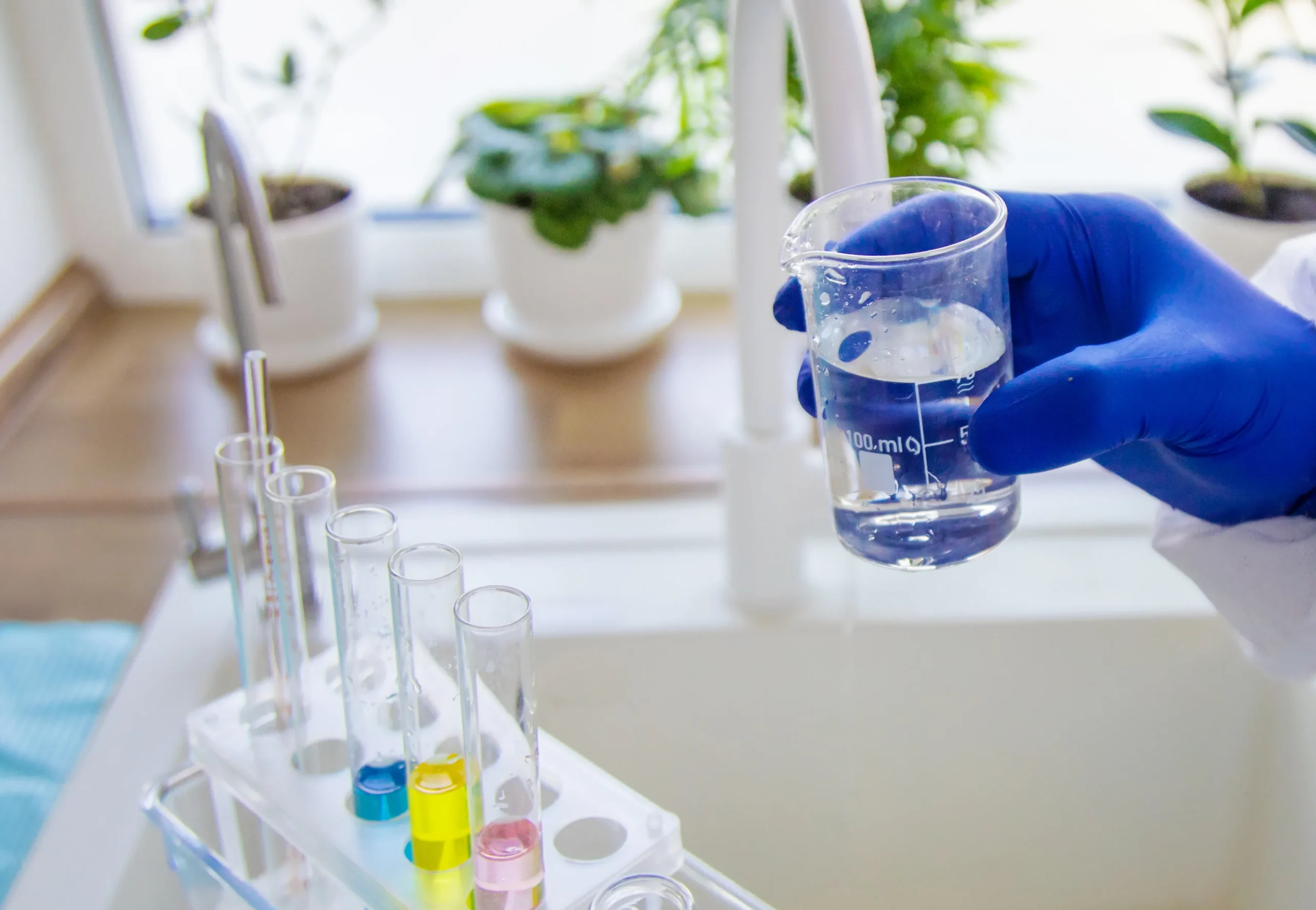
Installed cost comes down to three things:
That’s why Cesare’s tests first — so the quote reflects the fix your well actually needs. Straightforward pricing comes after testing, before any work begins.
Free Water Testing Across Southwestern Pennsylvania
Cesare’s runs free in-home water evaluations across Pittsburgh and all thirteen Southwestern Pennsylvania counties — wells and city water alike.
Allegheny / Pittsburgh Westmoreland County Butler County Somerset County Washington County Beaver County Mercer County Lawrence County Indiana County Armstrong County Fayette County Cambria County Greene County
And the region’s numbers say testing is worth the visit: in submitted lab samples from our 13-county report, half of Indiana and Somerset County samples exceeded the manganese standard, 75.5% of Greene County samples were coliform-positive, 85.7% of Cambria County corrosivity samples fell outside the balanced range, and Washington County’s median hardness hit 13.8 grains per gallon. Submitted samples, not predictions — your tap is the only test that counts. Explore the full 13-county water report.
Why Homeowners Call Us After Other Systems Fail.
Google Rating
5.0
For anyone thinking of a home water purification system, this is the company to call. I'd had a system installed by Gillece only two years earlier; Lance came out, tested the water, and pointed out the issues. Within a week of my call, the new system already out-performed the old one, plus a reverse osmosis system. It's refreshing to see a third-generation owner who takes pride in his work and stands behind it 24/7.
— Charla Samolovitch
Irwin, PA
Other systems would only soften the water — to remove chlorine they required an additional unit. Cesare's custom build filtered out the chlorine from my township supply with the same unit that softens the water. Very pleased to have soft water and no chlorine. After installation they confirmed it by testing the water.
— Tony Martincic
Westmoreland County, PA
After dealing with hard water for years, this was a game changer. They installed a whole-house filtration system with a saltless conditioner, and the difference has been incredible. With young children, it gives me peace of mind. The install only took about two hours and was done neatly. If you're in Monroeville or anywhere in Allegheny/Westmoreland County, I highly recommend Cesare's.
— Sean Walker
Monroeville, PA
For anyone thinking of a home water purification system, this is the company to call. I'd had a system installed by Gillece only two years earlier; Lance came out, tested the water, and pointed out the issues. Within a week of my call, the new system already out-performed the old one, plus a reverse osmosis system. It's refreshing to see a third-generation owner who takes pride in his work and stands behind it 24/7.
— Charla Samolovitch
Irwin, PA
Other systems would only soften the water — to remove chlorine they required an additional unit. Cesare's custom build filtered out the chlorine from my township supply with the same unit that softens the water. Very pleased to have soft water and no chlorine. After installation they confirmed it by testing the water.
— Tony Martincic
Westmoreland County, PA
After dealing with hard water for years, this was a game changer. They installed a whole-house filtration system with a saltless conditioner, and the difference has been incredible. With young children, it gives me peace of mind. The install only took about two hours and was done neatly. If you're in Monroeville or anywhere in Allegheny/Westmoreland County, I highly recommend Cesare's.
— Sean Walker
Monroeville, PA
For anyone thinking of a home water purification system, this is the company to call. I'd had a system installed by Gillece only two years earlier; Lance came out, tested the water, and pointed out the issues. Within a week of my call, the new system already out-performed the old one, plus a reverse osmosis system. It's refreshing to see a third-generation owner who takes pride in his work and stands behind it 24/7.
— Charla Samolovitch
Irwin, PA
Other systems would only soften the water — to remove chlorine they required an additional unit. Cesare's custom build filtered out the chlorine from my township supply with the same unit that softens the water. Very pleased to have soft water and no chlorine. After installation they confirmed it by testing the water.
— Tony Martincic
Westmoreland County, PA
After dealing with hard water for years, this was a game changer. They installed a whole-house filtration system with a saltless conditioner, and the difference has been incredible. With young children, it gives me peace of mind. The install only took about two hours and was done neatly. If you're in Monroeville or anywhere in Allegheny/Westmoreland County, I highly recommend Cesare's.
— Sean Walker
Monroeville, PA
Been quoted a system by a company that never actually measured your water? Bring us the quote. We’ll test for free, show you the real numbers, and tell you honestly what the water needs — even when the answer is “less than they told you.”
Water Testing FAQs
Straight answers about what testing covers, what it costs, and what happens after. More answers in our Water Testing & Analysis Knowledge Center.
Is the in-home water test really free?
Yes — the in-home evaluation is genuinely free, with no obligation. It measures iron, manganese, hardness, pH, sulfur, TDS, flow and pressure right at your tap, and the results are explained the same visit. What it is not: certified laboratory analysis. Lab testing for regulated contaminants is a separate, quoted service — and we’ll always be clear about which is which.
What should I test my well water for?
The treatment picture — iron, manganese, hardness, pH, sulfur, TDS, clarity and flow — plus the annual list PA DEP recommends through a state-certified lab: total coliform bacteria, nitrate, TDS and pH. The first group is covered by the free in-home evaluation; the second is lab work we’ll point you to the right path for.
How often should a private well be tested in Pennsylvania?
Every year, per PA DEP — through a state-certified laboratory for coliform bacteria, nitrate, TDS and pH — and immediately after flooding, well work, or any change in taste, color or odor. Pennsylvania doesn’t regulate private wells, so the testing schedule is entirely in the owner’s hands.
What is the difference between your field test and a lab test?
The field evaluation reads treatment-design numbers at your tap, on the spot — it’s fast, free and accurate for what it measures. A state-certified lab uses accredited methods for regulated contaminants like bacteria, lead, nitrate and PFAS, with results that stand up for closings and compliance. Different tools for different questions — and we use both honestly.
Can you test for PFAS or lead?
Those need accredited laboratory methods — no field kit honestly answers them. We’ll identify the right certified testing path, and if the results call for treatment, we design it from the actual numbers, including reverse osmosis where it fits.
Should I test the water when buying a home with a well?
Absolutely — before closing, not after moving in. A certified lab package covers what lenders and buyers need, and the in-home evaluation reads the treatment picture so you know what equipment, if any, the house will need. It’s the cheapest insurance in the transaction.
My water looks and tastes fine. Do I still need a test?
The honest answer: some problems have no look, smell or taste — bacteria, nitrate and low pH among them. That’s exactly why PA DEP recommends annual testing rather than waiting for a symptom. If everything measures clean, you get peace of mind and we get out of your way.
How long does the in-home test take?
Usually under an hour, results in hand before we leave — measured, explained, and mapped to options if anything needs attention. Certified lab results take longer because accredited analysis takes the time it takes.
What happens after the test?
You get the numbers and a plain explanation of what they mean. If treatment is warranted, you get a design built from those numbers and straightforward pricing before any work begins. If it isn’t, you get an honest “your water is fine” — education first, pressure never.
Do you test city water too?
Yes. City water in Southwestern PA commonly shows hardness, chlorine taste and odor, and aging-infrastructure concerns — and homes on municipal supply get the same free in-home evaluation, the same plain explanation, and the same test-first design if treatment makes sense.
Ready to Know What’s in Your Water?
Schedule the free in-home evaluation — real numbers at your tap, explained plainly, with honest next steps and zero pressure.
What You’ll Get
- In-home water evaluation — free
- Clear explanation of your results
- A clear picture of your water — and a plan only if one is needed
- Straightforward pricing (after testing)
- Professional installation & local support