
Sulfur & Rotten-Egg Smell Removal for Well Water in Southwestern Pennsylvania
That rotten-egg smell when you run the tap is hydrogen sulfide — and no amount of airing the house out will fix it. Treating the water will, and it starts with finding where the smell actually comes from.
Most companies install equipment. Cesare’s engineers water.

Where Is the Rotten-Egg Smell Coming From?
Hydrogen sulfide shows up in different ways — and the pattern tells us a lot about the fix. If any of these sound familiar, a free water test pins down the source.
Smell at Every Tap
Hot and cold, kitchen and bath — the classic sign the sulfur is in the well water itself.
Smell Only in Hot Water
Cold water fine, hot water reeks — that usually points to the water heater, not the well.
Worse in the Morning
Odor that builds while water sits in the lines overnight, then fades as you run it.
Black Slime on Fixtures
Dark slime in aerators and toilet tanks often means sulfur bacteria — a different fix than dissolved gas.
Tarnished Silver & Fixtures
Hydrogen sulfide is corrosive — it darkens silverware and eats at plumbing over time.
Smell That Comes and Goes
Intermittent odor after rain or heavy use — the well working hardest stirs it up.
Three Causes, Three Different Fixes
“Sulfur smell” isn’t one problem — it’s three, and they need different fixes. Treating the wrong one is why so many homeowners have already paid for equipment that didn’t kill the smell. Hydrogen sulfide also dissipates quickly, which is why it has to be measured on-site, at your tap — not from a sample jar mailed to a lab days later.
| The Cause | The Tell | The Fix |
|---|---|---|
| Hydrogen sulfide in the well | Smell at every tap, hot and cold — often worse after water sits | Cesare’s whole-house sulfur-treatment system, sized from the level we measure at your tap |
| The water heater | Smell on the hot side only | A water-heater fix — treating the well won’t help, and we’ll tell you that honestly before you spend a dime |
| Sulfur bacteria | Black slime in aerators and tanks; odor that keeps returning | A different treatment approach than dissolved gas — testing tells us which one your well has |
The free in-home water test measures sulfur along with hardness, iron, manganese, pH and more — so the diagnosis comes from your tap, not a guess.
How Do You Remove Sulfur Smell From Well Water?
Rotten-egg smell is removed by oxidizing the dissolved hydrogen sulfide gas into a filterable solid and removing it at the point of entry, before water reaches your plumbing. Because the gas escapes bottled samples in transit, hydrogen sulfide has to be measured on-site — and because low pH, iron, manganese and sulfur bacteria all undermine treatment, they have to be measured and corrected in the same design. That is why Cesare’s tests first and engineers the system second.
The smell alone isn’t enough to design from — here’s what we measure at your home before any equipment is chosen:
| We Measure | Why It Matters |
|---|---|
| Hydrogen sulfide (H₂S) | Measured at the tap, where the gas actually is — the number sizes the oxidation stage. |
| Iron | Usually oxidized and filtered in the same stage as sulfur — iron in the load changes the design. |
| Manganese | Adds to the oxidation demand and causes black staining if it’s ignored. |
| pH | Acidic water undermines oxidation and keeps the odor coming back — a common reason earlier systems failed. |
| Sulfur bacteria | A different problem than dissolved gas, with a different fix — slime and residue are the tell. |
| Hardness | Decides whether softening belongs in the treatment train. |
| Well flow rate | Sizes the equipment to the contact time oxidation actually needs. |
| Where the odor shows up | Hot only, cold only or both — points to the well, the water heater or the plumbing. |
There is no federal drinking-water limit for hydrogen sulfide — it is treated as an odor and corrosion issue, and most people notice it at even trace levels. That is exactly why the fix is a system engineered to your measured water, not a one-size cartridge.
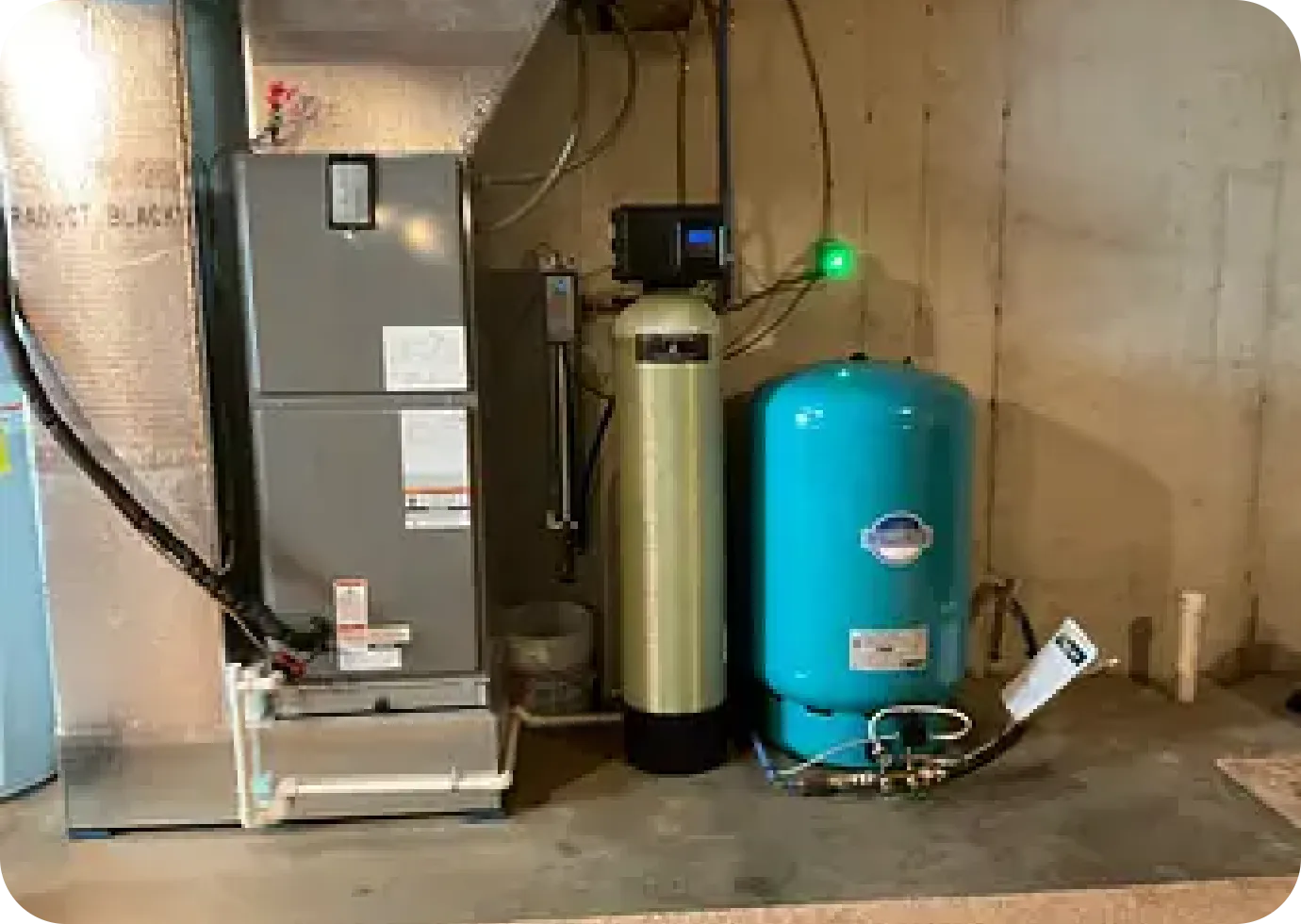
Whole-House Sulfur Treatment
- Strips hydrogen sulfide at the point of entry — the smell ends at every tap, not just one.
- Cesare’s sulfur-treatment system is sized from the level we measure on-site at your tap.
- Sulfur rarely travels alone — iron and manganese usually ride along, and one custom build treats all of it.
- Protects plumbing and fixtures from the corrosion hydrogen sulfide causes over time.
We Find the Real Source First
- Hydrogen sulfide dissipates fast — it has to be measured at your tap, on-site, not days later in a mail-in jar.
- If the smell is only on the hot side, it’s usually the water heater — and we’ll tell you so instead of selling you a system.
- If it’s sulfur bacteria, the fix is different than dissolved gas — treating the wrong one is why smells come back.
- On tough wells, a lab test settles the question — and the free in-home test is where every diagnosis starts.
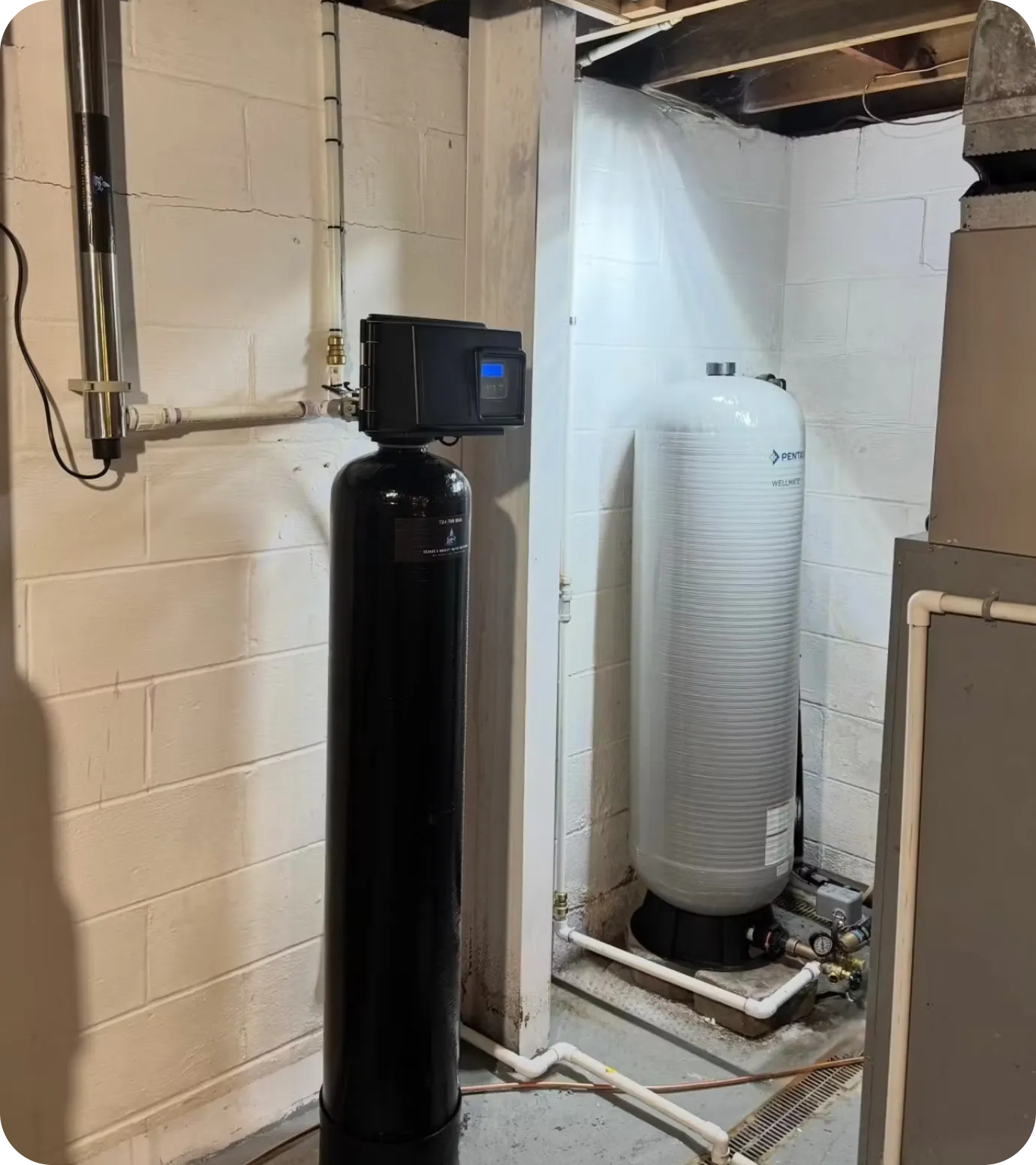
Cesare’s doesn’t guess at odor problems — we measure hydrogen sulfide at your tap, find the real source, and build the one system your well actually needs. If the fix isn’t a treatment system, we’ll say so.
How Cesare’s Kills the Smell for Good
1. Free In-Home Water Test
We measure hydrogen sulfide on-site at your tap — along with iron, manganese, pH and hardness — because the gas dissipates before a mailed sample ever reaches a lab.
2. Custom System Design
A whole-house build with Custom-Designed media, sized from your measured sulfur level, well flow and whatever else is riding along in the water.
3. Professional Installation
Plumbed, programmed and started up by the people who designed it. Most single-system installs are done in a day.
4. Verify & Support
We re-test the finished water so you smell — and see — the difference, and we stay local for service afterward.

The smell is usually only part of the story. Wells with hydrogen sulfide very often carry iron and manganese too, and sometimes hardness or low pH. One custom build can treat all of it — from sulfur to softening — and the test tells us what your well actually needs.
A Ligonier Well Owner on Losing the Rotten-Egg Smell
A family in Ligonier had lived with a strong rotten-egg smell in their well water for years, and earlier attempts by other companies had not fixed it. Here is what they wrote after Cesare’s tested their water and installed a system designed around it.
“The rotten egg smell is completely gone, the water looks clear, and everything tastes and smells clean.”
Vader, Ligonier, PA · Read our Google reviews
Problem
Strong H₂S odor, iron staining, pH 5.8
Solution
3-stage: pH correction, oxidation, polishing
Result
Zero odor. Clean water. Same-day install.
No two rotten-egg problems get the same fix. Before we recommend anything, we find where the smell starts: the well, the water heater, or bacteria in the system. Then the treatment is designed around your test results.
Your in-home water analysis is free. If your water needs certified laboratory testing, such as a bacteria panel, that lab work is separate and paid, and we tell you before any sample is sent. The full write-up lives in our sulfur guide.
What Does Sulfur Removal Cost in Southwestern PA?
Every quote starts with a free water test — so you pay for the fix your well actually needs, not a one-size package price.
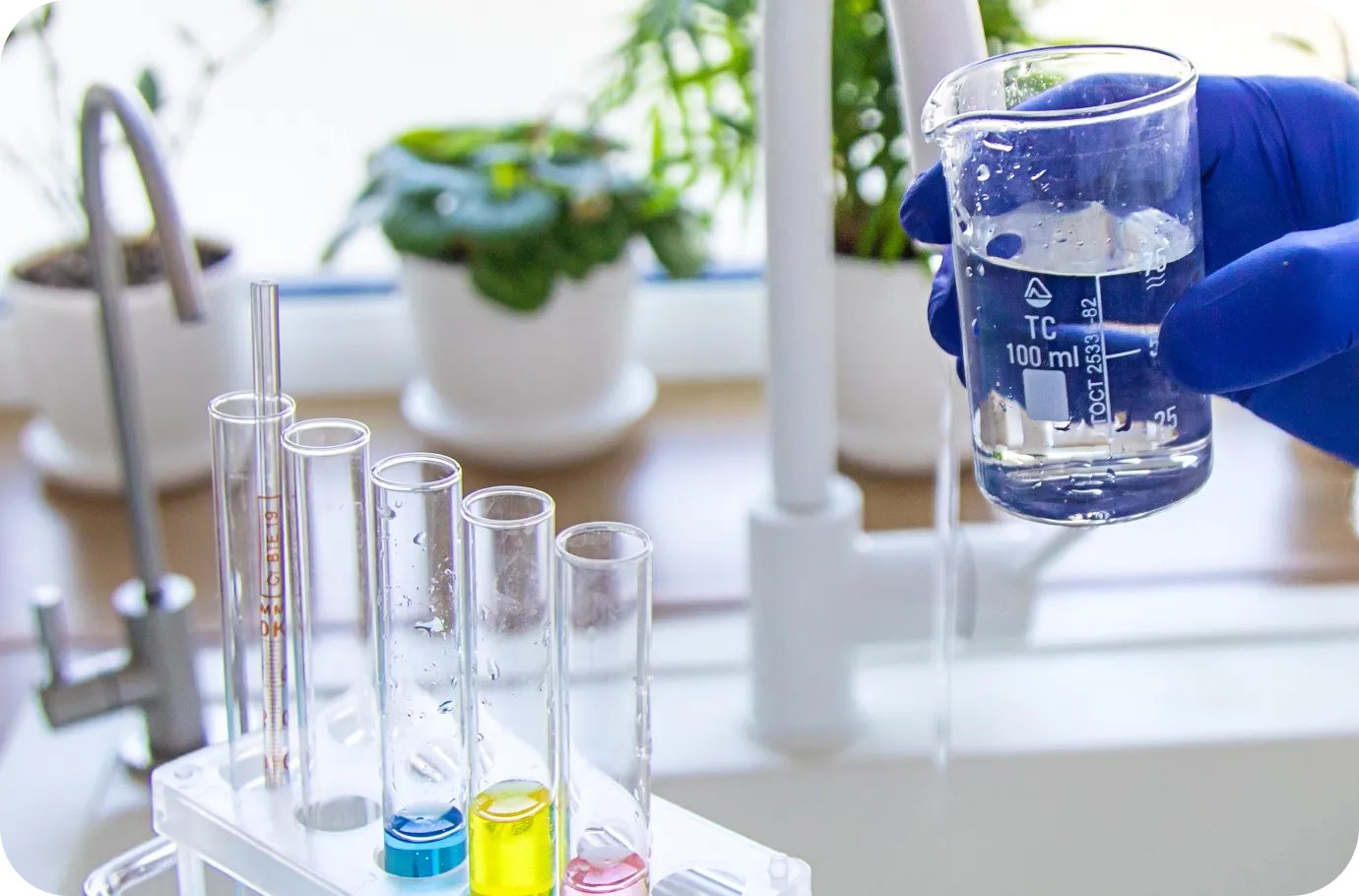
Installed cost comes down to three things:
That’s why Cesare’s tests first — so the quote reflects the fix your well actually needs. Straightforward pricing comes after testing, before any work begins.
Where We Fix Rotten-Egg Water
Cesare’s installs and services whole-house sulfur treatment across Pittsburgh and all thirteen Southwestern Pennsylvania counties.
Allegheny / Pittsburgh Westmoreland County Butler County Somerset County Washington County Beaver County Mercer County Lawrence County Indiana County Armstrong County Fayette County Cambria County Greene County
Westmoreland County — our home base: Murrysville, Export, Greensburg and Latrobe. Across Western Pennsylvania’s coal country — Washington, Greene, Fayette and Somerset counties — sulfur odor is one of the most common well-water calls we get, and Butler, Beaver and Armstrong county wells see their share too. Wherever the well is, the fix starts with measuring it.
Why Homeowners Call Us After Other Systems Fail.
Google Rating
5.0
I started losing hope after three different water treatment companies couldn't fix my water. Lance and Monica came out that night, tested my water, and took a sample for a third-party lab. He made sure I was getting the right system for my water. Install went great and now my water is better than bottled. Trust Lance — he won't let you down.
— moonlight Paige
Greensburg, PA • Boswell, PA
We originally went with Specialty Water because Google showed them at the top. Within three years we had to replace the entire system. We've now been with Cesare's for three years and our water still tastes better than bottled water. Cesare's actually tested our water and built a system specifically for it instead of a one-size-fits-all setup. We wish we'd started with Cesare's.
— Jesse Steel
Fayette County
After dealing with hard water for years, this was a game changer. They installed a whole-house filtration system with a saltless conditioner, and the difference has been incredible. With young children, it gives me peace of mind. The install only took about two hours and was done neatly. If you're in Monroeville or anywhere in Allegheny/Westmoreland County, I highly recommend Cesare's.
— Sean Walker
Monroeville, PA
I started losing hope after three different water treatment companies couldn't fix my water. Lance and Monica came out that night, tested my water, and took a sample for a third-party lab. He made sure I was getting the right system for my water. Install went great and now my water is better than bottled. Trust Lance — he won't let you down.
— moonlight Paige
Greensburg, PA • Boswell, PA
We originally went with Specialty Water because Google showed them at the top. Within three years we had to replace the entire system. We've now been with Cesare's for three years and our water still tastes better than bottled water. Cesare's actually tested our water and built a system specifically for it instead of a one-size-fits-all setup. We wish we'd started with Cesare's.
— Jesse Steel
Fayette County
After dealing with hard water for years, this was a game changer. They installed a whole-house filtration system with a saltless conditioner, and the difference has been incredible. With young children, it gives me peace of mind. The install only took about two hours and was done neatly. If you're in Monroeville or anywhere in Allegheny/Westmoreland County, I highly recommend Cesare's.
— Sean Walker
Monroeville, PA
I started losing hope after three different water treatment companies couldn't fix my water. Lance and Monica came out that night, tested my water, and took a sample for a third-party lab. He made sure I was getting the right system for my water. Install went great and now my water is better than bottled. Trust Lance — he won't let you down.
— moonlight Paige
Greensburg, PA • Boswell, PA
We originally went with Specialty Water because Google showed them at the top. Within three years we had to replace the entire system. We've now been with Cesare's for three years and our water still tastes better than bottled water. Cesare's actually tested our water and built a system specifically for it instead of a one-size-fits-all setup. We wish we'd started with Cesare's.
— Jesse Steel
Fayette County
After dealing with hard water for years, this was a game changer. They installed a whole-house filtration system with a saltless conditioner, and the difference has been incredible. With young children, it gives me peace of mind. The install only took about two hours and was done neatly. If you're in Monroeville or anywhere in Allegheny/Westmoreland County, I highly recommend Cesare's.
— Sean Walker
Monroeville, PA
Already own a sulfur system that isn’t working? Cesare’s services odor-treatment systems we didn’t install — including equipment from companies that guessed at the source. If the smell came back, we’ll measure what your system is actually producing and tell you honestly whether it needs service, resizing or a different approach entirely.
Sulfur & Odor FAQs
Straight answers to the questions Southwestern PA well owners actually ask about the smell. More answers in our Sulfur & Hydrogen Sulfide Knowledge Center.
Why does my well water smell like rotten eggs?
The rotten-egg smell is hydrogen sulfide gas dissolved in your water. In Western Pennsylvania it often comes from the same geology that gave the region its coal — sulfur compounds in the ground the well draws from. Our sulfur guide in The Well covers it in depth, and a free water test measures exactly how much is in yours.
Why does only my hot water smell like sulfur?
If the cold side is fine and the hot side reeks, the problem is usually inside the water heater, not the well. That is a water-heater fix — a whole-house treatment system will not solve it, and we will tell you that plainly instead of selling you one.
Is sulfur water safe?
At the levels typical in residential wells, hydrogen sulfide is mostly a nuisance — but it is corrosive to plumbing and fixtures, it makes water unpleasant to drink and bathe in, and a strong or sudden odor is worth testing promptly. The free in-home test tells you what you are actually dealing with.
Why did my sulfur filter stop working?
When a sulfur system works at first and the smell creeps back, it usually failed for one of five measurable reasons: the hydrogen sulfide level was never measured on-site, so the system was undersized from day one; iron and manganese weren’t counted in the oxidation load; low pH was never corrected, so oxidation underperforms; the water doesn’t get enough contact time for oxidation to finish; or the media is exhausted and backwashing has been neglected. Shock chlorination has the same weakness — it knocks the problem down without removing the source. We measure what your system is actually producing and fix the reason, not the symptom.
Will a water softener remove the sulfur smell?
No. A softener removes hardness minerals — it is not built to handle hydrogen sulfide, and running smelly water through one can actually foul it. Sulfur needs dedicated treatment, which can be built alongside softening in one system.
What is the best sulfur filter for well water?
There is no single best sulfur filter — or sulphur filter, as it’s sometimes spelled. The right system depends entirely on the measured hydrogen sulfide level, how much iron and manganese ride along with it, your water’s pH and your well’s flow rate. A system that solves one home’s odor can fail outright in the next home over. Filter pitchers and under-sink units can’t fix it at all — the smell hits every tap, so treatment has to sit at the point of entry, ahead of the whole house. That’s why Cesare’s measures first, then engineers the system to your water instead of selling a boxed answer.
How much does sulfur removal cost installed?
It depends on the real source of the odor, how much hydrogen sulfide we measure at your tap, your well flow rate, and whether iron, manganese or hardness get treated in the same build. Cesare’s tests first — straightforward pricing comes after the free water test, before any work begins.
Why does hydrogen sulfide have to be tested at my house?
Because the gas escapes from water quickly. A sample jar mailed to a lab can test clean days later even when your water reeks at the tap. That is why Cesare’s measures sulfur on-site during the free in-home water test.
How fast does the smell go away after installation?
The treated water is odor-free from startup, and the lingering smell washes out of your lines and fixtures over the first days as fresh water works through the house. We re-test after install so you see the measured difference.
My water smells and leaves orange stains — is that related?
Very likely. Hydrogen sulfide, iron and manganese travel together in many Southwestern PA wells, and one custom-engineered system can treat all of them at once. Testing shows the full picture before anything gets built.

Ready to Lose the Rotten-Egg Smell?
Start with the free water test — we’ll measure the hydrogen sulfide at your tap, find the real source, and design the whole-house fix your well actually needs. Straightforward pricing after testing — no pressure.
What You’ll Get
- In-home water evaluation — free
- Clear explanation of your results
- A sulfur-treatment plan built from the level we measure at your tap
- Straightforward pricing (after testing)
- Professional installation & local support