- Pittsburgh & Southwestern PA • Custom-Engineered Water Treatment
- Fully Licensed & Insured
- 24/7 Emergency Water Service
- 3rd Generation Water Treatment Experts

Butler County is not one water supply. The city of Butler drinks treated river and reservoir water carrying chloramine, Cranberry Township and Adams Township buy Ohio River water disinfected with chlorine, and thousands of homes in between run on private wells. Cesare’s identifies which one is yours, tests the water at your tap, and engineers treatment around what it finds.

Roughly 200,000 people live in Butler County, and their water arrives three different ways. The Butler system treats water from Thorn Run and Oneida reservoirs and the Allegheny River, and carries chloramine. Cranberry Township and Adams Township buy Ohio River water from West View Water Authority, disinfected with chlorine. Everyone else runs on local systems or private wells — and Penn State’s water lab has summarized 529 Butler County drinking-water submissions since 2007, where iron and manganese staining show up far more often than hardness. Which problems matter at your house depends on which water you have, and that is a measurement, not a guess.
Treatment starts with the water source. A home in Butler receives different water than a home in Cranberry Township — and a private well is a separate supply entirely.
The Butler system treats water from Thorn Run and Oneida reservoirs and the Allegheny River, carries chloramine in distribution, and averages about 4.5 gpg hardness. Up to a fifth can arrive from the Ellwood City system.
Cranberry Township and Adams Township’s water authority both purchase Ohio River water from West View Water Authority, treated at Neville Island and disinfected with chlorine.
Zelienople runs its own utility, Buffalo Township’s authority produces water in the southeast, and thousands of homes rely on private wells that no agency tests or treats for the owner.
Penn State’s Agricultural Analytical Services Laboratory has summarized 529 Butler County drinking-water submissions collected between August 2007 and June 2025. These laboratory results describe the samples submitted to Penn State and are not a representative survey of all homes, wells or public water supplies in the county.
Aesthetic water conditions
Health-related indicators
About the data: Individual parameters were tested on different numbers of samples. These results describe the samples submitted — they cannot determine what is present at an individual property. Test the water at the property before treatment is selected.
Source: Penn State Agricultural Analytical Services Laboratory — Drinking Water Test Summaries by County.
Butler County’s best-known problems are metals, not minerals. The symptom usually points at the cause — and testing confirms it before treatment is chosen.
Iron was above the staining standard in 25.7% of tested Penn State samples and manganese in 28.0% — the county’s signature well-water finding.
The disinfectant differs by provider — chloramine in the Butler system, chlorine in Cranberry and Adams — and each calls for different city-water filtration.
Median hardness in tested samples is only about 2.7 gpg. Soft water leads homeowners to assume nothing is wrong while metals quietly stain sinks and laundry.
Concerned about lead or PFAS? These cannot be identified by taste, smell or appearance and require proper testing.
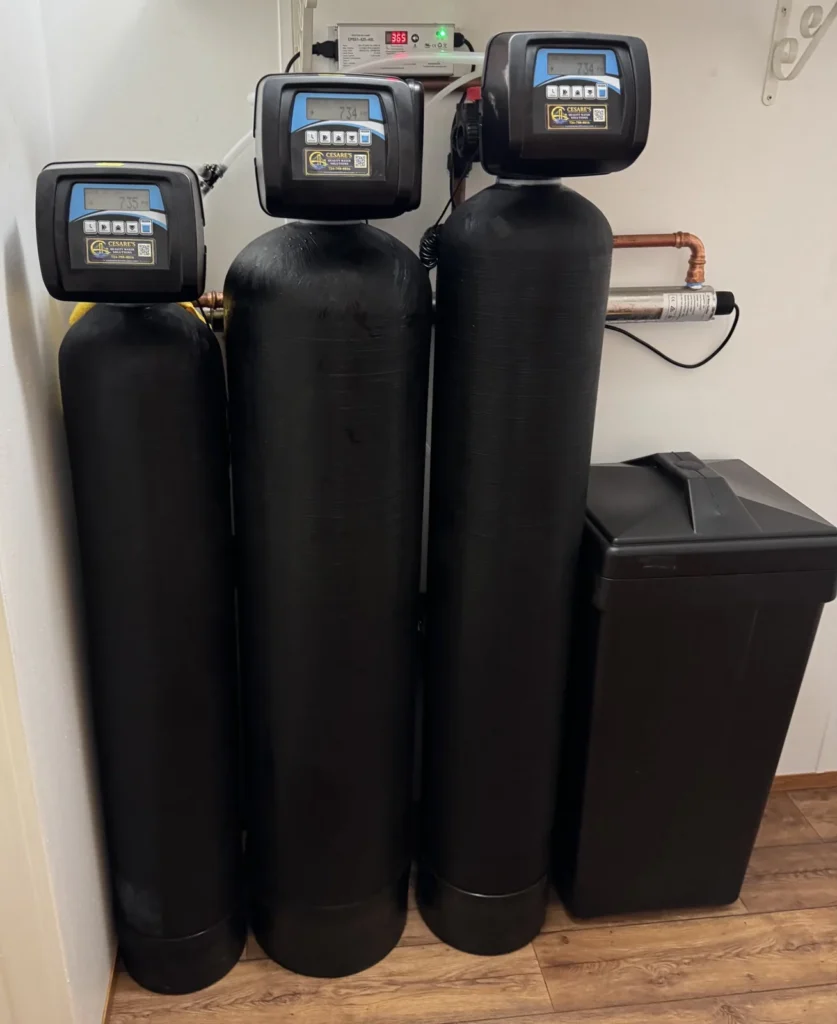
BUTLER, PA • PENNSYLVANIA AMERICAN WATER
BUTLER COUNTY MUNICIPAL WATER CASE STUDY
On Site Water Conditions
5.5 gpg hardness
2.1 ppm chloramine
pH 7.2
Cesare’s Treatment Design
Whole-home treatment built around the home’s measured water chemistry and flow
Follow-Up Results
Below 1 gpg hardness
Chloramine below 0.10 ppm
pH 7.2
Chloramine & Hard Water in a Butler Home
A Butler homeowner served by Pennsylvania American Water wanted better-tasting water and less mineral buildup around the house. Testing showed 2.1 ppm chloramine and 5.5 grains per gallon of hardness. Cesare’s designed whole-home treatment around the water measured at that home—not a generic Butler County package.
Follow-up testing measured chloramine below 0.10 ppm and hardness below 1 gpg, with the taste and scale complaints resolved.
CHICORA, PA • PRIVATE WELL
BUTLER COUNTY WELL WATER CASE STUDY
On Site Water Conditions
4.6 ppm iron
0.22 ppm manganese
2.1 ppm hydrogen sulfide
15 gpg hardness
Cesare’s Treatment Design
Whole-home treatment built around the home’s measured water chemistry and flow
Follow-Up Results
Iron below 0.05 ppm
Manganese below 0.01 ppm
Sulfur below field detection
Below 1 gpg hardness
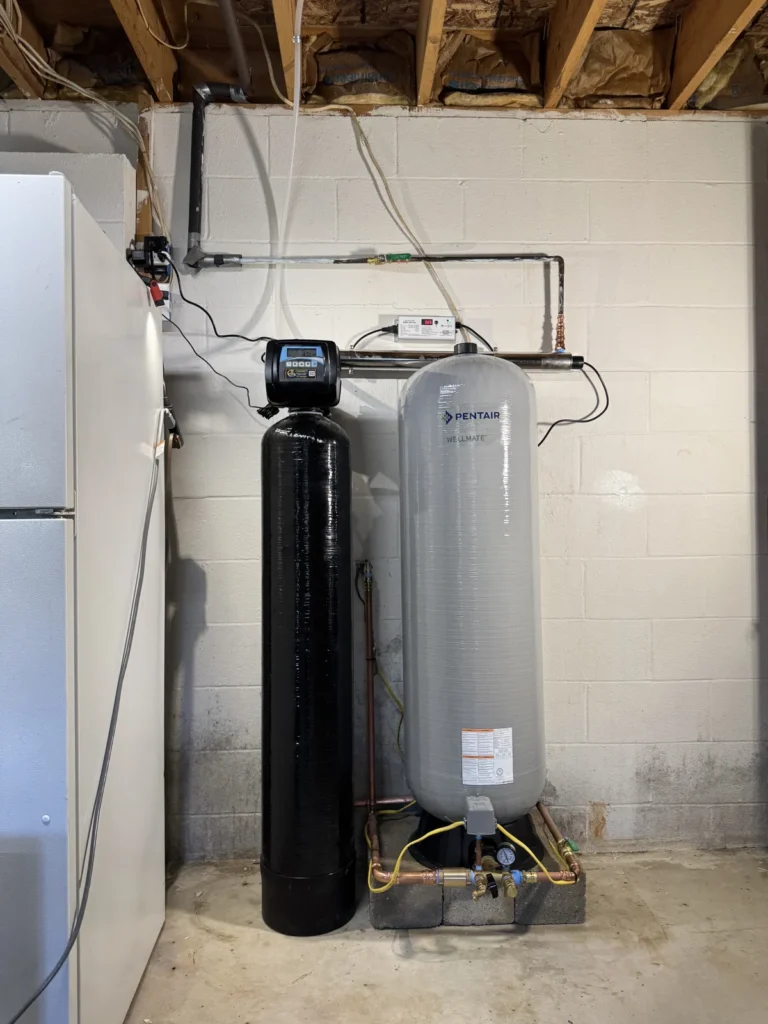
Iron, Manganese & Sulfur in a Chicora Well
A Chicora homeowner was dealing with orange rust staining, a rotten-egg odor and hard-water buildup from a private well. Testing found 4.6 ppm iron, 0.22 ppm manganese, 2.1 ppm hydrogen sulfide and 15 gpg hardness. Cesare’s built the treatment around that well’s measured chemistry—not a generic well package.
Follow-up testing brought iron, manganese and sulfur to near-undetectable levels and hardness below 1 gpg, clearing the staining and the odor.
Pennsylvania does not regulate privately owned household wells — testing and treatment are the owner’s responsibility. PA DEP recommends testing every year for total coliform bacteria, nitrate, total dissolved solids and pH, with additional testing when a specific contaminant is suspected, performed by a state-certified laboratory. Butler County’s groundwater moves through different bedrock and glacial settings, so neighboring wells should never be assumed to match — the well next door is not your well. Cesare’s publishes the same tested county data for neighboring Lawrence, Beaver and Armstrong counties.
Whole-home city-water filtration matched to the disinfectant your provider actually uses — chloramine in the Butler system, chlorine in Cranberry and Adams.
Sized to measured hardness — which in Butler County is often far lower than homeowners expect.
Point-of-use treatment for taste, dissolved minerals and laboratory-confirmed drinking-water concerns.
Butler’s most common tested finding — orange and black staining treated after the metal is measured, not guessed.
Rotten-egg odor traced to its source — water supply, plumbing or water heater — before treatment is chosen.
Inspection, repair and service for existing equipment — including systems Cesare’s didn’t install.
Cesare’s works the Route 228 and Route 19 corridors weekly — softening, city-water filtration and reverse osmosis for West View-supplied municipal homes, and full well treatment just outside the boroughs.

Cranberry Township Adams Township Mars Seven Fields Valencia Callery Middlesex
Zelienople Harmony Evans City Jackson Township Forward Township Connoquenessing Prospect
From the city of Butler through the rural north and east, most homes run on wells — iron, manganese, sulfur and bacteria treatment designed from a test at the tap.
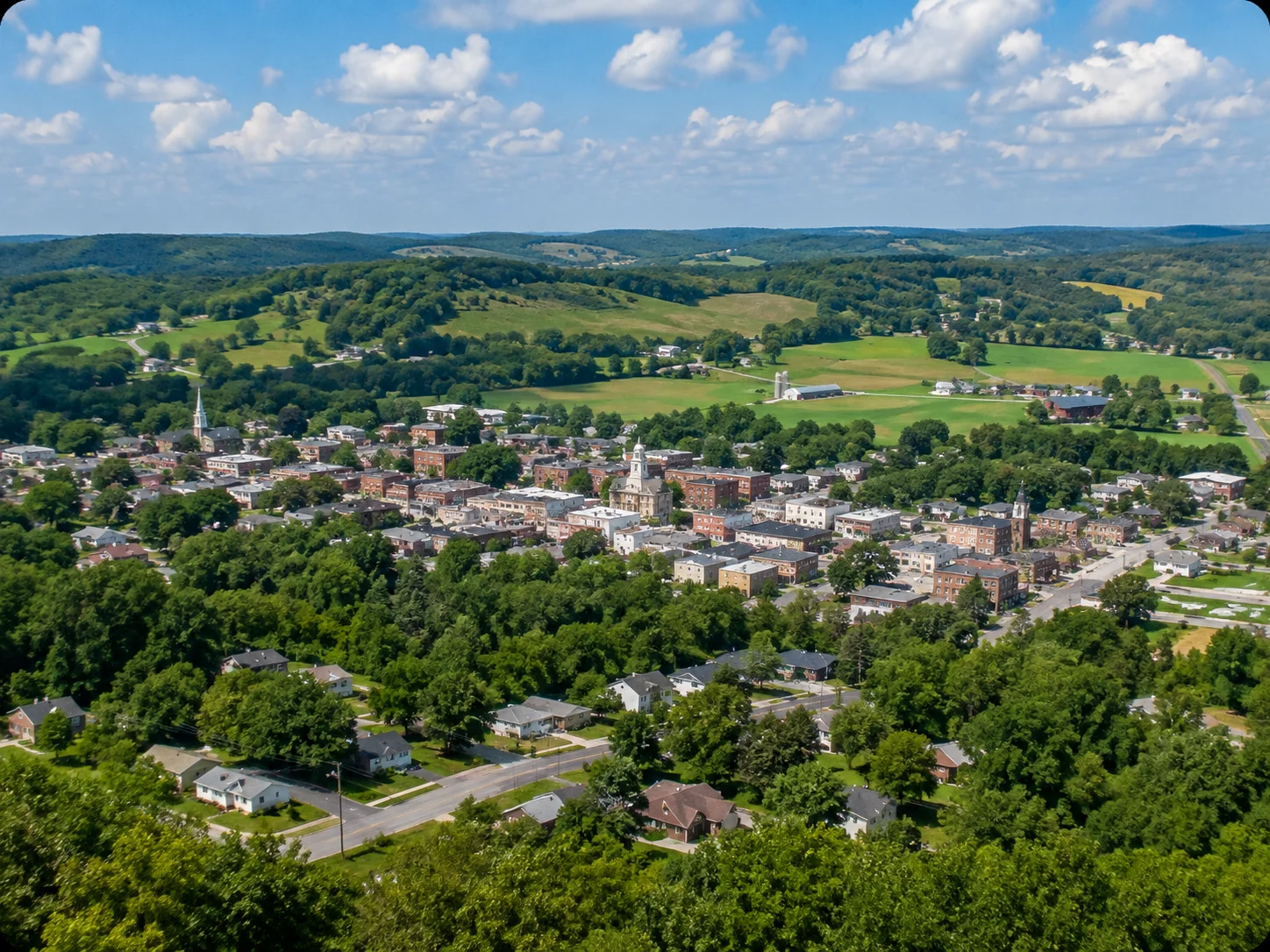
Butler Butler Township Center Township Penn Township East Butler Meridian Summit Township
Slippery Rock Saxonburg Sarver Buffalo Township Cabot Chicora Harrisville West Sunbury Portersville Petrolia Karns City
Cesare’s Quality Water Solutions designs, installs and services water treatment across Butler County, for homes on municipal water and homes on private wells. That includes water testing, whole-house filtration, water softening, iron and manganese removal, sulfur treatment, UV disinfection and reverse osmosis. We identify the water source and test at the tap before recommending anything, because Butler County water arrives too many different ways for one standard package.
All of it. Butler, Cranberry Township, Adams Township, Mars, Seven Fields, Zelienople, Harmony, Evans City, Saxonburg, Sarver, Slippery Rock, Prospect, Portersville, Chicora, Cabot, Middlesex Township and the rural areas between them. Treatment differs by address here because the county mixes municipal systems, purchased-water systems and a lot of private wells.
Penn State’s water lab summarizes 529 drinking-water samples submitted from Butler County between August 2007 and June 2025. Among the samples tested, iron was over the 0.3 mg/L limit in 38 of 148, manganese was over 0.05 mg/L in 44 of 157, total coliform bacteria turned up in 224 of 501, and E. coli in 45 of 501. Those are homeowner-submitted samples, not a survey of every property, which is why we start with water testing at your tap instead of county averages.
No. Butler County has at least three different water profiles. Pennsylvania American Water’s Butler system treats local reservoir and river water. Cranberry Township and Adams Township distribute water purchased from West View Water Authority, which starts in the Ohio River. And a large share of the county’s rural homes run on private wells. The right treatment starts with knowing which of those serves your address.
Pennsylvania American Water’s Butler system uses surface water from Thorn Run Reservoir, Oneida Reservoir and the Allegheny River. Its own report notes the western part of the system can also receive up to about 20% of its supply from the Ellwood City service area, which draws on Connoquenessing Creek and the Beaver River. So even within the Butler system, the blend can shift depending on where you live.
Cranberry Township water is purchased from West View Water Authority, and the original source is the Ohio River. West View treats at two plants, one on Neville Island and one in Baden, and its current report lists sections of Cranberry among the areas the Baden plant serves. By the time it reaches a Cranberry tap it has been through full treatment, but disinfectant taste, spotting and appliance scale are still the complaints we hear most.
The Municipal Water Authority of Adams Township purchases its water from West View Water Authority as well, so the source is the same Ohio River supply. The authority describes itself as one of about twenty-nine communities served from West View’s plant at the northern tip of Neville Island, and it distributes that water to Adams Township and portions of neighboring communities.
It depends on the supplier. Pennsylvania American Water’s Butler system uses chloramines, and its current report shows a residual of 1.39 to 2.56 parts per million in the distribution system. Cranberry and Adams receive West View water, which is treated and disinfected before purchase, and disinfection practices can change over time. Chlorine and chloramine call for different Cesare’s carbon filtration, so we confirm what is actually in the water at your address before designing anything.
It depends heavily on the source. The median across Penn State’s Butler County samples is only 46 mg/L, about 2.7 grains per gallon, which is on the softer side. But Pennsylvania American Water reports 77 mg/L, about 4.5 grains, for the Butler system, and individual wells in the county have tested anywhere from under 1 up to 457 mg/L. That spread is exactly why we size softeners from the hardness measured at your tap, not a county number.
Orange or rust-colored staining is iron. Black or dark brown staining is usually manganese. They are Butler County’s signature well problems: Penn State found iron over the limit in 38 of 148 samples tested and manganese over the limit in 44 of 157, with some iron results as high as 39 mg/L. The fix is iron and manganese filtration matched to the form and concentration in your water, which testing tells us.
That smell is hydrogen sulfide gas, and it is common in wells around here. A useful clue: if the odor is in both hot and cold water, it is likely coming from the well itself; if it only shows up on the hot side, the water heater may be involved. Sulfur also tends to travel with iron and manganese, so we test for all of it before picking a treatment approach.
Pennsylvania DEP recommends testing private well water every year for total coliform bacteria, nitrates, total dissolved solids and pH, through a state-certified lab, plus anything else you have reason to suspect. In Butler County that usually means adding iron, manganese, hardness and sulfur whenever there is staining, scale or odor. Coliform turned up in 224 of the county’s 501 Penn State samples, so the annual bacteria test is the one not to skip.
Treat it as a safety issue, not a nuisance. DEP’s guidance is not to consume the water without boiling it for one minute at a rolling boil, or to use bottled water for drinking and food preparation in the meantime. Then the well should be checked for how contamination is getting in, disinfected, and retested. When bacteria keeps coming back, UV disinfection provides an ongoing barrier, but it has to be sized properly and it does not fix the entry point.
Yes, and in Butler County it is the single most common failed test. The corrosivity index was outside the acceptable range in 80 of 137 Penn State samples, about 58%, and pH ran from 5.0 to 9.5 with 49 of 339 samples outside the recommended band. Corrosive water eats at copper pipe and fittings, showing up as blue-green staining and eventually pinhole leaks. An acid neutralizer ahead of the plumbing stops it at the source.
It is worth considering when the home has an older or unknown service line, older fixtures or lead-soldered plumbing. Pennsylvania American Water’s Butler system reported a 2 ppb 90th-percentile lead result, with none of its 30 sampled sites over the 15 ppb action level. But lead usually enters from the individual home’s own line and plumbing, and in Penn State’s countywide submissions 12 of 120 first-draw samples were over the action level. A first-draw test at your tap settles it.
Yes, when treatment is chosen for a confirmed problem. The EPA identifies granular activated carbon, ion exchange and reverse osmosis as technologies capable of reducing PFAS. Performance depends on the specific compounds, the concentrations, the rest of the water chemistry and how the system is maintained, so testing comes first and the equipment follows.
They solve different problems. A softener removes calcium and magnesium hardness through ion exchange. A Cesare’s whole-house carbon filter handles disinfectant taste and odor. And neither one touches iron, manganese, sulfur or bacteria — those need their own stages. Some Butler County homes need one piece, some need a combination, and some need none of it. The test results decide, which is how you avoid paying for stages your water does not need.
It depends on the water source and what the tests find. A Cranberry home that wants municipal-water filtration is a very different project from a Chicora well carrying iron, manganese, sulfur and bacteria at the same time. Flow rate, plumbing and the number of treatment stages all factor in. Cesare’s prices a system after testing the water and identifying what the property actually requires — not before.
Straight answers to the water questions we hear most in Butler County.
See how Butler County compares with 12 other Southwestern Pennsylvania counties for hardness, iron, manganese, bacteria and corrosivity in the 2026 Southwestern PA Water Quality Report.
2026 Southwestern PA Water Quality Report →
Get a professional water analysis and a custom treatment plan—clear answers, no pressure.