POSITIVE BACTERIA TEST? START HERE.

Coliform or E. coli in Your Well Test? What to Do Next

Coliform and E. coli cannot be seen, tasted, or smelled. We test the water, explain what the result means, look at how contamination may be getting in, and design the right response — from disinfection and source repair to continuous whole-home UV.
Light blue wave section divider

Coliform & E. coli at a Glance

If your test just came back positive, start here.

What a positive means

Total coliform is an indicator — it means a pathway exists for surface contamination to reach your water. E. coli is more specific: it points to human or animal waste reaching the supply.

What to do right now

Use bottled water, or water brought to a rolling boil for one minute, for drinking, cooking, ice, coffee, baby formula, and brushing teeth — until the problem is corrected and follow-up testing is clear.

What actually fixes it

Three different jobs: disinfect what is already in the system, repair how it got in, then treat continuously. UV alone does none of the first two.
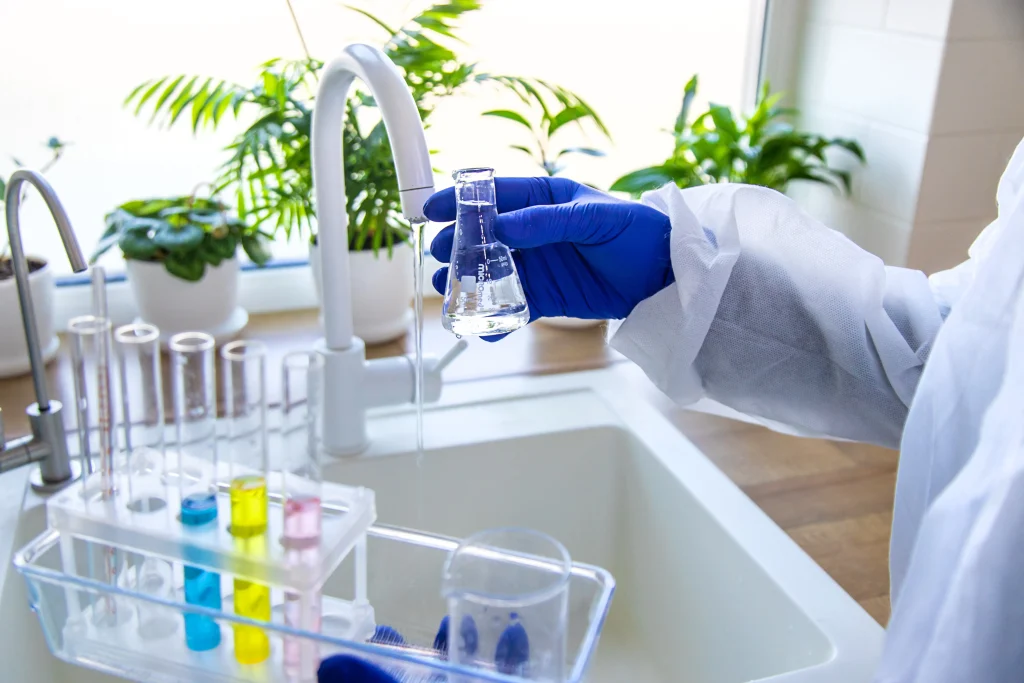
Well water samples collected for coliform and E. coli bacteria testing in Southwestern Pennsylvania

Your Well Tested Positive. What Should You Do?

Switch to bottled water, or water brought to a rolling boil for one minute, for anything that goes in your mouth. Pennsylvania guidance covers drinking, cooking, food preparation, dishwashing, ice, coffee, baby formula, and brushing teeth.

Washing dishesWash with soap and water, then rinse with clean — bottled or boiled — water.

ShoweringAdults can shower without swallowing the water, then wash hands with soap and clean water.

Young childrenUse a sponge bath so they do not accidentally swallow any.

TEST + TREAT YOUR WATER
Child examining a glass of well water with a magnifying glass — coliform and E. coli cannot be seen

Total Coliform, Fecal Coliform, and E. coli Are Not the Same Result

Labs report these differently, and the difference decides how fast you need to move.

  1. 1
    Total coliformIndicator

    A broad group living in soil, plants, and surface water. Mostly harmless themselves — but their presence means a pathway is open, and whatever opened it could let something worse through.

  2. 2
    Fecal coliformMore specific

    A subgroup tied to the digestive tracts of people and warm-blooded animals. Suggests contact with waste rather than just soil or vegetation.

  3. 3
    E. coliMost specific — act now

    One type of fecal coliform, and the strongest warning of the three. A positive result means fecal contamination has likely reached the water supply.

FREE CONSULTATION

Bacteria in Pennsylvania Private Wells

Why annual testing is not optional here.

3.5M+Pennsylvanians on private wells

The highest private-well population of any state — and the state does not regulate them.

33%Had unsafe coliform levels

From Penn State’s analysis of thousands of Pennsylvania private wells and springs.

14%Had unsafe E. coli levels

Same dataset. Roughly one in seven of the wells tested.

Groundwater moving through fractured rock toward a private well in Southwestern Pennsylvania

How Does Bacteria Get Into a Private Well?

Almost always through a physical pathway — not from the aquifer itself. The usual suspects are a loose or non-sanitary well cap, cracked casing, ground that slopes toward the well instead of away, a shallow or older well, nearby septic, or recent pump and plumbing work.

Southwestern PA adds its own factor. Our fractured shale and sandstone can move water fast, so after heavy rain or flooding surface water reaches a compromised well far quicker than it would through deep soil filtration.

It can also come from inside: contaminated household plumbing, a failed treatment component, or a sample collected the wrong way.

GET MY WATER FIXED

What Happens After a Positive Test

Six steps, in this order. Skipping any of them is how positives come back.

The response sequence

1

Protect the Household

Bottled or boiled water for all oral uses while the result is investigated.

2

Confirm the Result

Review the sample point, collection method, and property history — a bad sample is a real possibility.

3

Inspect the Pathways

Cap, casing, grading, recent flooding, plumbing work, and existing equipment.

4

Disinfect the System

Shock chlorination to clear what is already living in the well and lines.

5

Correct the Source

Repair the pathway once it is identified. This is the step most often skipped.

6

Retest, Then Protect

Confirm with follow-up testing, then add continuous treatment when conditions justify it.

About retesting timing

There is no single correct retest date. PA DEP’s disinfection procedure says wait until the chlorine has cleared, then wait another two to five days. PA Department of Health guidance describes retesting ten to fourteen days out when judging whether an event was temporary. The right date depends on the disinfection method, how fast chlorine clears, and what your lab specifies — so we coordinate the sample timing with the laboratory rather than applying one universal waiting period.

  • Source investigated, not just treated
  • Downstream plumbing disinfected too
  • Retest timed with the lab
  • Testing available on its own
Custom-Engineered
Most companies install equipment. Cesare’s engineers water.

Shock Chlorination, Well Repair, or UV — Which One Fixes It?

They are not competing options. They do different jobs, and most positives need more than one.

ResponseWhat it doesWhat it does not do
Bottled or boiled waterProtects the household right nowNothing about the well itself
Shock chlorinationDisinfects bacteria currently in the well and plumbingDoes not stop it coming back in
Well or plumbing repairCloses the pathway contamination usedDoes not disinfect what is already there
UV treatmentContinuously treats water passing through the chamberDoes not repair the well or remove chemical contaminants
Continuous chlorinationOngoing disinfection with a measurable residualRequires chemical feed, contact time, and monitoring
RetestingVerifies the water at that point in timeTreats nothing on its own
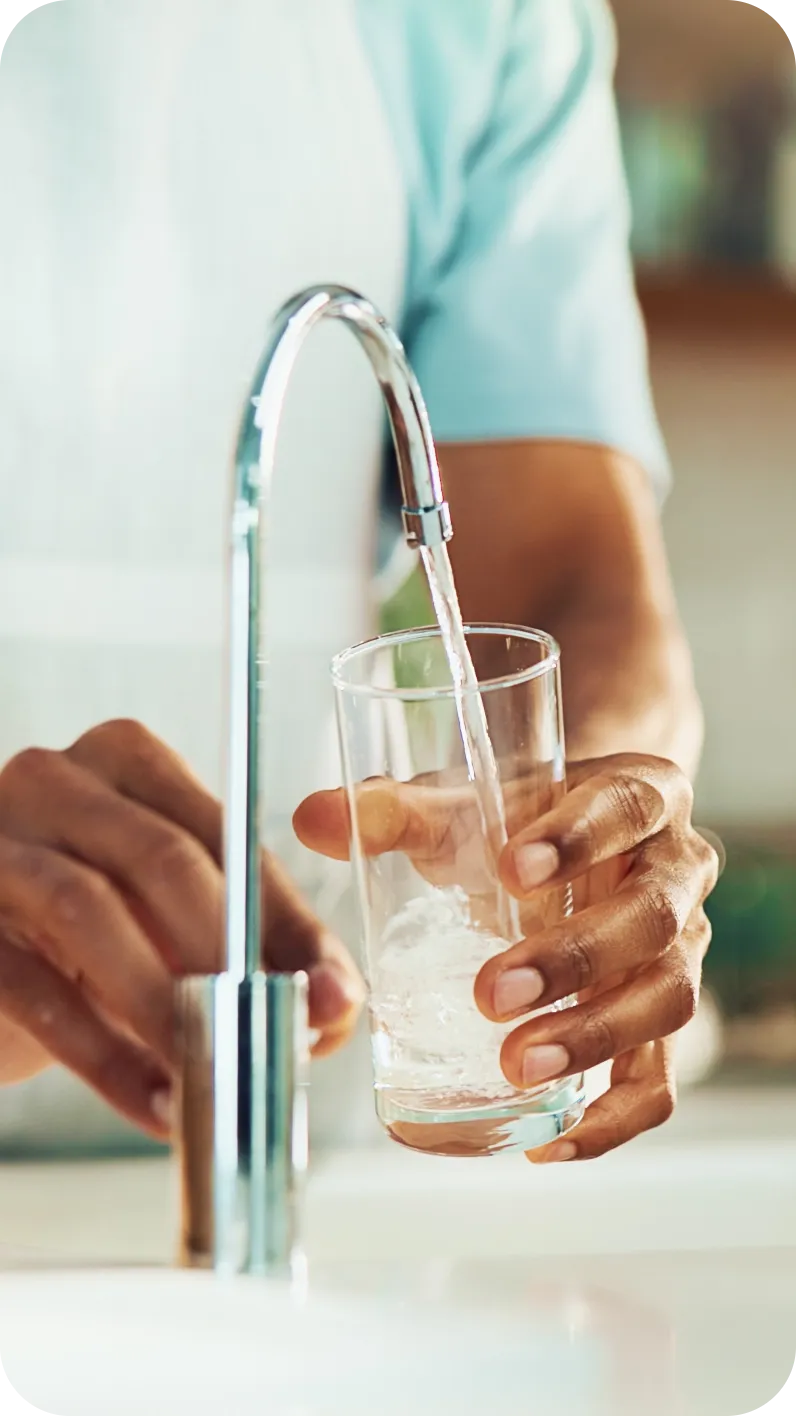
Homeowner pouring a glass of treated well water in a Southwestern Pennsylvania kitchen after ultraviolet disinfection

How Whole-Home UV Treatment Works

Water flows through a stainless chamber past an ultraviolet lamp at roughly 254 nanometers. That wavelength damages the genetic material inside susceptible microorganisms so they can no longer reproduce — which is what makes them incapable of causing infection.

UV adds no salt and no routine chemicals, and it does not change taste, odor, or pH. It also does not filter anything out — organisms stay in the water, inactivated.

Class ABuilt for water that is not microbiologically safe — a positive well test. Failsafe dose of 40 mJ/cm².

Class BSupplemental only, for water already deemed safe. 16 mJ/cm² — not the right answer after a positive result.

SCHEDULE MY WELL WATER TEST

Why UV Fails Without the Right Water In Front of It

UV depends on light reaching the organism. Anything that blocks, absorbs, or coats gets in the way.

What is in the waterWhy it defeats UVWhat has to happen first
Sediment / turbidityParticles cast shadows — organisms ride through untouchedFine sediment filtration ahead of the chamber
IronBakes an opaque coating onto the quartz sleeveIron treatment at the point of entry
ManganeseSame fouling problem, at even lower concentrationsManganese treatment upstream
HardnessScale forms an insulating film on the sleeveSoftening or conditioning first
Low UV transmittanceDissolved organics absorb the light before it worksMeasure UVT and size the chamber to it
Sulfur, low pH, lead, PFAS, nitrateUV does nothing for any of theseSeparate treatment — UV is disinfection only
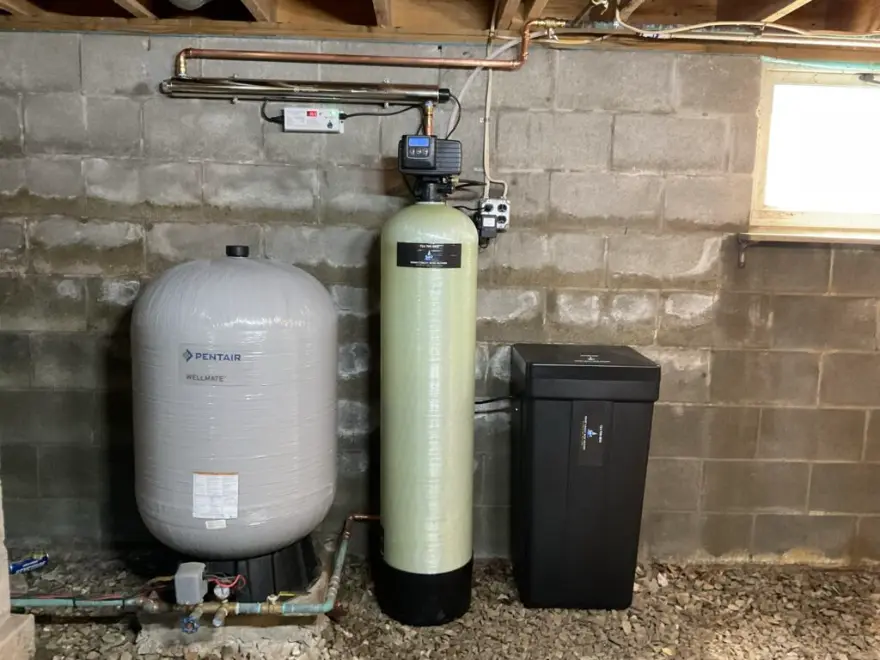
Whole-home well water treatment system with sediment filtration and ultraviolet disinfection installed in Southwestern Pennsylvania

A Real Southwestern PA Well: Coliform, E. coli, and Everything Blocking the UV

COLIFORM + E. COLIPRETREATED FOR UV IN 8 DAYS

This private well is exactly why UV cannot simply be bolted on. Alongside the bacteria, the raw water carried iron at 33× the fouling threshold and manganese at 100× it — plus 21 gpg hardness and visible cloudiness. Every one of those would have coated the quartz sleeve or shadowed the organisms.

MeasuredBefore (Jul 19)After (Jul 27)
Iron10 ppmBelow the field method’s 0.05 mg/L reporting limit
Manganese5 ppmBelow the field method’s 0.05 mg/L reporting limit
Hardness21 gpgBelow 1 gpg
TurbiditySlightly cloudyClear — no sediment
TDS881 ppm759 ppm

Sources & References

Every claim on this page traces back to a primary source — regulators, accredited standards bodies and state public-health guidance.

EPA

Federal Rules

  • Total Coliform Rule and Revised Total Coliform Rule
  • Maximum contaminant level goal of zero for E. coli in public systems
PA DEP

State Program & Wells

  • Safe Drinking Water Program — bacteriological monitoring for public systems
  • Private wells are not regulated at the state level in Pennsylvania; testing is the homeowner’s responsibility
PA DOH

Public Health Guidance

  • Private well water and health guidance for Pennsylvania households
  • Boil-water guidance after a positive bacteria result
PENN STATE

Regional Well Data

  • Extension surveys of coliform detection rates in Pennsylvania private wells
  • Well construction, grouting and cap guidance
NSF/ANSI

UV Certification

  • NSF/ANSI 55 Class A and Class B ultraviolet treatment systems
  • Prefiltration requirements for UV transmittance and turbidity
CDC

Waterborne Illness

  • Drinking water and waterborne disease background
  • Guidance for private well owners after flooding or contamination

Reviewed July 2026 by Lance Cesare, third-generation water-treatment specialist. Water testing referenced on this page is on-site field analysis performed by Cesare’s Quality Water Solutions. Coliform and E. coli results require an accredited laboratory and are not published from field methods.

Coliform, E. coli & UV FAQs

What does a positive total coliform test mean?
It means coliform bacteria were detected, and that a pathway likely exists for surface contamination to reach your water. Most total coliforms are not disease-causing themselves — they are indicator organisms. The concern is that whatever let them in could also let something worse in. It has to be investigated, not ignored.
Is E. coli worse than total coliform?
Yes. E. coli is a more specific indicator that human or animal waste has reached the water supply. Total coliform can come from soil or vegetation; E. coli points to fecal contamination. A standard indicator test does not identify whether the strain detected is one of the disease-causing types, so it should be treated seriously either way.
Can I drink water that tested positive for coliform?
Not without treating it first. Pennsylvania guidance says to use bottled water or water brought to a rolling boil for one minute for drinking, cooking, food preparation, ice, coffee, baby formula, and brushing teeth — until the problem is corrected and follow-up testing comes back clear.
Can I shower with coliform in my water?
Adults generally can, as long as they avoid swallowing it, then wash their hands with soap and clean water. For young children Pennsylvania recommends a sponge bath instead, specifically so they do not accidentally swallow any. Follow stricter instructions if your lab or a health authority gives them.
Can I wash dishes with it?
Yes, with a clean-water rinse. Wash with soap and water as normal, then rinse with bottled or boiled water and let dishes dry completely.
Does coliform change how the water looks or tastes?
Usually not at all. Water can look completely clear, taste normal, and smell fine while testing positive. That is precisely why a test is the only way to know, and why annual testing matters on a private well.
Why did my well test positive after heavy rain?
Rain usually reveals a vulnerability rather than creating one. Runoff or flooding reaches a loose cap, cracked casing, or ground sloping toward the well. Southwestern PA’s fractured shale and sandstone can also move surface water down quickly, bypassing the soil filtration you would otherwise get. We see that pattern most often on older wells in Greene, Armstrong and Lawrence counties after a heavy storm cycle.
Could my sample just have been contaminated?
It is genuinely possible. A dirty faucet or aerator, unwashed hands, touching the inside of the bottle or cap, or delayed delivery to the lab can all affect a bacteria sample. That does not mean you should dismiss a positive — it means the sampling and the well should both be reviewed before conclusions are drawn.
Should I shock chlorinate my well?
Often yes, but not as the whole answer. Shock chlorination disinfects bacteria already in the well and plumbing. It does nothing to stop re-entry, so it should be paired with inspecting the well and correcting whatever pathway let contamination in.
When should I retest after shock chlorination?
There is no single universal date. PA DEP says wait until the chlorine has fully cleared, then wait another two to five days. PA Department of Health guidance describes retesting ten to fourteen days out when assessing whether an event was temporary. The correct timing depends on the procedure and your lab’s instructions, which is why we coordinate it with the laboratory.
Does UV kill E. coli and coliform?
A properly selected and maintained UV system inactivates susceptible bacteria as water passes through the chamber. Verify the system’s NSF/ANSI 55 classification — Class A is intended for water that is not microbiologically safe, at a 40 mJ/cm² failsafe dose. Class B, at 16 mJ/cm², is supplemental treatment for water already considered safe.
Does UV remove bacteria from the water?
No — it inactivates them, it does not filter them out. UV damages the organism’s genetic material so it cannot reproduce. The organism remains physically in the water. That distinction matters when someone claims UV “removes” or “filters” bacteria.
Is UV a permanent fix for a bad well?
No. UV treats water passing through the chamber — it repairs nothing. A cracked casing, loose cap, drainage problem, or septic issue is still there. UV is continuous protection, not a substitute for fixing the source.
Does UV remove iron, hardness, or sulfur?
No, and those contaminants actively work against it. Iron and manganese coat the quartz sleeve; hardness scales it; sediment shadows the organisms. They generally have to be treated before the water reaches the UV chamber or the disinfection will not perform as intended.
How often does a UV system need service?
Follow the manufacturer schedule for the exact system. Typically that means annual lamp replacement, quartz sleeve inspection and cleaning, upstream cartridge changes, alarm checks, sanitation after service, and periodic bacteria testing. A lit lamp is not proof of adequate disinfection — lamp age, sleeve condition, and water clarity all matter.
Can you test my water without selling me a system?
Yes. We provide standalone testing for homeowners, buyers, sellers, and real estate agents. If the result and the property conditions do not justify treatment, we will tell you that. A water test is a service, not a sales appointment.
Homeowner filling a glass with fresh, clean drinking water from a kitchen faucet after whole-home water treatment.

Ready for Better Water at Home?

Get a professional water analysis and a custom treatment plan—clear answers, no pressure.

Address(Required)

What You’ll Get