- Pittsburgh & Southwestern PA • Custom-Engineered Water Treatment
- Fully Licensed & Insured
- 24/7 Emergency Water Service
- 3rd Generation Water Treatment Experts

Cesare’s Quality Water Solutions tests and treats well and municipal water throughout Westmoreland County. We test for iron, sulfur odor, manganese, hardness, acidic water, bacteria, chlorine, chloramine, PFAS and drinking-water concerns. Custom-engineered systems built for your exact water chemistry.
Our Murrysville-based team provides water testing and water treatment across Westmoreland County, including Greensburg, Irwin, North Huntingdon, Latrobe, Ligonier and surrounding communities.

Westmoreland County counted 354,663 residents in the 2020 Census, and the Census Bureau estimates 349,324 as of July 2025, spread across 7 cities and dozens of boroughs and townships. Their water does not all arrive the same way. The Municipal Authority of Westmoreland County, operating since 1942, is the county’s largest supplier — its George R. Sweeney plant treats Beaver Run Reservoir water for the northern portion of the system, while the Indian Creek Supply Filtration Plant near Connellsville draws from Indian Creek and the Youghiogheny River for the southern end, and a separate McKeesport plant serves McKeesport, White Oak and Port Vue. Disinfectant practice is not identical across those systems and does change seasonally: MAWC moved the Indian Creek and Sweeney plants to chloramine on May 4, 2026, with a return to free chlorine planned for the fall, while McKeesport and Furnace Run (Ligonier) stay chlorinated year-round. Beyond the mains, thousands of homes run on private wells that nobody monitors, where iron, manganese, hydrogen sulfide and low pH are the recurring findings. Which problems matter at your house depends on which water you have, and that is a measurement, not a guess.
Treatment starts with the water source. A home in Greensburg receives different water than a home on a private well outside Ligonier — and the two should not get the same recommendation.
The Municipal Authority of Westmoreland County has run since 1942. Its George R. Sweeney plant treats Beaver Run Reservoir water and supplies the northern portion of the system, including Greensburg and the central boroughs.
MAWC’s Indian Creek Supply Filtration Plant sits in Dunbar Township near Connellsville and draws from both Indian Creek and the Youghiogheny River, supplying the southern end of the system. A separate McKeesport plant treats Youghiogheny water for McKeesport, White Oak and Port Vue.
Smaller authorities supply parts of the county, and thousands of homes rely on private wells that no agency tests or treats for the owner.


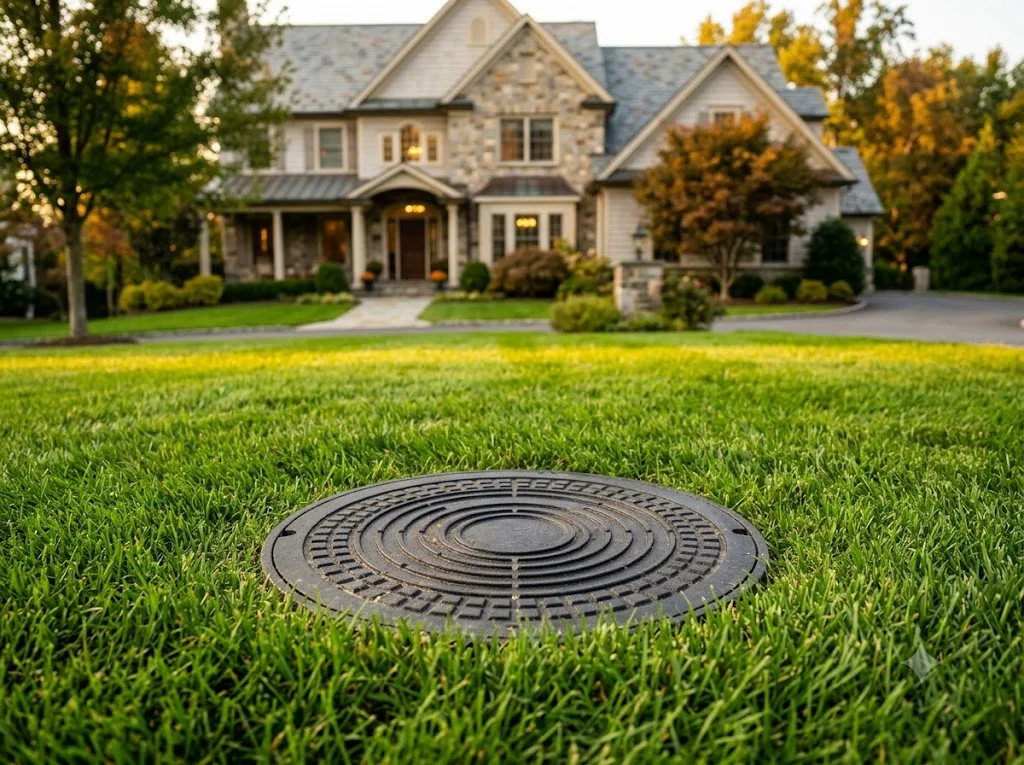
Municipal water is treated before reaching your home, but hardness minerals, disinfectants, service lines and household plumbing can still affect the water at your tap.
Common Westmoreland County city-water concerns include:
Cesare’s identifies your water supplier, reviews its current water-quality report and tests your tap water. Based on the results, the right solution may be a water softener, Cesare’s whole-house carbon filter or reverse osmosis drinking-water system.
Nobody monitors a private well for you. Pennsylvania DEP recommends testing every year for total coliform bacteria, nitrates, total dissolved solids and pH — and more often when something changes or a specific contaminant is suspected.
Smell, taste and appearance cannot identify every contaminant. Bacteria, nitrate and other health-related testing should run through an accredited Pennsylvania laboratory. Start with the well water testing guide to see what to test for and what your results mean. Cesare’s publishes the same tested county data for neighboring Allegheny, Fayette and Indiana counties.

Equipment picked before testing is a guess. Every Cesare’s recommendation starts with real numbers from your tap — chemistry, flow and pressure — because those numbers decide what the system has to do and how big it has to be.
We test hardness, iron, manganese, pH, total dissolved solids, chlorine and sulfur indicators at your tap. We also measure water pressure and flow rate so the treatment system can be properly sized for your home.
Testing for total coliform, E. coli, lead, copper, PFAS, nitrate, arsenic and other health-related contaminants is completed through a Pennsylvania-accredited drinking-water laboratory.
We inspect existing treatment equipment, well and pressure-system conditions, plumbing size, household water demand, drainage and available installation space before finalizing the system design.
Penn State’s Agricultural Analytical Services Laboratory has summarized 808 drinking-water samples from Westmoreland County collected between July 2007 and June 2025. The results show recurring concerns involving iron, manganese, hardness and bacteria in submitted samples. These results are countywide laboratory data — not a prediction of what is in any individual home or private well.
Common Water Quality Conditions
Health-Related Indicators
About the data: Different water-quality parameters were tested in different numbers of samples. These results describe water submitted to Penn State and do not represent every home, private well or public water supply in Westmoreland County. Water should be tested at the property before treatment equipment is selected.
Source: Penn State Agricultural Analytical Services Laboratory — Drinking Water Test Summaries by County: Westmoreland County.
Sources: Penn State Agricultural Analytical Services Laboratory, Westmoreland County drinking water test summary and MAWC disinfectant notice.
Match what you’re seeing or smelling to the likely cause. Then confirm it with a test — appearance and odor alone can’t diagnose water.
Orange stains in sinks, toilets or laundry usually point to iron in well water. Test before treating.
Black stains, dark sediment or toilet-tank buildup may indicate manganese in well water.
A rotten-egg smell in well water often comes from hydrogen sulfide. Testing determines the right treatment.
White scale on faucets, shower glass and appliances is a common sign of hard water.
Blue-green stains and pinhole leaks can signal acidic water corroding copper plumbing.
A bleach or pool smell in tap water may come from chlorine or chloramine.
Repeated coliform or E. coli results require certified well-water testing and the right disinfection barrier.
Concerned about PFAS, lead or other contaminants? Laboratory testing identifies what is in your drinking water.
Lead and copper can enter drinking water through service lines, solder, fixtures or household plumbing.
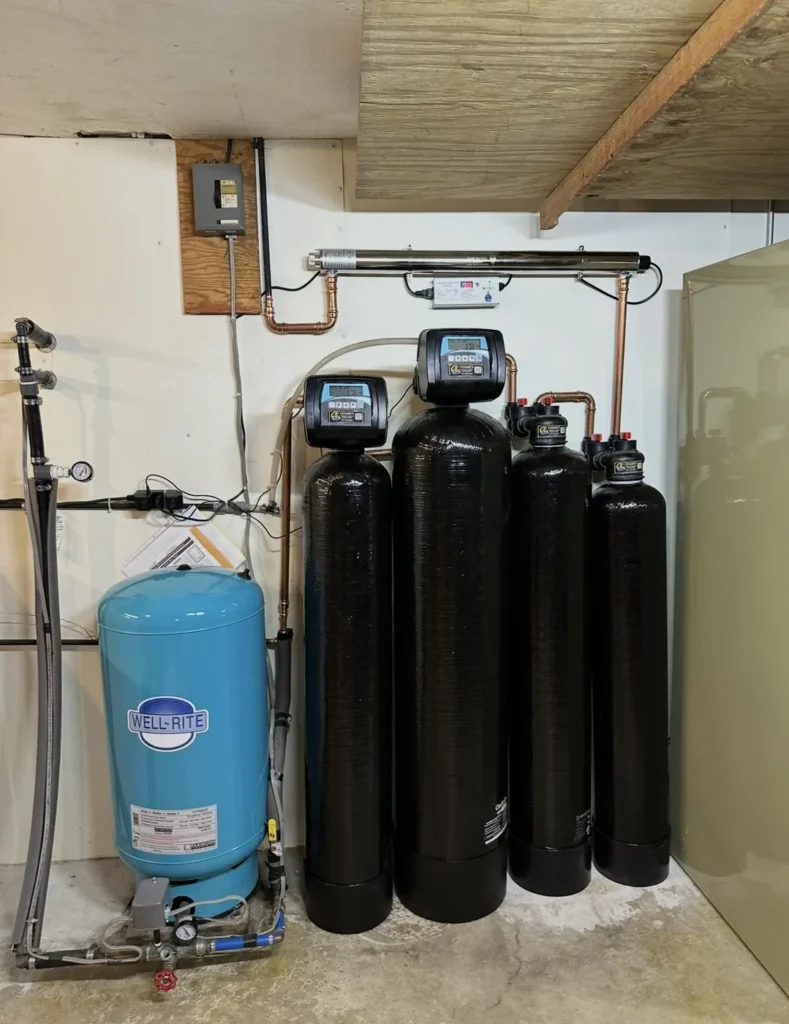
LATROBE, PA • PRIVATE WELL CASE STUDY
RESOLVED
Problem
Strong rotten-egg odor, orange iron stains, metallic taste, and buildup on plumbing fixtures
Treatment
On-site water testing, oxidation, dedicated iron-and-sulfur filtration, water softening and final polishing
Result
Sulfur odor eliminated, iron staining greatly reduced, and softened water throughout the home
Measured before and after treatment
A homeowner near Latrobe in Westmoreland County, Pennsylvania was dealing with strong sulfur odor and orange iron staining from a private well. Testing identified elevated iron, hydrogen sulfide and hardness. After treatment, iron measured below 0.1 mg/L, hydrogen sulfide was no longer detected, and hardness was reduced to below 1 grain per gallon.
CHLORINE + HARDNESS • MUNICIPAL WATER
RESOLVED
Problem
Chlorine taste and odor, hard-water scale, spotting, and mineral buildup
Treatment
On-site water testing, then a two-stage whole-house system combining chlorine filtration with ion-exchange softening
Result
Chlorine taste and odor eliminated at the tested taps, noticeably less scale and spotting, and softened water throughout the home
Measured before and after treatment
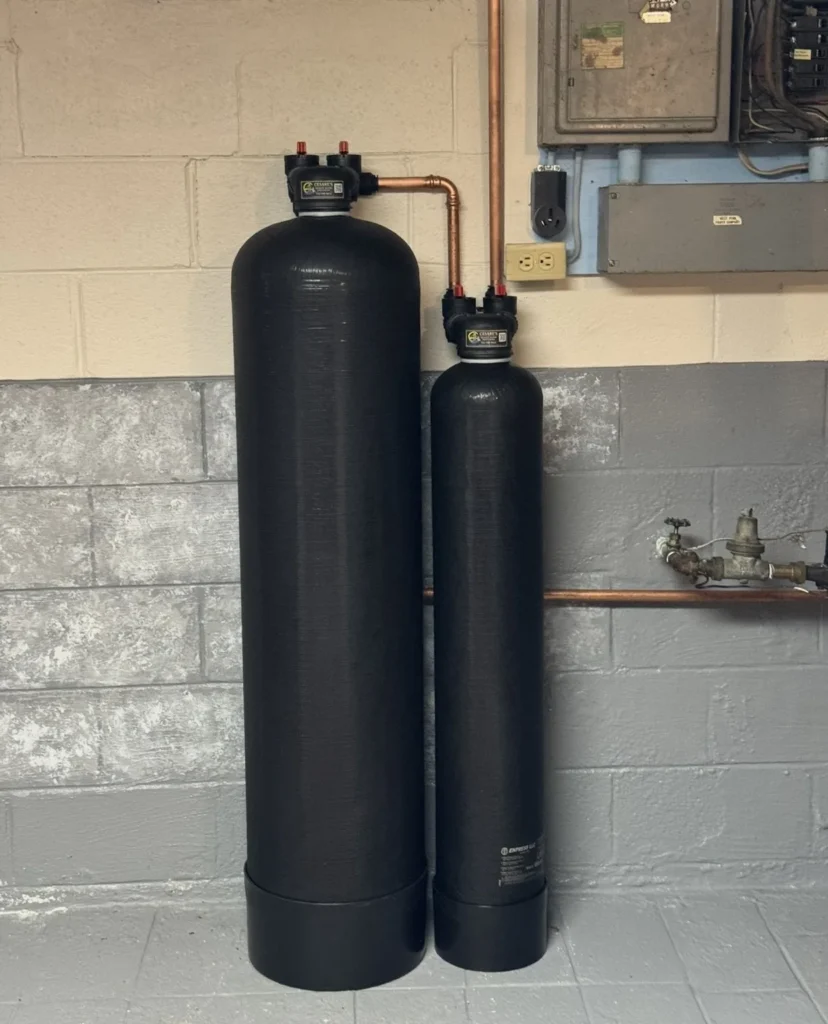
This Westmoreland County, Pennsylvania homeowner wanted one whole-house solution for chlorine and hard water. Initial testing measured 2.4 mg/L free chlorine and 10 grains per gallon of hardness. After installation, free chlorine measured below 0.1 mg/L and hardness measured below 1 grain per gallon at the tested location.
Every service starts with a professional water analysis. We identify the problem, then design a custom solution fit for your water — not a preset package off a shelf.
Systems designed around your water analysis, household flow and the contaminants actually present.
Learn more →
Orange and black staining have different causes. Testing tells us which, and the system follows.
Learn more →
A softener removes hardness; a conditioner treats scale without softening. We tell you which fits.
Learn more →
Rotten-egg odor traced to its source, then treated by cause and concentration rather than guesswork.
Learn more →
Correct acidic water and help protect copper plumbing, fixtures and downstream equipment.
Learn more →
A final disinfection stage that helps inactivate microorganisms, designed around clarity and flow.
Learn more →
Chlorine and chloramine are not the same problem. We match the treatment to what your utility uses.
Learn more →
Point-of-use treatment for drinking and cooking, with optional remineralization for taste and pH.
Learn more →
Media changes, salt and cartridge service, and system checks that keep equipment performing.
Learn more →
Murrysville, Export and the Route 22 corridor run on Municipal Authority of Westmoreland County water, while homes just off the main lines are still on private wells. Chlorine taste and hardness on one side of the road, iron and sulfur on the other.

Murrysville Export Delmont Penn Township
Irwin North Huntingdon Jeannette
From the county seat east into the Ligonier Valley the water changes fast. Municipal supply runs through the boroughs, and private wells outside them carry iron, manganese and sulfur as you get out toward Chestnut Ridge.

Greensburg Hempfield Township Unity Township Youngwood South Greensburg
Latrobe Ligonier Derry New Alexandria
Cesare’s Quality Water Solutions, based in Murrysville, provides water testing, whole-house filtration, softening, private-well treatment and drinking-water systems throughout Westmoreland County. Every system is designed around the water source, the test results, the household flow and the plumbing — not a preset equipment package. Call 724-708-8816.
All of it, from the home base in Murrysville: Greensburg, Irwin, North Huntingdon, Jeannette, Latrobe, Ligonier, Export, Delmont, New Stanton, Penn Township, Hempfield Township, Unity Township, Derry and the townships around them. Westmoreland is Cesare’s home county.
Penn State has summarized 808 drinking-water samples submitted from Westmoreland County between July 2007 and June 2025. Manganese was above 0.05 mg/L in 106 of the 405 samples tested, iron above 0.3 mg/L in 65 of 402, total coliform was detected in 419 of 783, and E. coli in 121 of 783. Submitted samples are not a survey of every home, which is why testing your own water is still the first step.
It varies more than people expect. Penn State reports a median hardness of 100.8 mg/L — about 5.9 grains per gallon — among the 400 samples tested, with results running from 0.8 all the way to 1,327.8 mg/L. A county median cannot tell you whether one house needs a softener; the number at your tap can.
It depends on the address. Within the Municipal Authority of Westmoreland County system, the George R. Sweeney plant treats Beaver Run Reservoir water, the Indian Creek plant draws from the upper Youghiogheny River, some communities receive a blend of the two, the McKeesport plant draws from the lower Youghiogheny, and the Ligonier system is fed by North Fork Reservoir. Other utilities serve smaller portions of the county.
Both, on a schedule. MAWC’s own report states that the Indian Creek and George R. Sweeney plants change the disinfection residual from chloramine to free chlorine annually from mid-October to mid-April. Chlorine and chloramine behave differently in carbon filtration, so the current disinfectant should be confirmed before a whole-house system is designed.
It is worth doing when the service line, solder or fixture materials are old or unknown. In Penn State’s Westmoreland submissions, 13 of the 179 first-draw samples tested were above the 0.015 mg/L reference. Lead usually enters at the household plumbing rather than the source, so only a tap test can answer it for a specific home.
They start from different questions. A Westmoreland well usually needs evaluation for iron, manganese, sulfur odor, hardness, pH and bacteria. A municipal home is more often about hardness, chlorine or chloramine, and drinking-water concerns such as lead or PFAS. The right system follows the source and the test, not the label on the water bill.
Pennsylvania DEP recommends testing every year for total coliform bacteria, nitrate, total dissolved solids and pH, through a state-certified drinking-water laboratory. Add iron, manganese and hardness when there is staining or scale, and retest any time the water changes in taste, odor or appearance. A positive bacteria result has its own follow-up path.
A rotten-egg odor usually points to hydrogen sulfide or another sulfur condition, and the source matters. Odor in both hot and cold water tends to come from the well or supply; odor only in hot water often involves the water heater. Iron, manganese and pH shape the fix, so the odor gets measured before it gets treated.
Orange and rust tones usually mean iron; black or dark deposits usually mean manganese. Appearance alone cannot confirm either, because sediment and oxidized particles look similar. A test tells you what is there and how much treatment capacity it takes to remove it.
Yes. Acidic or otherwise corrosive water contributes to blue-green staining and pinhole leaks in copper. Penn State’s Westmoreland samples ranged from pH 2.7 to 9.7, with 113 of 705 tested outside the recommended 6.5 to 8.5 range. pH is only part of corrosion chemistry, so treatment follows the full analysis, not one number.
Sometimes, and sometimes that is exactly the wrong idea. Those conditions interact — concentrations, oxidation needs and household flow decide the order of treatment. Some homes do well with a combined system; harder water needs separate oxidation, filtration, softening or pH-correction stages, in sequence.
A softener removes hardness minerals by ion exchange and produces genuinely soft water. A salt-free conditioner does not remove hardness — it manages scale behavior. Which one fits depends on the measured hardness, the source, what else is in the water, and whether you want true soft water or mainly less scale.
Properly selected filtration can reduce certain PFAS. EPA identifies activated carbon, ion exchange and reverse osmosis among the technologies capable of it, with performance depending on the specific compounds, the water chemistry and maintenance. PFAS should be measured by laboratory testing first, and the finished water verified after treatment is installed.
It depends on what the water actually requires. Source, test results, household flow, plumbing and the number of treatment stages set the installed price — a straightforward hardness problem is a very different job from a well carrying iron, manganese, sulfur and low pH. Cesare’s prices the system after testing, not before.
Straight answers to the water questions we hear most in Westmoreland County.
See how Westmoreland County compares with 12 other Southwestern Pennsylvania counties for hardness, iron, manganese, bacteria and corrosivity in the 2026 Southwestern PA Water Quality Report.
2026 Southwestern PA Water Quality Report →
Get a professional water analysis and a custom treatment plan—clear answers, no pressure.