- Pittsburgh & Southwestern PA • Custom-Engineered Water Treatment
- Fully Licensed & Insured
- 24/7 Emergency Water Service
- 3rd Generation Water Treatment Experts

Washington County is not one water supply. Public water treated from the Monongahela River reaches Washington, Canonsburg and the Mon Valley, thousands of rural homes run on private wells, and in 2025 some well neighborhoods were connected to public water for the first time. Cesare’s identifies which water you have, tests it at your tap, and engineers treatment around what it finds.

About 209,000 people live in Washington County, and their water arrives more than one way. Pennsylvania American Water treats Monongahela River water at its Aldrich plant in Elrama and carries chloramine to Washington, Canonsburg and much of the Mon Valley, while smaller borough authorities and thousands of private wells serve the rest. Penn State’s water lab has summarized 443 Washington County drinking-water submissions since 2007, where hard water stands out along with iron, manganese and coliform bacteria. Which problems matter at your house depends on which water you have, and that is a measurement, not a guess.
Treatment starts with the water source. A home in Canonsburg on public water receives different water than a home on a private well outside the borough — and every well is a separate supply entirely.
Pennsylvania American Water’s E.H. Aldrich plant in Elrama draws from the Monongahela River and serves about 527,000 customers across Washington and Allegheny counties — including Washington, Canonsburg, Peters Township, North Strabane and Monongahela.
In 2025, new waterlines reached Cross Creek, Independence, Mount Pleasant, Robinson and Smith townships — connecting homes that had relied on private wells, backed by more than $15 million in PENNVEST funding.
Across rural and western Washington County, thousands of homes still draw from private wells that no agency tests or treats for the owner. Testing and treatment are entirely the homeowner’s call.
Penn State’s Agricultural Analytical Services Laboratory has summarized 443 Washington County drinking-water submissions collected between October 2007 and June 2025. These laboratory results describe the samples submitted to Penn State and are not a representative survey of all homes, wells or public water supplies in the county.
Aesthetic water conditions
Health-related indicators
About the data: Individual parameters were tested on different numbers of samples. These results describe the samples submitted — they cannot determine what is present at an individual property. Test the water at the property before treatment is selected.
Source: Penn State Agricultural Analytical Services Laboratory — Drinking Water Test Summaries by County.
Washington County’s water problems run from hard-water scale to metals and well-water odors. The symptom usually points at the cause — and testing confirms it before treatment is chosen.
Iron was above the staining standard in 13.6% of tested Penn State samples and manganese in 15.3% — the county’s signature well-water finding.
The disinfectant depends on your provider — the Pennsylvania American system fed by the Aldrich plant carries chloramine — and city-water filtration is matched to what your tap actually has.
Median hardness in tested samples is 235.4 mg/L — about 13.8 gpg. Scale on faucets, shower glass and water heaters is the county’s most visible water problem.
Concerned about lead or PFAS? These cannot be identified by taste, smell or appearance and require proper testing.
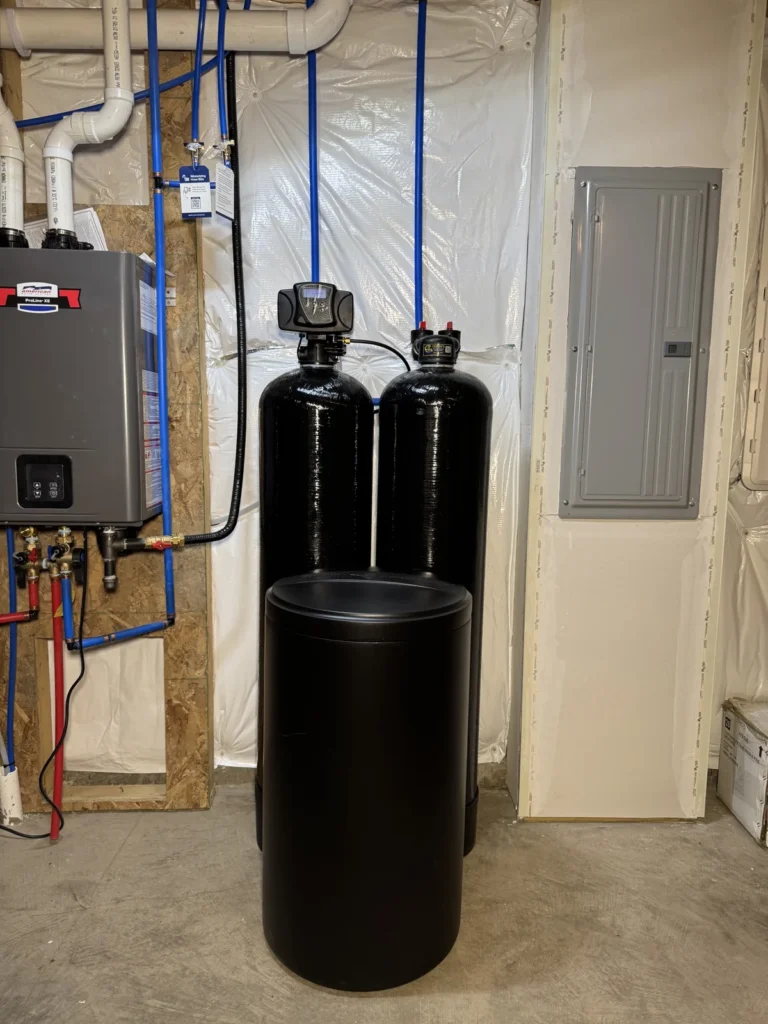
CANONSBURG, PA • PENNSYLVANIA AMERICAN WATER
WASHINGTON COUNTY MUNICIPAL WATER CASE STUDY
On Site Water Conditions
9.0 gpg hardness
2.4 ppm chloramine
pH 7.5
Cesare’s Treatment Design
Whole-home treatment built around the home’s measured water chemistry and flow
Follow-Up Results
Below 1 gpg hardness
Chloramine below 0.10 ppm
pH 7.4
Hard Water & Chloramine in a Canonsburg Home
A Canonsburg homeowner served by Pennsylvania American Water wanted better-tasting water and less scale on fixtures and glass. Testing showed 2.4 ppm chloramine and 9.0 grains per gallon of hardness from the Monongahela River supply. Cesare’s designed whole-home treatment around the water measured at that home—not a generic Washington County package.
Follow-up testing measured chloramine below 0.10 ppm and hardness below 1 gpg, with the taste and scale complaints resolved.
CLAYSVILLE, PA • PRIVATE WELL
WASHINGTON COUNTY WELL WATER CASE STUDY
On Site Water Conditions
4.8 ppm iron
0.21 ppm manganese
2.3 ppm hydrogen sulfide
17 gpg hardness
Cesare’s Treatment Design
Whole-home treatment built around the home’s measured water chemistry and flow
Follow-Up Results
Iron below 0.05 ppm
Manganese below 0.01 ppm
Sulfur below field detection
Below 1 gpg hardness
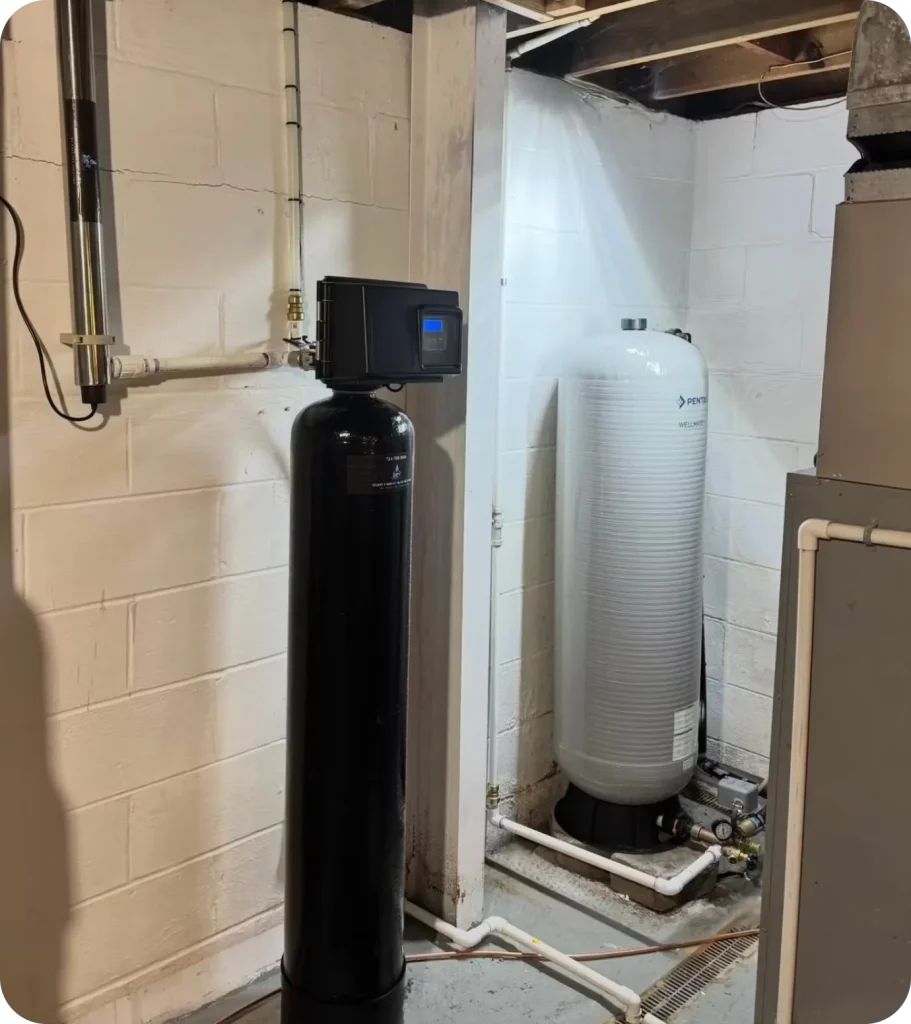
Iron, Manganese & Sulfur in a Claysville Well
A Claysville homeowner was dealing with orange rust staining, a rotten-egg odor, dark manganese staining and hard-water buildup from a private well. Testing found 4.8 ppm iron, 0.21 ppm manganese, 2.3 ppm hydrogen sulfide and 17 gpg hardness. Cesare’s built the treatment around that well’s measured chemistry—not a generic well package.
Follow-up testing brought iron, manganese and sulfur to near-undetectable levels and hardness below 1 gpg, clearing the staining and the odor.
Pennsylvania does not regulate privately owned household wells — testing and treatment are the owner’s responsibility. PA DEP recommends testing every year for total coliform bacteria, nitrate, total dissolved solids and pH, with additional testing when a specific contaminant is suspected, performed by a state-certified laboratory. Washington County’s groundwater moves through different bedrock and, in places, old mining ground, so neighboring wells should never be assumed to match — the well next door is not your well. Cesare’s publishes the same tested county data for neighboring Greene, Fayette and Beaver counties.
Whole-home city-water filtration matched to the disinfectant your provider actually uses — chloramine on the Pennsylvania American system across most of the county.
Sized to measured hardness — which across Washington County runs high, among the hardest in the region.
Point-of-use treatment for taste, dissolved minerals and laboratory-confirmed drinking-water concerns.
A common tested finding in Washington County wells — orange and black staining treated after the metal is measured, not guessed.
Rotten-egg odor traced to its source — water supply, plumbing or water heater — before treatment is chosen.
Inspection, repair and service for existing equipment — including systems Cesare’s didn’t install.
Cesare’s works the Route 19 and I-79 corridors weekly — softening, city-water filtration and reverse osmosis for Pennsylvania American municipal homes, and full well treatment just outside the boroughs.
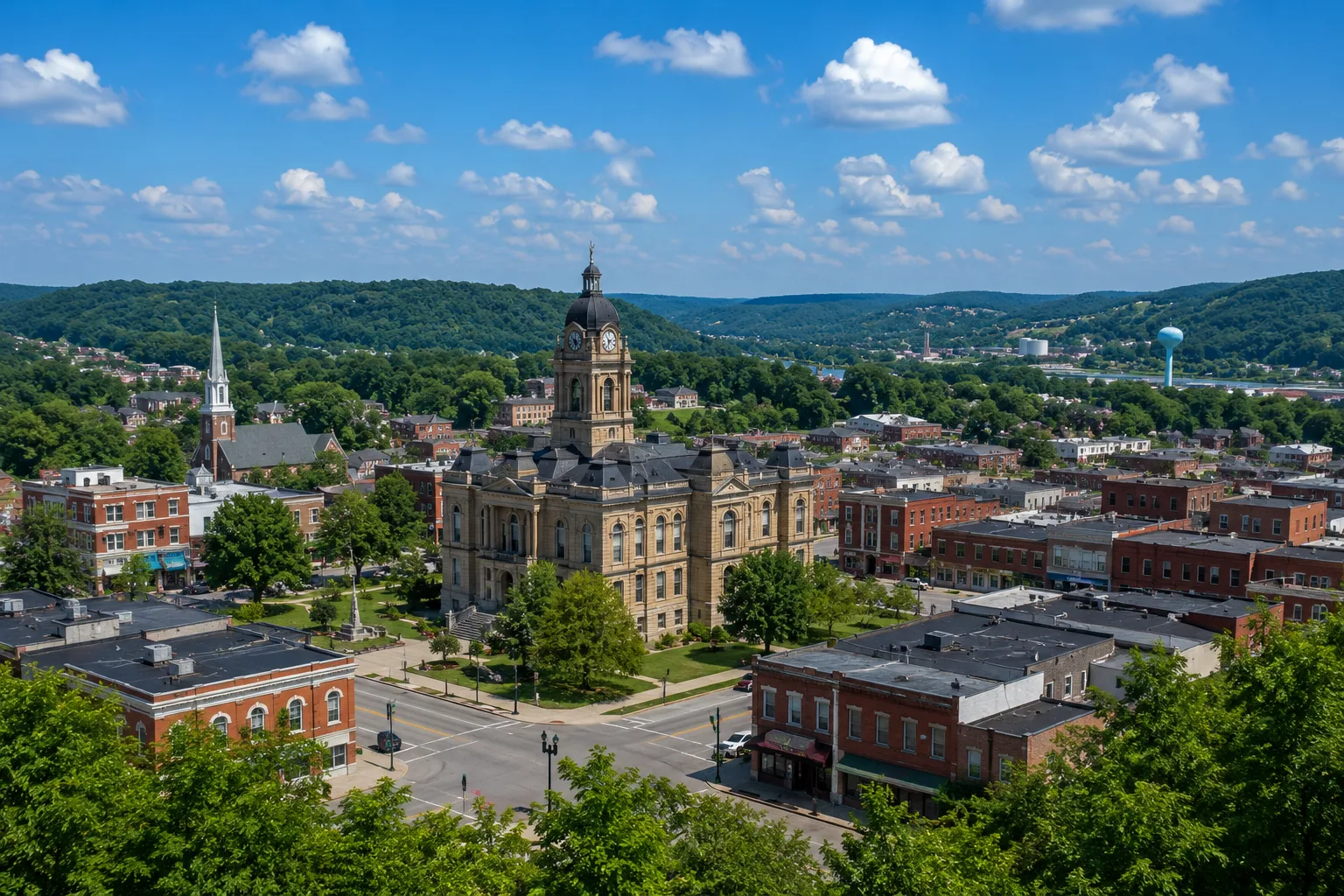
Washington East Washington South Strabane North Strabane North Franklin Chartiers Houston
Canonsburg Peters Township Cecil Township Nottingham Township Finleyville McMurray Muse
From Claysville and the rural west through the Mon Valley boroughs, many homes run on wells — iron, manganese, sulfur and bacteria treatment designed from a test at the tap.

Monongahela New Eagle Carroll Township Donora Charleroi Fallowfield California
Burgettstown Cross Creek Independence Jefferson Robinson Township Smith Township Mount Pleasant Midway McDonald West Middletown Claysville
Cesare’s Quality Water Solutions designs, installs and services water treatment across Washington County, for homes on municipal water and homes on private wells. That includes water testing, whole-house filtration, water softening, iron and manganese removal, sulfur treatment, UV disinfection and reverse osmosis. We identify the water source and test at the tap first, because a Canonsburg city home and a Claysville well rarely need the same equipment.
All of it. Washington, Canonsburg, Peters Township, McMurray, North Strabane, South Strabane, Cecil Township, Houston, Monongahela, Charleroi, McDonald, Finleyville, Burgettstown, Claysville, Avella and the rural communities between them. The county mixes municipal-water neighborhoods with large areas where private wells still do the work, so treatment differs by address.
Penn State’s water lab summarizes 443 drinking-water samples submitted from Washington County between October 2007 and June 2025. Among the samples tested, total coliform bacteria turned up in 284 of 418 and E. coli in 120 of 418 — some of the highest rates in the region. Iron was over the 0.3 mg/L limit in 16 of 118, manganese was over 0.05 mg/L in 21 of 137, and median hardness ran 235.4 mg/L, about 13.8 grains per gallon. These are homeowner-submitted samples, not a survey of every property, which is why we start with water testing at your tap.
Pennsylvania American Water is the major public supplier in the Washington and Canonsburg area, and much of that water arrives through its Pittsburgh regional system. The E.H. Aldrich treatment plant sits in Elrama, right in Washington County, and serves roughly 527,000 customers across Allegheny and Washington counties. Smaller systems and private wells cover other parts of the county, so the first step is always confirming what serves your address.
The raw water is the Monongahela River. Pennsylvania American Water treats it at the E.H. Aldrich plant in Elrama and at its Hays Mine plant, and the finished water is distributed across the region, including the Washington and Canonsburg area. River-sourced water is fully treated before it reaches you, but hardness, disinfectant taste and aging plumbing between the plant and your tap are still real, fixable complaints.
Chloramines. Pennsylvania American Water’s Pittsburgh system report shows chloramine in the distribution system at 1.17 to 2.39 parts per million. Chloramine is more persistent than plain chlorine and takes different Cesare’s carbon filtration to remove well, so we confirm the disinfectant at your address before recommending a whole-house filter.
The county data says yes, emphatically — but it depends on your source. The median across Penn State’s Washington County samples is 235.4 mg/L, about 13.8 grains per gallon, firmly in the very hard range, with wells testing as high as 785 mg/L. Pennsylvania American’s treated water is much milder: 5.3 grains at the Aldrich plant and 6.5 at Hays Mine. That gap is exactly why hardness gets measured at your tap before anyone talks softeners.
Only when the numbers say so. A softener makes sense when testing shows enough calcium and magnesium to cause scale, spotting, dry skin or poor soap performance — and with a county well median near 14 grains, plenty of Washington County wells qualify. Municipal homes often sit closer to 5 or 6 grains, where softening becomes a comfort choice rather than a necessity. We size from the hardness measured at your tap, not the county number.
Orange or rust-colored staining is iron. Black or dark brown staining is usually manganese. Penn State found iron over the limit in 16 of 118 Washington County samples tested and manganese over the limit in 21 of 137 — less common here than in some neighboring counties, but no less stubborn when it is your fixtures. The fix is iron and manganese filtration matched to the form and concentration in your water, which testing tells us.
That smell is hydrogen sulfide or another sulfur condition, and the source matters. If the odor is in both hot and cold water, it is likely coming from the well or supply; if it only shows up on the hot side, the water heater may be involved. Sulfur also tends to travel with iron and manganese around here, so we test for all of it before picking a treatment approach.
Pennsylvania DEP recommends testing private well water every year for total coliform bacteria, nitrates, total dissolved solids and pH, through a state-certified lab, plus anything else you have reason to suspect. Around Washington County it is worth adding iron, manganese, hardness and sulfur whenever there is staining, scale or odor. With coliform showing up in more than two-thirds of the county’s Penn State samples, the annual bacteria test is the one not to skip.
Treat it as a safety issue. DEP’s guidance is not to consume the water without boiling it for one minute at a rolling boil, or to use bottled water for drinking and food preparation until it is resolved. Then the well gets evaluated for how contamination is entering, corrected or disinfected, and retested. Properly sized UV disinfection gives an ongoing barrier when bacteria keeps returning — but it does not repair the entry point, so the evaluation matters.
Yes, if you want the well’s condition on record before the activity starts. Penn State offers a drilling-related package that covers total coliform, E. coli, pH, total dissolved solids, barium and chloride, and for results meant to stand as before-and-after documentation it recommends an accredited lab that collects the sample itself and provides full chain of custody. We can also test the working side of the water — hardness, iron, manganese, sulfur — so you know the whole baseline.
Yes, and the local numbers are striking. In Penn State’s Washington County submissions, 80 of 114 corrosivity-index samples — just over 70% — fell outside the acceptable range in one direction or the other — with a median of +0.5, many lean scale-forming rather than corrosive — even though only 19 of 361 pH readings were out of band. That distinction matters, because corrosion potential depends on more than pH alone. Corrosive water shows up as metallic taste, blue-green staining and eventually pinhole leaks in copper. Neutralizing it ahead of the plumbing stops the damage.
It is worth considering when the home has an older or unknown service line, older fixtures or lead-soldered plumbing. Pennsylvania American Water’s Pittsburgh system reported a 4 ppb 90th-percentile lead result, with 1 of 50 sampled sites over the 15 ppb action level, and in Penn State’s countywide submissions 5 of 103 first-draw samples were over. Systemwide numbers do not settle what is at your faucet, because lead usually comes from the home’s own line and plumbing. A first-draw test answers it.
Yes, when treatment is chosen for a confirmed concern. The EPA identifies granular activated carbon, ion exchange and reverse osmosis as technologies capable of reducing PFAS, and recommends equipment carrying an appropriate third-party PFAS-reduction certification. Performance depends on the specific compounds, the concentrations and how the system is maintained, so testing establishes the problem first and the equipment follows.
There is no single best system in a county with this much variety. A Canonsburg municipal home dealing with chloramine and moderate hardness needs a different design than a well outside Claysville carrying very high hardness, bacteria and corrosive water. Cesare’s carbon handles disinfectant taste, softening handles hardness, oxidizing filtration handles iron and manganese, UV handles bacteria, and reverse osmosis polishes drinking water at the sink. Your test results pick the pieces.
It depends on the source and what the tests find. A municipal home that wants chloramine filtration and softening is a different project from a rural well that needs iron, sulfur, bacteria and corrosive water handled at the same time. Flow rate, plumbing and the number of stages all factor in. Cesare’s prices a system after testing the water and identifying what the property actually requires — not before.
Straight answers to the water questions we hear most in Washington County.
See how Washington County compares with 12 other Southwestern Pennsylvania counties for hardness, iron, manganese, bacteria and corrosivity in the 2026 Southwestern PA Water Quality Report.
2026 Southwestern PA Water Quality Report →
Get a professional water analysis and a custom treatment plan—clear answers, no pressure.