
Whole-House Water Filtration in Southwestern PA: What System Does Your Home Actually Need?
A whole-house system is only as good as the water test behind it. Here is how filtration, softening, iron and sulfur treatment, pH correction, UV and drinking-water RO fit together, and how Cesare’s decides which of them a Southwestern Pennsylvania home actually needs.
Most companies install equipment. Cesare’s engineers water.

What Does a Whole-House Water Filtration System Actually Do?
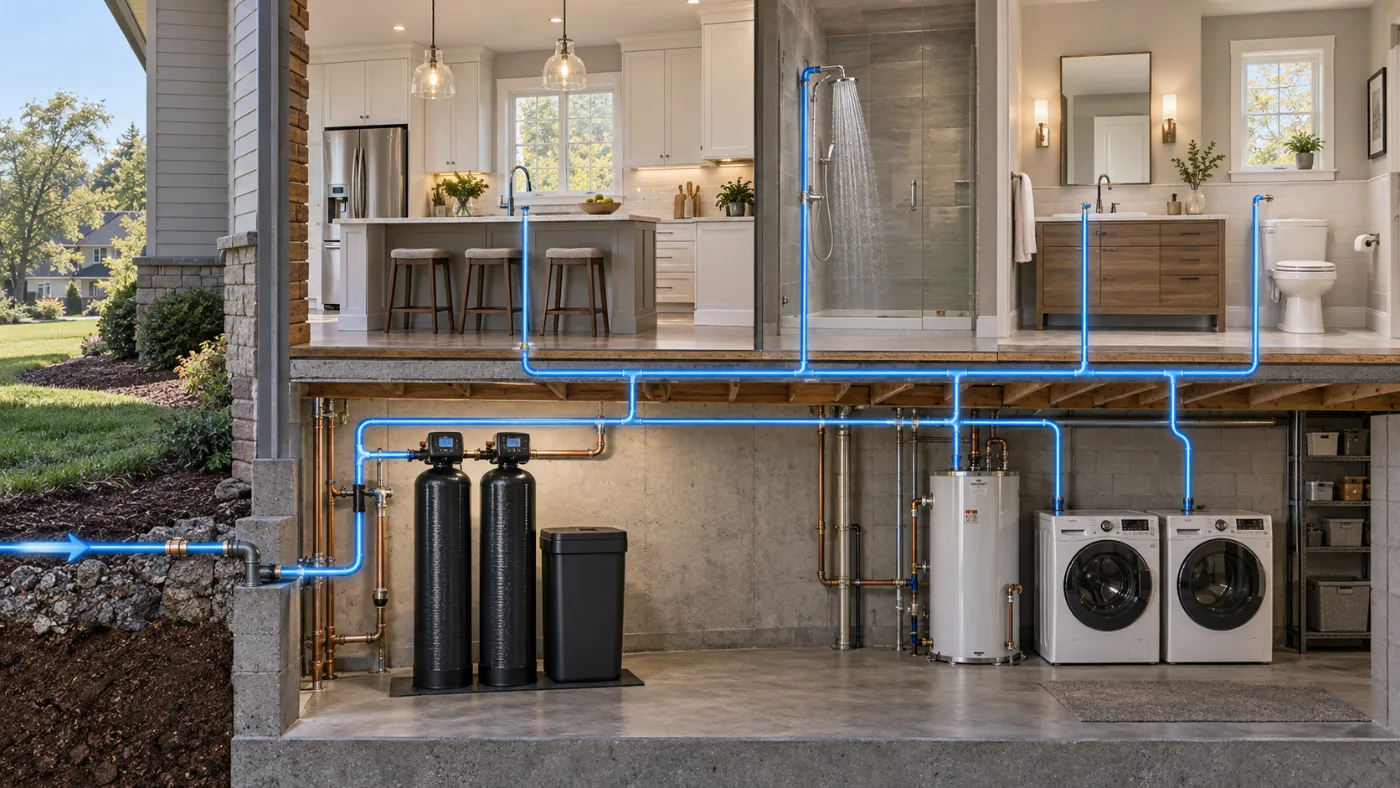
It treats the water where it enters the house, so every faucet, shower, appliance and water heater gets the same corrected water.
A pitcher or a fridge filter only touches the water you drink. A point-of-entry system touches all of it.
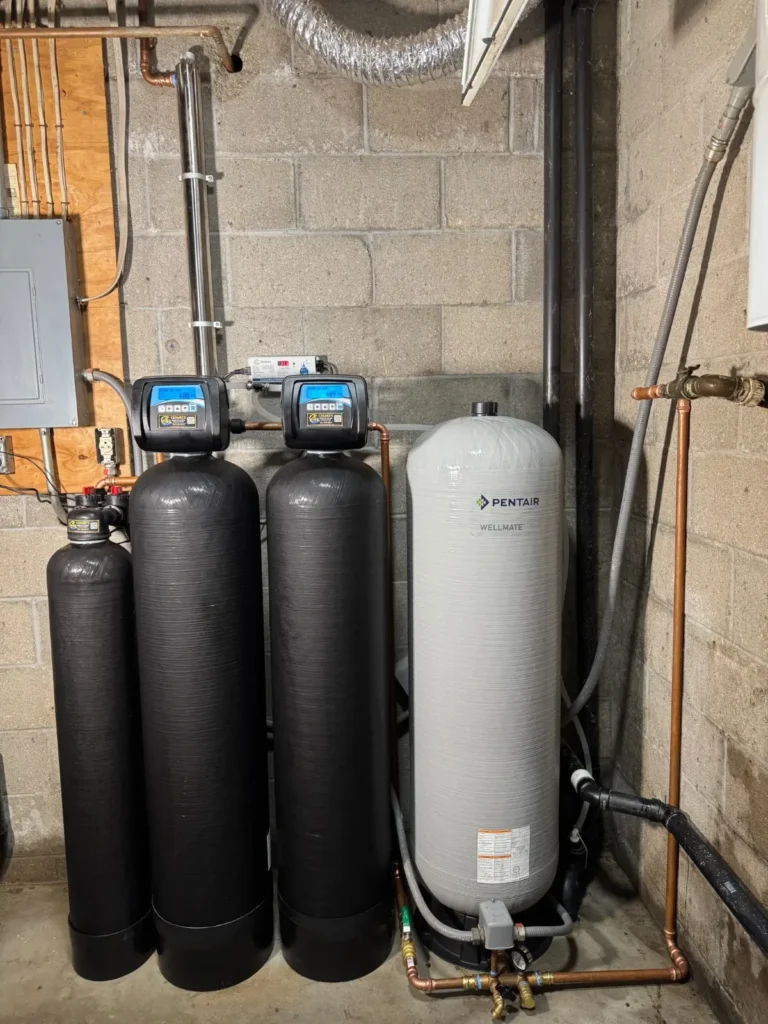
“Whole-house filtration” is a category, not one product. Depending on what the water test shows, the system may be one treatment tank or four, and each stage does one job: reducing chlorine, removing iron, softening hardness, correcting pH, or disinfecting with UV. Cesare’s has built these for three generations out of Murrysville, and the design always starts with what is measured at your tap, never with a package pulled off a shelf.
The whole-house water filtration systems page covers what we install. This guide covers how to figure out which of it your home needs.
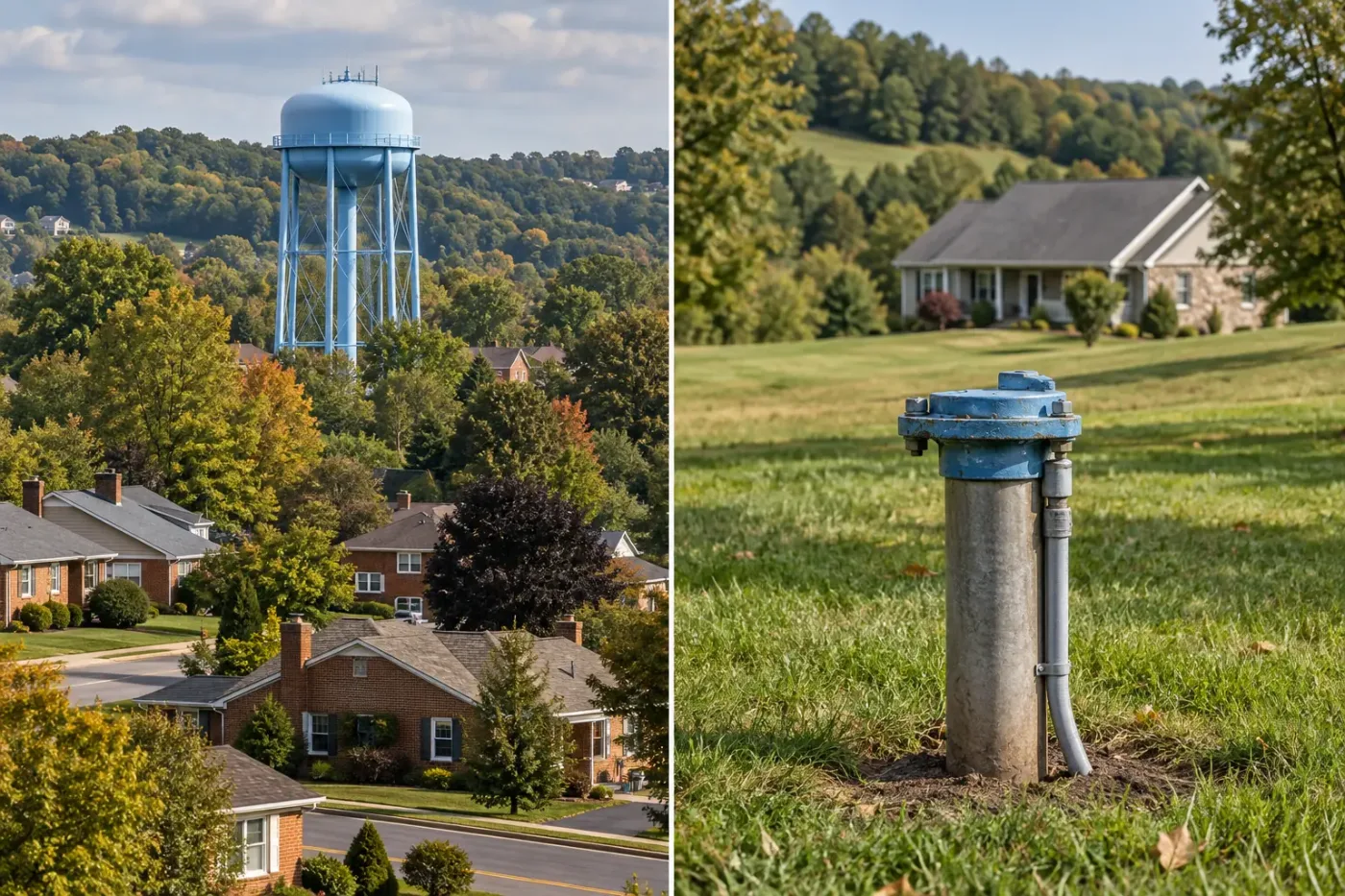
City Water or Private Well? That Decides Half the Design
On a municipal supply the utility has already disinfected the water. On a private well nobody has treated it before you.
Municipal homes usually call about chlorine or chloramine taste, hardness and scale, and sometimes lead or copper from older plumbing. Private wells carry a longer list: iron, manganese, hydrogen sulfide, low pH, bacteria and sediment, often several at once.
Southwestern Pennsylvania runs on both. Pittsburgh and its suburbs are mostly municipal, while large parts of Westmoreland, Washington, Butler, Fayette, Greene, Indiana and Somerset counties rely on wells drilled into shale, sandstone and coal-bearing rock. That geology is why one township’s wells carry heavy iron while wells two miles away run acidic. The first question Cesare’s asks on every call is which supply you are on, because the answer changes the equipment before a single number is measured.
Start with the city water guide or the well water treatment page.
Three Southwestern PA Homes, Three Completely Different Systems
These are three real Cesare’s water tests. Same region, same question from the homeowner, three systems that share almost no parts.
Municipal Home, South Fayette Area
Allegheny County. 2.4 ppm chlorine, 7 gpg hardness. Chlorine taste and odor plus scale and spotting. Design: a filtration stage for the chlorine, a softener for the hardness.
Private Well, Iron and Hardness
4.2 mg/L iron, 13.2 gpg hardness. Design: a dedicated iron stage first, then softening. Re-tested after treatment: iron below 0.05 mg/L, hardness below 1 gpg.
Private Well, 57 gpg and Limited Flow
57 gpg hardness, 1,193 ppm TDS, about 6 GPM from the well. Design: a softener sized to the hardness load and the flow available. A softener does not remove TDS.
None of these homes could have been served by the same box. That is the whole argument for testing before buying, and it is why Cesare’s engineers the treatment train around the measured chemistry instead of starting with a predetermined package.
Filtration and Softening Are Two Different Jobs
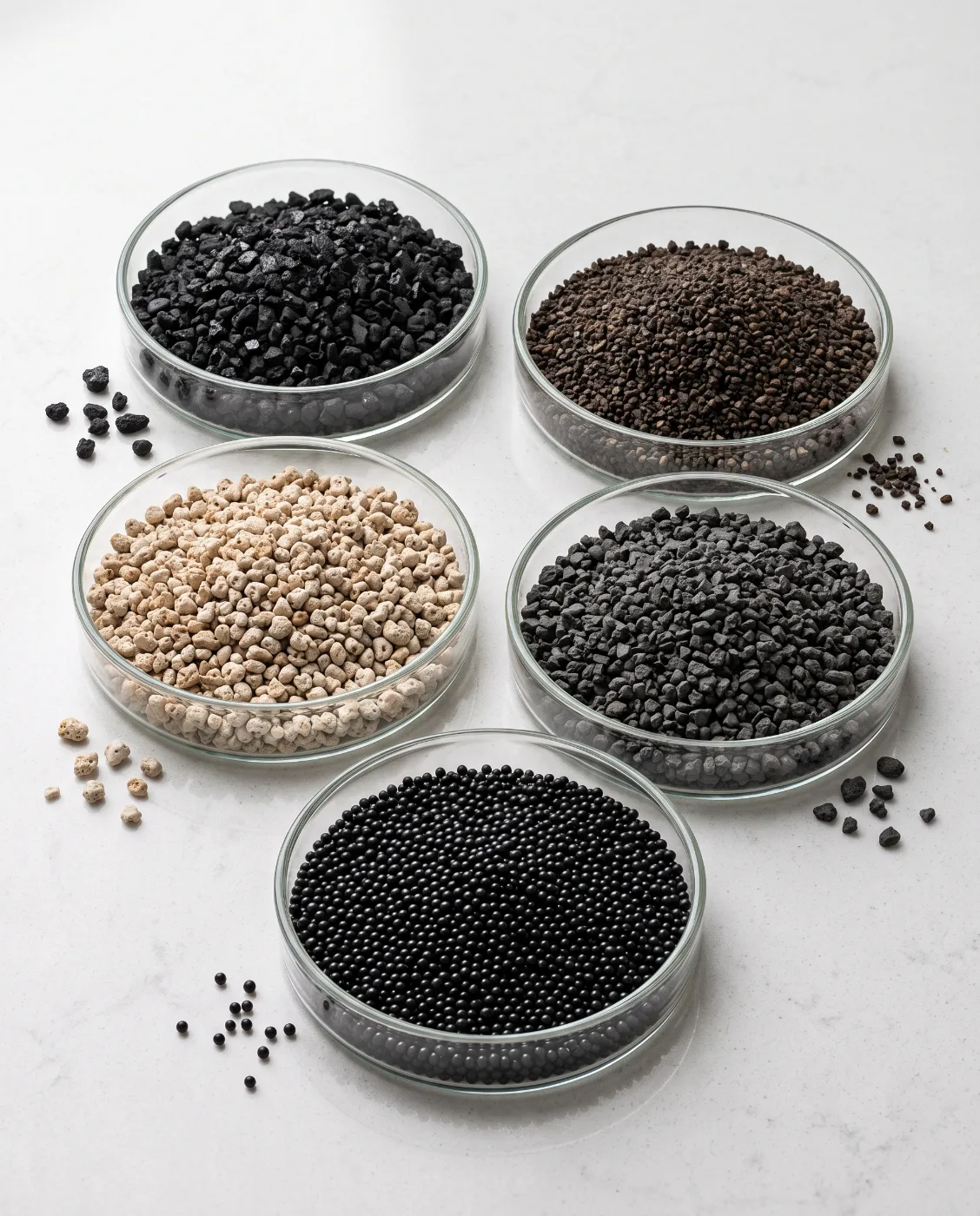
A filter and a softener are not interchangeable, and a lot of disappointing installs come from treating them as if they were.
A filtration stage takes out chlorine, chloramine, sediment and taste-and-odor compounds. A softener uses ion exchange to trade the calcium and magnesium that cause scale for sodium or potassium. A filter will not soften water. A softener will not take the chlorine taste out of it.
That South Fayette home is the clean example. At 2.4 ppm chlorine and 7 gpg hardness, the chlorine needed a filtration stage and the scale needed a softener, so the system got both, in that order.
Whether your home needs one, the other or both depends on the numbers, which is why Cesare’s does not quote a water softener until hardness has been measured at your tap. If price is the question, the water softener cost guide walks through what moves it.
Which Treatment Stage Handles Which Problem?
Every problem on this list has a stage built for it, and most of them cannot be handled by a different stage. This is the chart Cesare’s works from when test results come back. The numbers decide which stages a home gets and in what order. That part is the engineering, and it is done for each home, not read off a chart.
| Problem | What the test shows | Treatment stage | What decides the design |
|---|---|---|---|
| Hard water (scale, spotting) | Hardness in grains per gallon | Softening stage | Your hardness load, household demand and the flow available |
| Chlorine or chloramine taste | Disinfectant residual (municipal) | Whole-house filtration stage | Which disinfectant your utility uses and how much of it reaches your tap |
| Iron (orange staining) | Iron in mg/L | Dedicated iron treatment | The measured level and form of iron; past Cesare’s threshold it gets its own stage |
| Manganese (black staining) | Manganese in mg/L | Dedicated manganese treatment | Even low levels can change the design, so it is measured, never assumed |
| Hydrogen sulfide (rotten-egg odor) | H₂S in mg/L | Dedicated sulfur treatment | The measured concentration and its source, not the smell alone |
| Low pH (blue-green stains) | pH below the 6.5–8.5 range | pH correction | Corrected early so the rest of the system works as designed |
| Bacteria (coliform, E. coli) | Certified lab result: present or absent | UV disinfection | The water quality ahead of the lamp; verified by a follow-up lab test |
| Drinking-water TDS, PFAS, lead | TDS reads on a meter at the tap; PFAS and lead are certified-laboratory results | Point-of-use reverse osmosis matched to the certified reduction claim for that contaminant | Whole-house treatment protects the plumbing; RO polishes the water you drink |
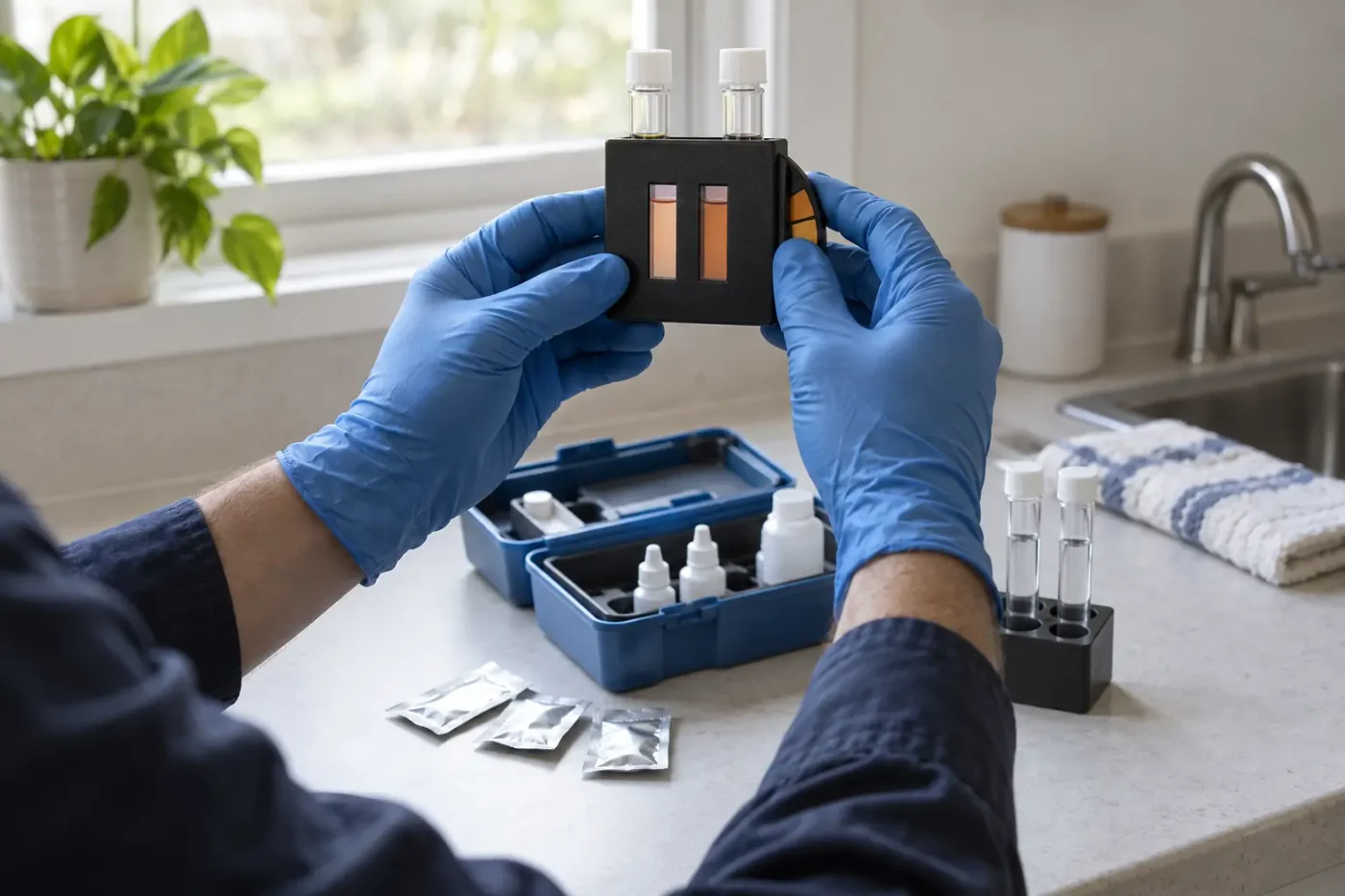
Two things to notice. Several stages only work if the water in front of them has already been corrected, so the order matters as much as the equipment. And bacteria, lead, nitrate and PFAS are laboratory questions: Cesare’s field test reads the treatment-design numbers, and we point you to a certified lab for the rest. A reduction claim also has to be verified for the exact system and the exact contaminant — reverse osmosis as a category is not proof that a given unit reduces a given substance. Details on the water testing page.
Test. Diagnose. Engineer. Verify. Most companies install equipment. Cesare’s engineers water — every stage on this page earns its place with a measured number, or it does not go in.
Iron, Manganese and Sulfur Are Three Different Problems
Orange stains, black stains and a rotten-egg smell are the three most common private-well calls we get, and the three problems homeowners most often try to fix with a softener alone.
Each of those is a different problem with a different fix. Whether they get their own stages or share one depends on the measured water chemistry and on what the equipment in front of them can actually handle — the concentration, not the symptom, decides what goes in ahead of the softener and in what order. Push those loads through a softener instead and the resin fouls, the softening stops and the staining comes right back.
We test iron and manganese separately for exactly this reason: manganese at a level you would barely notice on paper can change the whole treatment sequence. Sulfur is the same story. A smell tells you there is a problem; only the measured concentration tells you what to build.
The iron and manganese removal and sulfur removal pages go deeper on each.
When 57 Grains of Hardness Can’t Be Fixed With a Bigger Softener
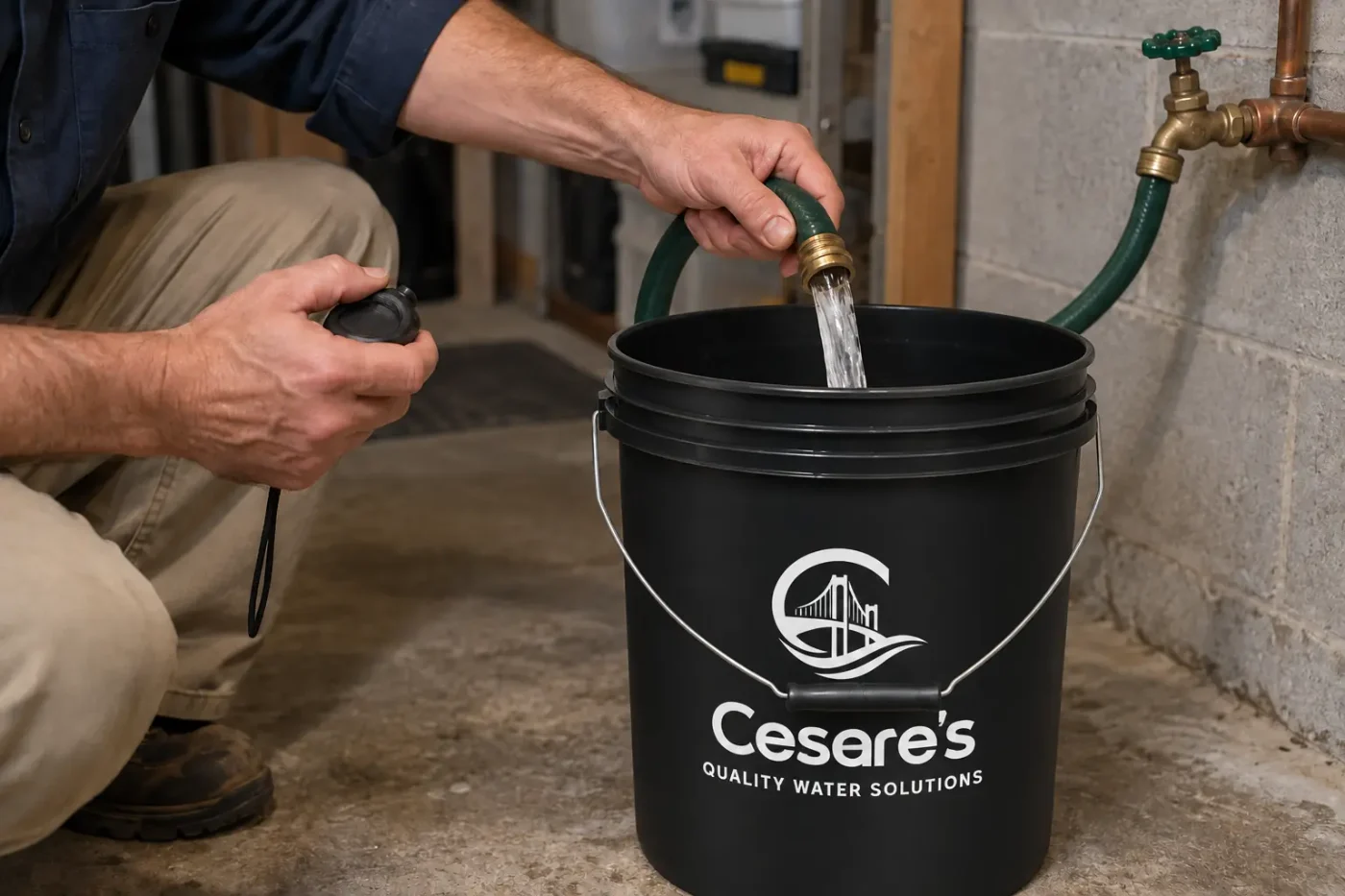
Hardness across Southwestern Pennsylvania varies far more than most people expect.
Penn State Extension’s submitted-sample medians run from slightly hard water in Cambria and Butler counties to very hard water in Washington County, and individual wells land well outside those medians. One private well Cesare’s tested came in at 57 grains per gallon with 1,193 ppm of total dissolved solids and only about 6 gallons per minute available from the well.
That is not a “buy the large model” situation. The softener has to carry a very heavy hardness load, regenerate on a schedule the household can live with, and do it without demanding more flow than the well can deliver. The TDS is a separate issue: a softener exchanges hardness minerals, it does not remove dissolved solids, so 1,193 ppm going in is roughly 1,193 ppm coming out. If lower TDS matters for drinking, that is a reverse osmosis job at the kitchen tap. Sizing from hardness alone would have failed this home twice.
More in the hard water guide. For the full walk-through of how hardness, iron, household use and flow set the size, read how to size a water softener for a Southwestern PA home.
Acidic Well Water Gets Corrected Before Anything Else
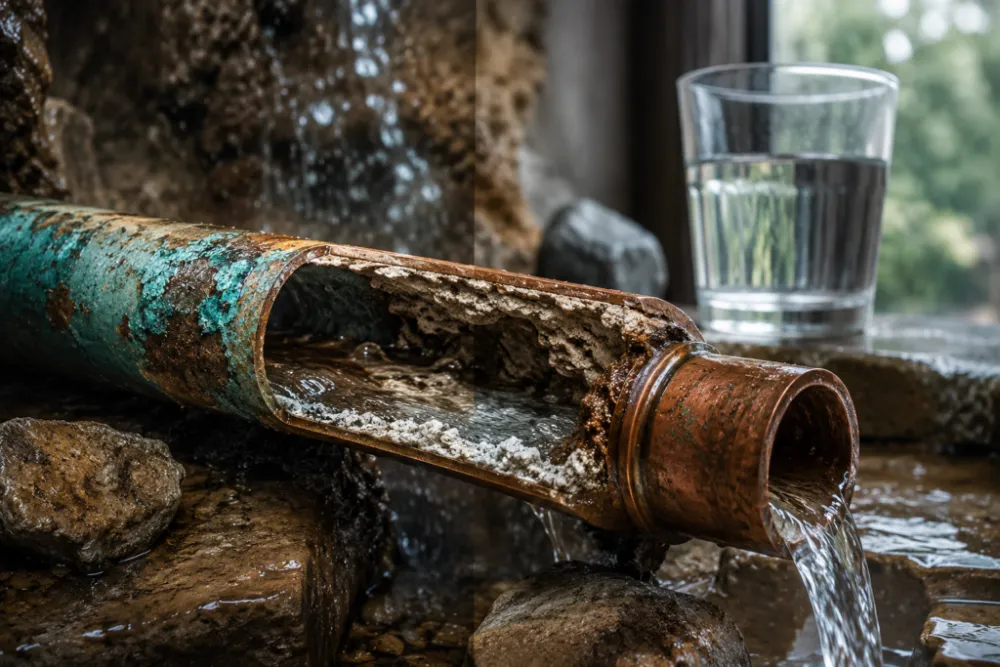
Blue-green stains around drains, pinhole leaks in copper and a metallic taste usually mean low-pH water is eating the plumbing from the inside.
Cesare’s has treated private-well homes across the region where acidic water was doing exactly that, and in every one the objective was the same: bring the pH into range before continued exposure damaged more pipe and fixtures.
pH correction goes first in the sequence for a practical reason. Acidic water keeps iron and manganese dissolved and invisible, so an iron filter placed ahead of pH correction is working against the chemistry. Correct the pH and the downstream stages can do what they were sized to do. Neutralizing also adds a little hardness back, which the softener then has to account for, another reason the whole train is designed together rather than stage by stage.
The acidic water and low pH guide covers testing and treatment in detail.
Bacteria and UV: Disinfection Is Not Filtration
A positive coliform or E. coli result is a certified-laboratory finding, not something a field kit or a filter cartridge tells you.
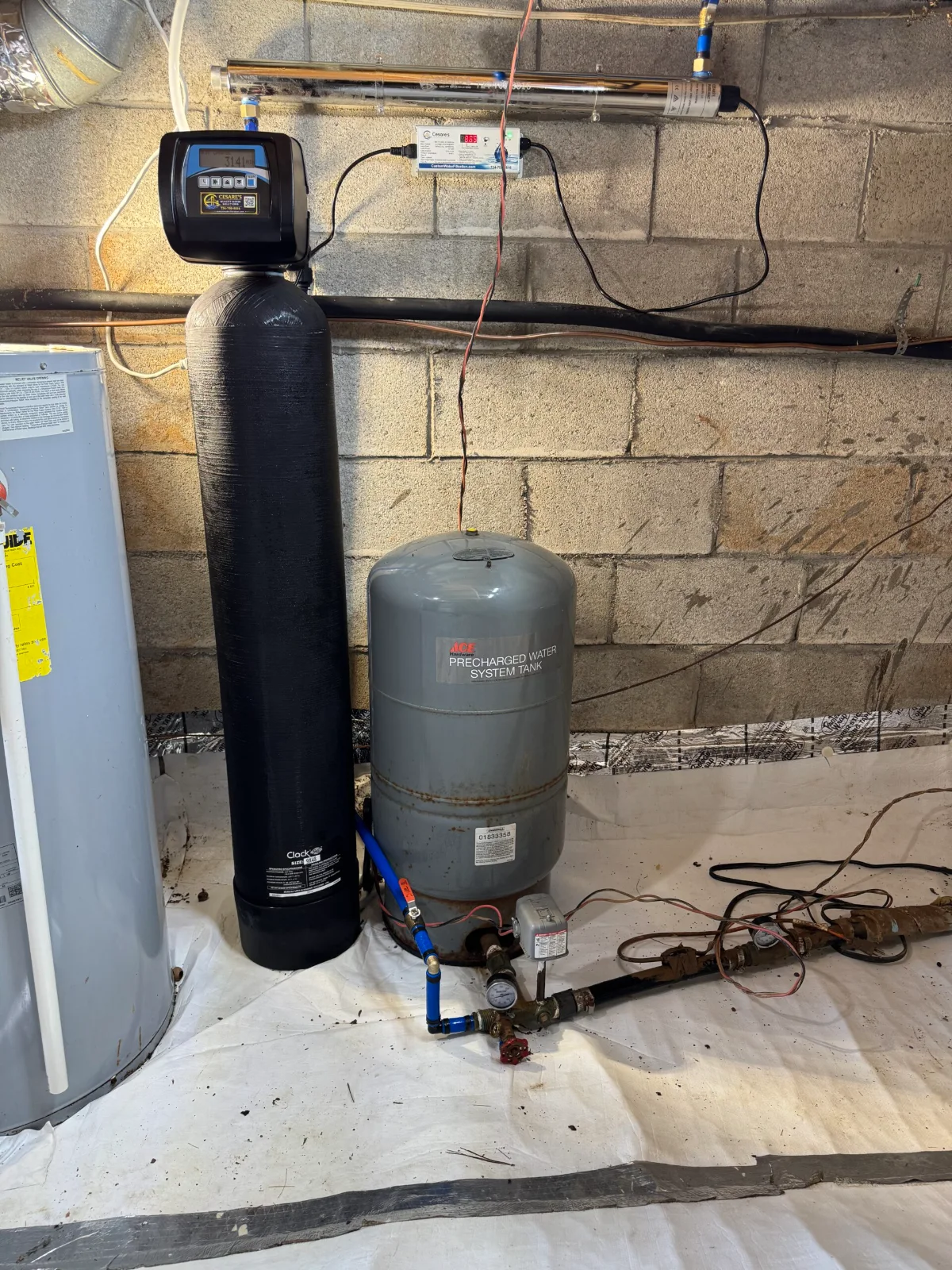
When a well tests positive the response has two parts: find how contamination is getting in, and add a continuous disinfection barrier. For most Southwestern PA wells that barrier is UV, which exposes microorganisms to germicidal ultraviolet light so they cannot reproduce. It does not filter anything out of the water, and it does not remove chemicals or minerals.
UV only performs if the water reaching it is clear. Iron, manganese, sediment and scale all shade the lamp, which is why Cesare’s places UV after the filtration and softening stages, never in front of them. Verification is a follow-up lab test showing coliform and E. coli absent, not a light on the controller.
See bacteria and UV treatment and the coliform and E. coli guide.
Reverse Osmosis Belongs at the Kitchen Tap, Not the Main Line
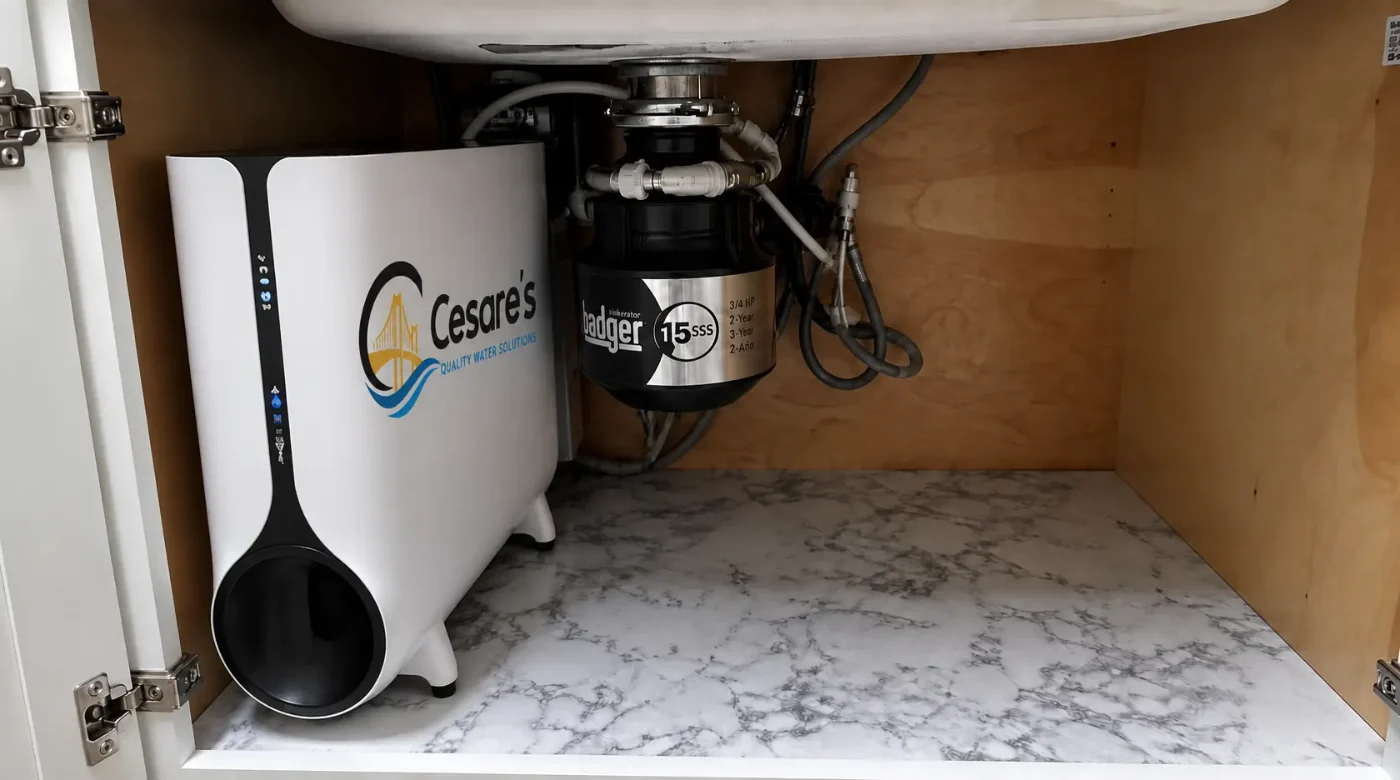
Cesare’s normal residential approach is whole-house treatment for the water that runs through your plumbing, plus point-of-use reverse osmosis under the sink for the water you drink and cook with.
RO polishes water to a level the whole-house stages are not designed for: dissolved solids and other drinking-water concerns. Which contaminants a particular system actually reduces — PFAS and lead among them — depends on that system’s certified reduction claims for that specific substance, checked against your laboratory result. Running that level of purification through the entire house is rarely the right engineering answer, and it is not what we recommend by default.
The pairing works in both directions. Whole-house treatment protects the RO membrane from the iron, hardness and chlorine that would shorten its life, and the RO gives you a dedicated faucet of purified drinking water without over-treating the shower. Cesare’s RO systems install with their own tap and finish with a pH-boost or mineral add-back stage to taste.
Details on the reverse osmosis systems page and in the RO drinking water guide.
Measured Before and After
IRON + HARDNESS
RESOLVED
The Iron and Hard-Water Well
Problem
4.2 mg/L iron, 13.2 gpg hardness. Orange staining and heavy scale on every fixture.
Solution
Two stages, each doing one job: dedicated iron treatment, then softening.
Result
Iron below 0.05 mg/L. Hardness below 1 gpg. Verified by re-test.
A private well in Southwestern Pennsylvania was carrying more iron and hardness than any single softener could handle. Cesare’s tested first, gave each problem its own stage, and re-tested after the install. Before-and-after values are Cesare’s on-site field measurements, not certified laboratory results.
Whole-House Water Filtration FAQs
Straight answers to the questions Southwestern Pennsylvania homeowners ask before buying a whole-house system.
What is a whole-house water filtration system?
It is water treatment installed on the main line where water enters the home, so every tap, shower and appliance receives treated water. The term covers a range of stages: filtration for chlorine and sediment, softening for hardness, dedicated iron, manganese and sulfur treatment, pH correction and UV disinfection. Which stages a home needs depends entirely on what testing finds in the water.
Do I need a water softener or a whole-house filter?
They solve different problems, so the answer comes from the test. A softener removes the calcium and magnesium hardness that causes scale and spotting. A filtration stage removes chlorine, chloramine, sediment and taste-and-odor compounds. Many Southwestern Pennsylvania homes on municipal water need both; some need only one. Cesare’s measures hardness and disinfectant residual at your tap before recommending either.
Can one system handle iron, hardness and sulfur together?
Yes, but as separate stages inside one treatment train, not one tank doing three jobs. Iron and sulfur are handled by oxidation and filtration, hardness by ion-exchange softening, and the stages are sequenced so each one receives water the previous stage has already corrected. That is how the private well described on this page went from 4.2 mg/L iron and 13.2 gpg hardness to below 0.05 mg/L and below 1 gpg.
Will a water softener remove iron or sulfur odor?
Not reliably, and not at the levels common in Southwestern PA wells. A softener can catch small amounts of dissolved iron, but iron, manganese and sulfur each have their own treatment stage in a Cesare’s system, and the measured levels decide when one is needed ahead of the softener. Overloading a softener with iron fouls the resin and stops it from softening.
Why does the order of the treatment stages matter?
Because most stages only work on water that has already been corrected. Low pH keeps iron dissolved, so pH correction comes before iron filtration. Iron, sediment and scale shade a UV lamp, so UV comes after filtration and softening. Chlorine and hardness shorten an RO membrane’s life, so whole-house treatment comes before the RO. Get the sequence wrong and the equipment underperforms from the first day.
Is whole-house reverse osmosis a good idea?
For most Southwestern Pennsylvania homes, no. Cesare’s standard approach is whole-house treatment for the plumbing water and a point-of-use reverse osmosis system under the kitchen sink for drinking and cooking water. RO polishes water to a level the rest of the house does not need, and running it through every fixture adds cost and wastewater without a matching benefit.
Will a whole-house filter make my water safe to drink?
Filtration and softening address taste, staining, scale and plumbing protection. They do not by themselves address bacteria, lead, nitrate or PFAS, which are certified-laboratory questions with their own treatment stages: UV disinfection for bacteria, and point-of-use reverse osmosis for most dissolved drinking-water contaminants. Cesare’s will tell you which of those apply to your water rather than implying one filter covers everything.
How is my water tested before a system is designed?
Cesare’s runs an in-home evaluation at your tap that measures iron, manganese, hardness, pH, sulfur, TDS, flow and pressure, and explains the results the same visit. That field screening produces the numbers the treatment design is built from. For regulated contaminants such as bacteria, lead, nitrate or PFAS, we identify the right state-certified laboratory path, which is a separate, paid analysis.
What is the difference between the in-home water test and a lab test?
The in-home evaluation is free and reads the treatment-design numbers on the spot. Certified laboratory testing uses accredited methods for regulated contaminants and produces results that stand up for real-estate closings and compliance. Cesare’s never sells lab analysis as free and never guesses at a lab result from a field kit. Both have a place, and we are clear about which is which.
Does a whole-house system make sense on city water?
Often, yes. Municipal water in Southwestern Pennsylvania is disinfected and monitored, but chlorine or chloramine taste, hardness and scale, and lead or copper from older plumbing are all common reasons homeowners call. A municipal home usually needs fewer stages than a private well, which is why the design starts with which supply you are on.
How long does a custom system last, and what is the warranty?
A properly designed system built around the measured water chemistry is intended to run for many years with routine service, and Cesare’s installations are backed by up to a 10-year warranty (terms apply). The systems that fail early are usually the ones sized from a hardness number alone or bought without testing the water at all.
How much does a whole-house filtration system cost in Southwestern PA?
It depends on how many stages the water requires, the flow rate the home needs, and the condition of the supply. A municipal home needing chlorine reduction and softening costs less than a private well needing pH correction, iron treatment, softening and UV. Cesare’s provides straightforward pricing after the in-home test, before any work begins, and only if a fix is warranted. The water softener cost guide shows how one stage is priced.
Will a whole-house filtration system reduce my water pressure?
A correctly sized system should not leave you with weaker showers. Every treatment tank costs some pressure as water passes through it, which is why Cesare’s measures the flow and pressure actually available at your home before specifying anything. A system sized to the house and to the well or service line keeps that drop small; a system sized from a hardness number alone is where most pressure complaints come from. Undersized equipment and a well that cannot deliver enough flow are two different problems, and the in-home evaluation tells us which one you have.
What maintenance does a whole-house water system need?
Salt for the softener if your water called for one, and periodic service on the treatment stages. How often depends on which stages your water needed, how much water the household uses and what the manufacturer specifies for that equipment, so Cesare’s sets the schedule for the system we designed rather than quoting one interval for every home. Anything with a lamp or a cartridge has its own replacement interval, and we tell you what yours is at the install and at every service visit.
Reviewed October 2026 by Lance Cesare, third-generation water-treatment specialist.
Ready for Better Water at Home?
Start with the free in-home water test — we’ll measure hardness, iron, manganese, pH, sulfur and TDS at your tap, explain what the numbers mean, and design only the stages your water actually needs. Straightforward pricing after testing — no pressure.
What You’ll Get
- In-home water evaluation — free
- Clear explanation of your results
- A treatment plan sized to your water’s measured levels
- Straightforward pricing (after testing)
- Professional installation & local support