
How to Size a Water Softener for a Southwestern PA Home
The grain number on the box is not what decides softener size. Your measured hardness, any iron riding along with it, how much water your household uses and how fast it needs it are — here is how those numbers fit together, and why we take them from your tap instead of a chart.
Most companies install equipment. Cesare’s engineers water.

What “Sizing” a Water Softener Actually Means
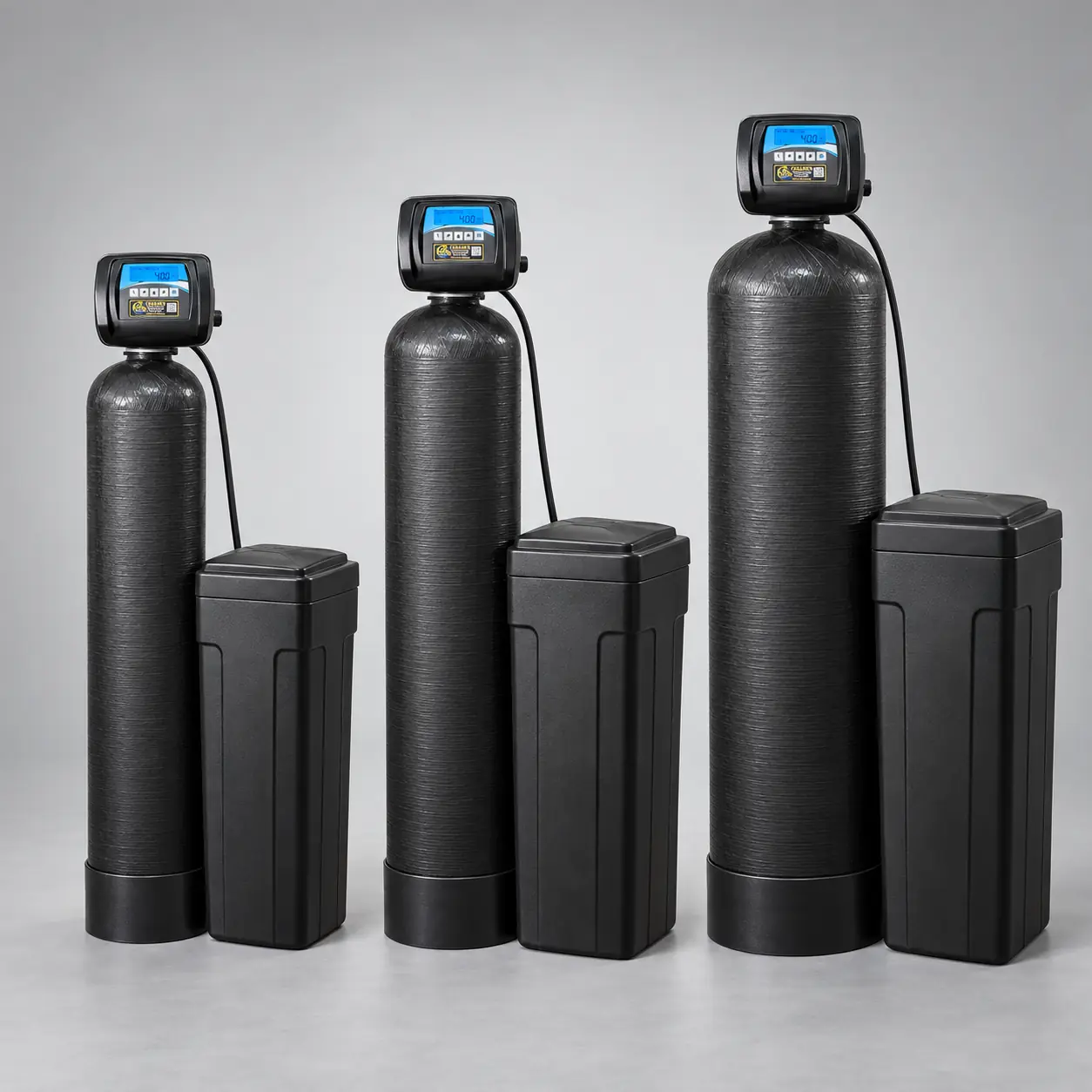
A water softener has three sizes, not one. Capacity is how many grains of hardness the media bed can hold between regenerations. Service flow is how many gallons per minute it can treat without letting hardness slip through or starving the house of pressure. Regeneration schedule is how often it has to clean itself, which is where salt and water use come from.
Get any one of the three wrong and the softener either bleeds hardness during a busy morning, regenerates far more often than it should, or sits so long between cycles that it wastes salt and water. That is why a properly sized system is matched on all three at once.
Square footage tells us nothing. A 1,400 sq ft home with five people on a 13-gpg well needs a bigger, faster softener than a 4,000 sq ft home with two people on 5-gpg city water. Sizing starts with the water and the people, not the floor plan.
The Four Numbers That Decide Softener Size
1. Hardness, measured at your tap. Reported in grains per gallon (gpg); 1 gpg equals 17.1 mg/L of calcium carbonate. This is the load the softener has to carry every day, and it is the number most often guessed at instead of measured.
2. Iron. Dissolved iron uses up softening capacity and, at higher levels, fouls the media bed. Small amounts are commonly counted as extra hardness when sizing; larger amounts need their own iron stage ahead of the softener rather than a bigger softener.
3. People and daily water use. Capacity is consumed in grains per day: hardness multiplied by the gallons your household actually runs. More people, a big soaking tub or a home business shifts this number fast.
4. Flow. Peak demand — two showers and a washing machine at once — must fit inside the system’s service-flow rating, and on a private well it must also fit inside what the well can deliver. A softener that is “big enough” on capacity can still be wrong on flow.
Only the first two come from a water test. The second two come from talking with you about how the house is used. Cesare’s does both on the same free in-home visit.
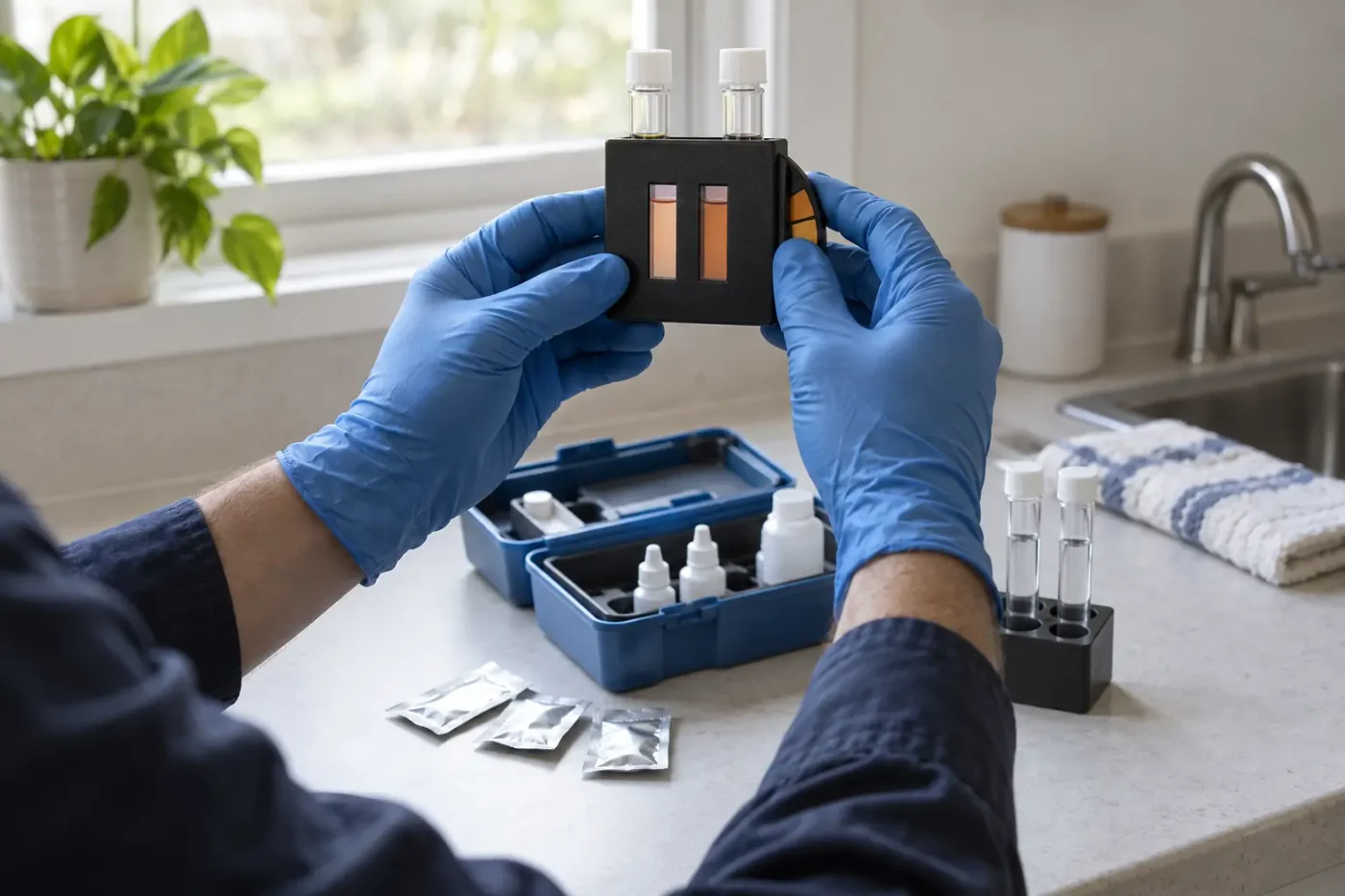
A Hypothetical Sizing Walk-Through (Not a Quote)
Everything in this example is made up to show the arithmetic. It is not one of our customers, not a recommendation, and not how we would size your home — that only happens from your own test results. It shows why the number on the box is the last thing to look at, not the first.
| Step | Hypothetical input | What it produces |
|---|---|---|
| Household use | 4 people × 75 gallons per person per day (an assumed average) | 300 gallons per day |
| Measured hardness | 12 gpg (assumed) | — |
| Iron allowance | 0.5 mg/L iron, given a small allowance as extra grains (a convention some installers use; we treat iron case by case) | Working hardness assumed at 14 gpg |
| Daily load | 300 gallons × 14 gpg | About 4,200 grains per day |
| Target interval | Regenerate roughly once a week | About 29,400 grains of usable capacity needed |
| Usable vs. labeled capacity | Usable capacity at an efficient salt setting is well below the maximum printed on the label | The box number has to be discounted before it is compared to 29,400 |
| Flow check | Two showers plus a washer running at once | Confirm the unit’s service-flow rating and, on a well, the well’s yield can cover it |
Notice what the walk-through did not do: it never started from a “family of four needs a 32,000” rule. It started from water and people, arrived at a daily load, chose a sensible interval, and only then asked which equipment can deliver that usable capacity at a reasonable salt setting with the flow the house needs. Change the hardness to 25 gpg, or the people to six, and the whole answer moves. Read how grain capacity is marketed and what to ask instead in our cost guide.
Why the Biggest Softener Isn’t the Safest Choice
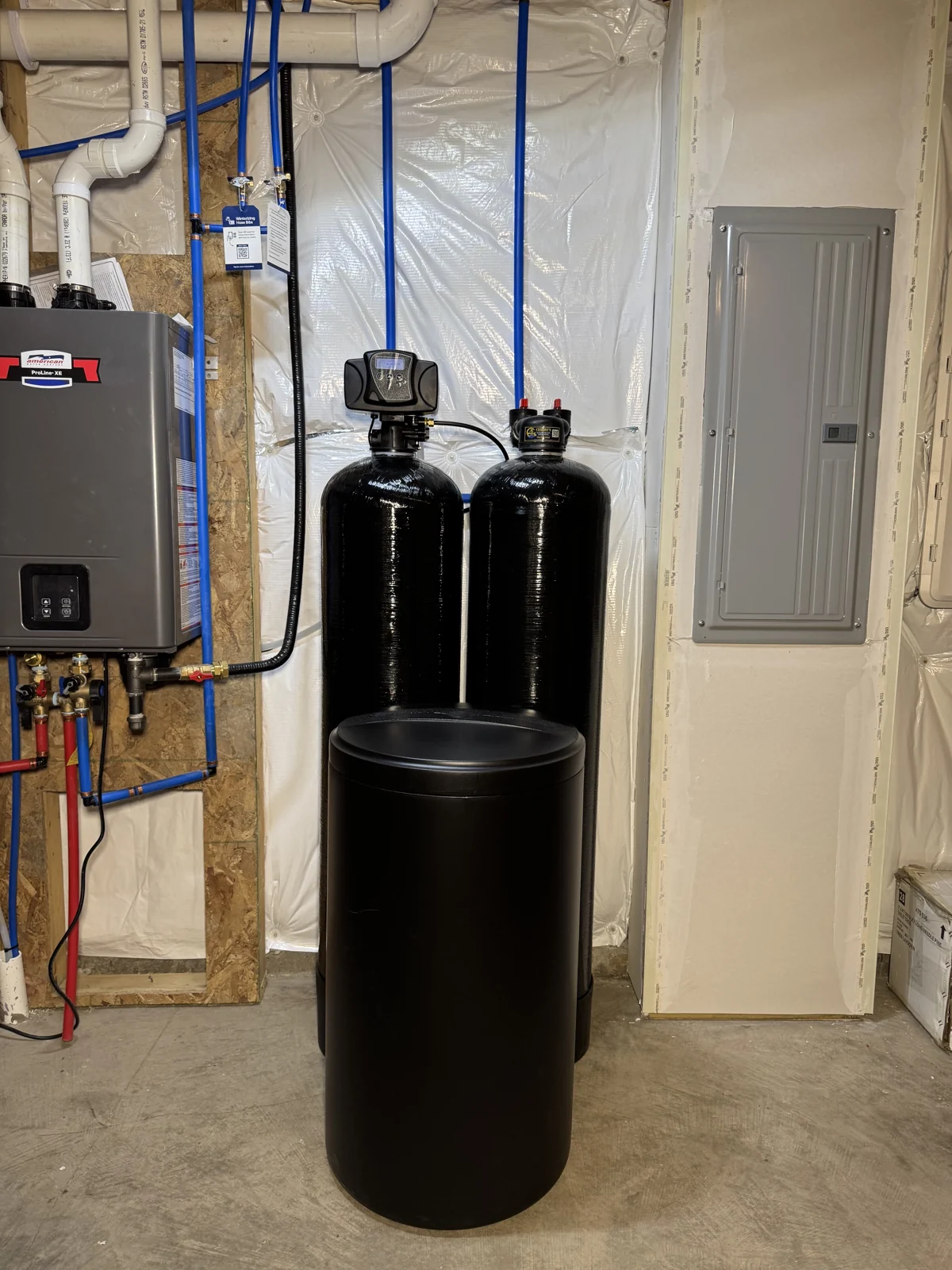
Oversized softeners sit too long between regenerations. The media bed can settle and channel, salt and water are wasted when it finally cycles, and you pay for capacity the house cannot use. “Go one size up to be safe” is not free of consequences.
Undersized softeners run out of capacity before the cycle ends, so hardness bleeds through on the busiest days, they regenerate far more often, and salt and water use climb. Undersizing is also how a softener gets blamed for scale that is really a capacity problem.
Wrong on flow is the one people miss. A system with plenty of capacity but too small a service-flow rating drops pressure when the house is busy, or lets hardness slip past the media because water is moving through it too fast.
Correct sizing means enough capacity and enough flow, regenerating on a schedule that makes sense for the water and the household — and not a step beyond that. If a softener you already own is showing these symptoms, the fix is often service or reprogramming, not replacement: see our water softener repair & service page.
Sizing in Southwestern PA: Why County Averages Aren’t Enough
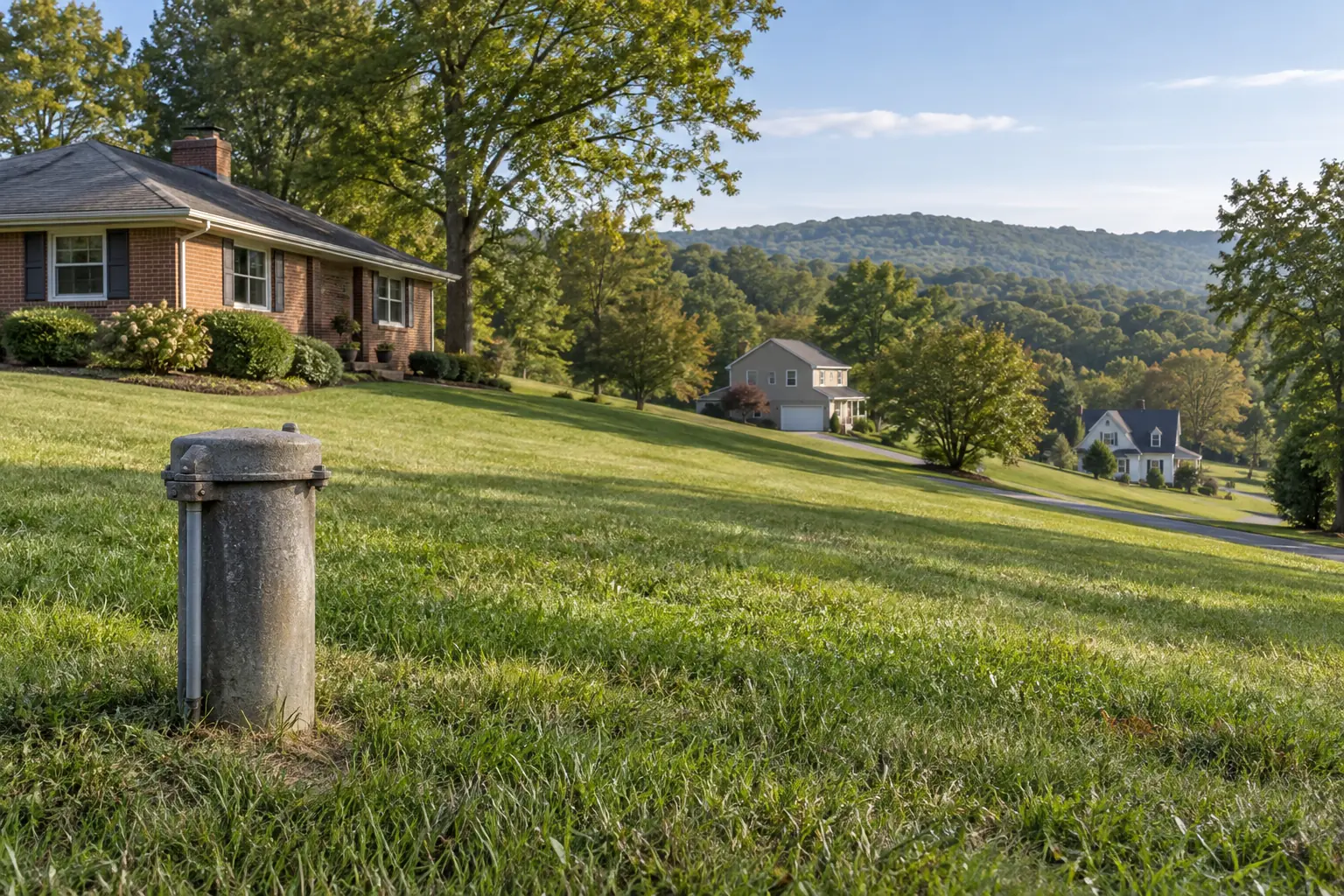
Penn State’s drinking-water test summaries put the median hardness of submitted well samples anywhere from 13.8 gpg in Washington County down to about 2.5 gpg in Cambria County, with Greene, Beaver and Lawrence counties on the very-hard side and Butler, Fayette and Cambria on the slightly-hard side. Those medians are useful for one thing: proving that a “standard” Southwestern PA softener does not exist.
Individual wells land well outside their county median, and on many of them hardness travels with iron, manganese or a sulfur smell — each of which changes the design, sometimes by adding a stage in front of the softener rather than making the softener bigger. Homes on municipal water have a different question: hardness and disinfectant taste are separate problems with separate stages.
County-by-county detail is in our 2026 Southwestern PA Water Quality Report. When you are ready to compare a salt-based softener with a salt-free conditioner for your water, start on our water softener systems & installation page.
Sized to the Water, Not the Catalog
HARDNESS · FLOW
SIZED, NOT UPSIZED
The 57-Grain Well on a 6-GPM Supply
Load
57 gpg hardness with 1,193 ppm total dissolved solids — several times the county median.
Constraint
About 6 gallons per minute available from the well. Nothing installed could demand more flow than that.
Design
A softener sized to the hardness load and the available flow, regenerating on a schedule the household can live with.
A very hard private well with a thin supply is the sizing problem in its purest form: the media bed has to carry a huge daily load, regenerate often enough to keep up, and never ask the well for more than it can give. Capacity, flow and interval were all decided from those measured numbers.
Water Softener Sizing FAQs
Straight answers to the sizing questions Southwestern PA homeowners actually ask.
How big a water softener does a 2,000 sq ft house need?
Square footage does not size a softener. What does is the measured hardness (plus any iron), how many people live there and how much water they use, and the peak flow the house needs. Two identical 2,000 sq ft homes can need very different systems. The free in-home water test gives us the numbers that matter.
What size water softener does a family of four need?
It depends on the hardness. Four people at 5 gpg is a light daily load; four people at 20 gpg with some iron is four times that, plus the flow to feed several fixtures at once. Hypothetically, four people on 12-gpg water with a little iron work out to roughly 4,000 grains a day — but the real number for your home comes from your test, not from an average.
Is a 48,000-grain water softener enough for my house?
The labeled grain number is a maximum reached only at a heavy salt setting; usable capacity at an efficient setting is well below it. Whether any size is “enough” depends on your daily grain load and how often you want it to regenerate. Compare usable capacity to your load, not the label to a rule of thumb. Our cost guide explains why the grain number is the most misleading figure in the industry.
How is water softener capacity calculated?
Multiply your household’s daily water use in gallons by the working hardness in grains per gallon (hardness plus any iron allowance) to get grains per day. Multiply by the number of days you want between regenerations to get the usable capacity you need. Then pick equipment whose usable capacity, at a sensible salt setting, meets that with the service flow your home requires.
Does iron change the size of the softener I need?
Yes. Dissolved iron consumes softening capacity and, at higher levels, fouls the media bed. Small amounts are usually counted as extra hardness when sizing. Larger amounts should be handled by a dedicated iron stage ahead of the softener — making the softener bigger is the wrong answer for high iron.
Can a water softener be too big?
Yes. An oversized softener sits too long between regenerations, which can let the media bed settle and channel and wastes salt and water when it finally cycles. You also pay for capacity the house cannot use. Correct sizing is enough capacity and flow for the water and the household, not a size up “just in case.”
How often should a water softener regenerate?
Often enough that it never runs out of capacity on a busy day, and not so often that it wastes salt and water. For many homes that lands around once a week, but the right interval follows from your daily grain load and the system’s usable capacity, and it is programmed at startup from the measured water, not from a factory default.
Do you size a softener from a water test?
Yes. Cesare’s measures hardness, iron, pH and more at your tap during a free in-home water test, talks through how your household uses water, and sizes the system from those numbers. After installation we re-test the treated water so you see the before-and-after.
Reviewed October 2026 by Lance Cesare, third-generation water-treatment specialist.

Ready to Size It Right?
Start with the free in-home water test — we’ll measure your hardness, iron and more at your tap, talk through how your household uses water, and size the softener to those numbers. Call or text (724) 708-8816.
What You’ll Get
- In-home water evaluation — free
- Clear explanation of your results
- A treatment plan sized to your water’s measured levels
- Straightforward pricing (after testing)
- Professional installation & local support