- Pittsburgh & Southwestern PA • Custom-Engineered Water Treatment
- Fully Licensed & Insured
- 24/7 Emergency Water Service
- 3rd Generation Water Treatment Experts


The short answers first — the full guide is below.
Dissolved hydrogen sulfide gas (H₂S) or sulfur-producing bacteria. Groundwater picks it up moving through organic material and sulfur-bearing minerals like pyrite.
Hot and cold water smelling means the well or plumbing. Only hot water points at the water heater instead.
Oxidation, then filtration. The gas is converted to a filterable solid, then captured in a backwashing bed sized to your water.
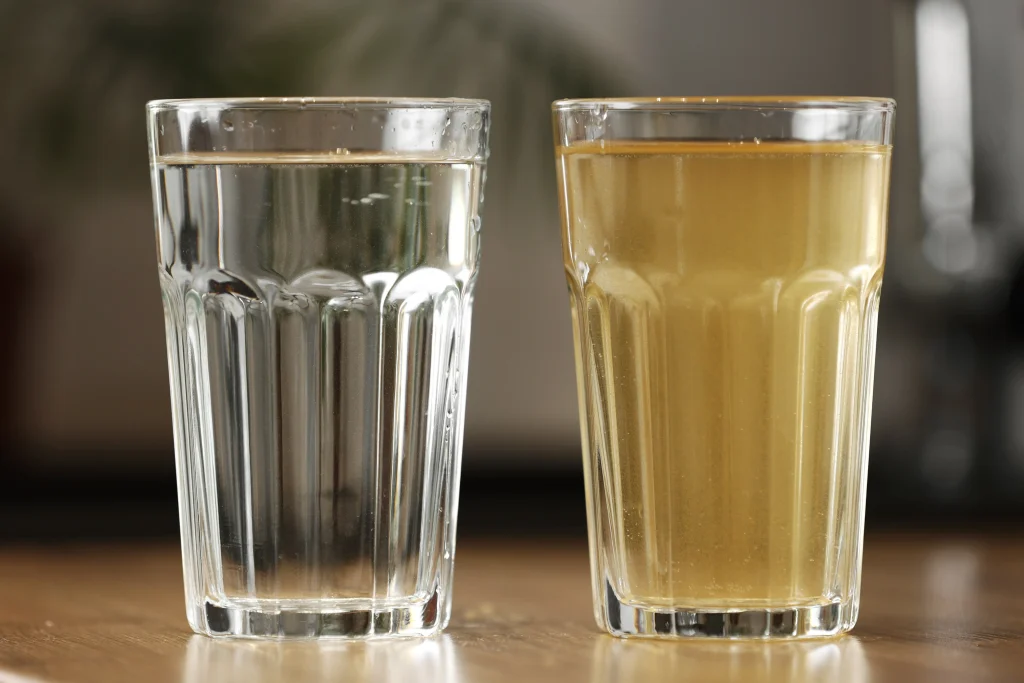
A rotten egg odor in well water is usually dissolved hydrogen sulfide gas (H₂S) or sulfur-producing bacteria. Groundwater picks up hydrogen sulfide as it moves through organic material and sulfur-containing minerals, and under low-oxygen conditions bacteria can convert dissolved sulfate into sulfide.
Most people detect it well below 0.5 mg/L — which is why the smell shows up long before the water looks wrong, and why it is worst first thing in the morning.
Hydrogen sulfideThe dissolved gas that actually creates the odor.
SulfateA mineral form of sulfur. It does not smell on its own.
Sulfur bacteriaMicrobes that produce H₂S and slime in wells and plumbing.
Before any equipment is chosen, this narrows the source down fast.
| What you notice | Likely source | Next step |
|---|---|---|
| Hot and cold water at most faucets | Well water, sulfur bacteria, or plumbing | Test the untreated source water |
| Only the hot water | Water heater — sulfur bacteria or a reaction at the magnesium anode rod can generate H₂S in the tank | Confirm whether cold water contains H₂S first |
| Only one sink or drain | Drain biofilm, not the water supply | Compare water in a clean glass away from the drain |
| Strongest after water sits | Gas or bacterial activity accumulating | Test while the odor is present |
| Changes seasonally or after heavy rain | Shifting groundwater conditions | Test at the worst point, design for peak |

At household levels, hydrogen sulfide is generally treated as a taste-and-odor problem, not a health violation. It has no federal health-based drinking water standard because it makes water unpleasant long before it would reach a harmful level.
But smell cannot tell you whether water is safe. Coliform bacteria, nitrate, lead, and PFAS have no odor at all. Water can smell awful and be clean, or smell fine and still contain something worth knowing about.
As for why it keeps turning up here: Southwestern PA sits on layered sandstone, shale, limestone, and coal-bearing rock. Where groundwater meets pyrite and organic material, it can release both sulfur compounds and iron — which is exactly why a single odor filter so often fails in this region.
A single treatment stage fails when contact time, oxidation capacity or media selection does not match the water chemistry and the household’s peak flow. If you already tried a sulfur filter and the smell came back, it is usually one of these.
A filter chosen because the water “smells bad” is a guess — and guesses get undersized.
They compete for the same capacity and create solids the system has to clear. Extremely common here.
Acidic water interferes with oxidation. It usually has to be corrected first, in sequence.
A media tank alone cannot capture a dissolved gas. The H₂S must become a solid first.
Oxidized sulfur and metals have to flush out of the bed, or it fouls and the odor returns.
Sulfur moves with the seasons. A system sized to the mildest sample fails at peak.
Sulfur comes out through oxidation and filtration — but the sequence is what makes it hold. Learn more about our sulfur and hydrogen sulfide removal service.
The 5-stage treatment process
Well water, hot water system, plumbing, or a single drain.
H₂S measured at the home, with pH, iron, manganese, hardness and flow.
Acidic water and other interference handled first, in order.
Air, ozone, or chemical oxidation turns dissolved H₂S into a filterable solid.
Backwashing bed captures it; finished water is retested before we leave.
Why testing has to happen here
Hydrogen sulfide is a dissolved gas, and it escapes. Penn State Extension advises testing in the home or chemically stabilizing the sample before transport — because an untreated sample loses gas on the drive to a lab and reads lower than the water actually is. That single detail is how most systems end up undersized, and it is why we will not quote a sulfur system from a description over the phone.
There is no single “sulfur system.” This is the logic behind which approach fits which water.
| Water condition | Approach | Why |
|---|---|---|
| Light odor, otherwise good water | Catalytic odor filtration, sometimes with light oxidation | Handles a small load without overbuilding |
| Persistent sulfur odor | Air or ozone oxidation with a backwashing catalytic bed | Converts the gas, then removes what oxidation creates |
| Sulfur with iron or manganese | Staged oxidation and filtration sized for the combined load | Stops one contaminant from eating the other’s capacity |
| Sulfur with low pH | pH correction first, then oxidation and filtration | Improves oxidation and protects plumbing at once |
| Sulfur-producing bacteria | Disinfection strategy plus designed filtration | Treats the source instead of masking odor |
| Hot water only | Confirm source-water chemistry before treating the house | Avoids a whole-house system for a water heater issue |
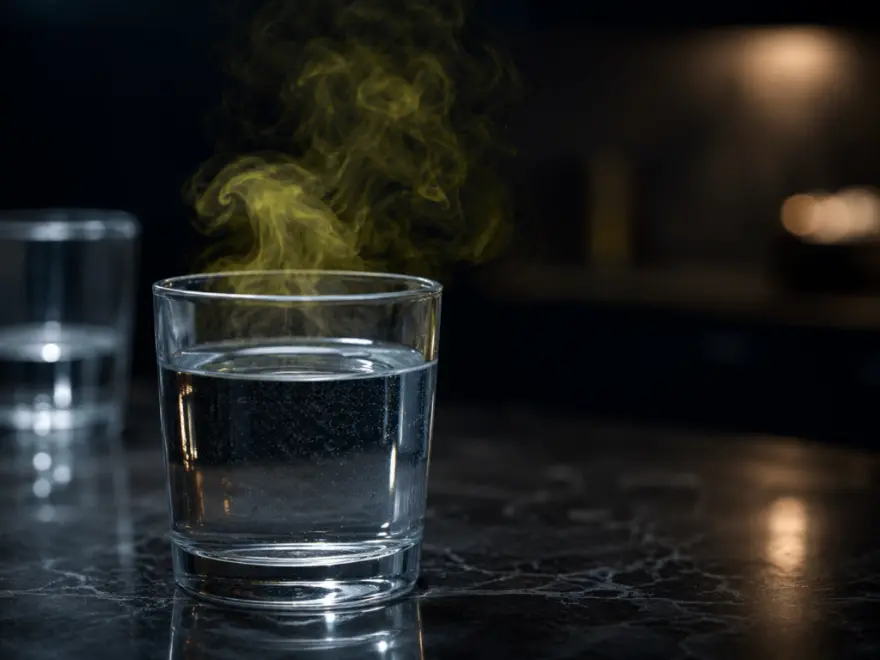
Most of what gets recommended for sulfur odor does not actually treat dissolved hydrogen sulfide. Here is what each one really does.
A well near Ligonier fought a rotten-egg odor that kept coming back: a strong sulfur smell at both the hot and cold taps, returning shortly after earlier treatment attempts because the underlying chemistry was never fully corrected.
On-site field analysis measured hydrogen sulfide at 2.8 ppm alongside 1.7 ppm iron, a pH of 5.9 and moderately hard water. Earlier work by other companies had not addressed the acidic, oxygen-poor chemistry driving the odor.
A custom whole-home system built from the full analysis: the low pH was corrected first, then air injection oxidized the hydrogen sulfide and iron, filtration removed the oxidized contaminants, and softening finished the water.
Follow-up field testing found no detectable hydrogen sulfide, iron below 0.05 ppm, a balanced pH of 7.2, and soft water — with the rotten-egg odor gone at both the hot and cold taps.
Rotten-egg odor keeps returning when the acidic, oxygen-poor chemistry behind it is never corrected. Treatment designed from the actual water chemistry took this well from a steady 2.8 ppm of hydrogen sulfide to below the field method’s reporting limit.
| Measurement | Before treatment | After treatment | Applicable reference |
|---|---|---|---|
| Hydrogen sulfide | 2.8 ppm | Below the field method’s reporting limit | No federal limit — hydrogen sulfide is an odor and corrosion issue |
| Total iron | 1.7 mg/L | Below the field method’s 0.05 mg/L reporting limit | EPA secondary guideline, 0.3 mg/L — aesthetic, not health-based |
| Manganese | 0.09 mg/L | Below the field method’s 0.01 mg/L reporting limit | EPA secondary guideline, 0.05 mg/L |
| pH | 5.9 | 7.2 | EPA secondary range, 6.5–8.5 |
| Hardness (as CaCO₃) | 11.6 gpg | Below 1 gpg | No federal drinking-water limit |
Measured by on-site field analysis before and after the installed system. *EPA Secondary Standards are non-enforceable guidelines for aesthetic qualities such as taste, odor, color and staining.
Every claim on this page traces back to a primary source — regulators, accredited standards bodies and the utilities that publish local water quality.
Reviewed July 2026 by Lance Cesare, third-generation water-treatment specialist. Water testing referenced on this page is on-site field analysis performed by Cesare’s Quality Water Solutions, not certified laboratory analysis. Bacteria, lead, nitrate, PFAS and disinfection by-product results require an accredited laboratory and are not published from field methods.
More answers in our Sulfur & Hydrogen Sulfide Knowledge Center.