CUSTOM-ENGINEERED WATER TREATMENT

Why Does My Well Water Leave Black Stains in the Toilet?

Stop black and brown manganese stains on sinks, laundry, and fixtures. Cesare's designs whole-house manganese removal systems for well and municipal water, engineered around your manganese, iron, pH, hardness, and household flow rate.
Light blue wave section divider
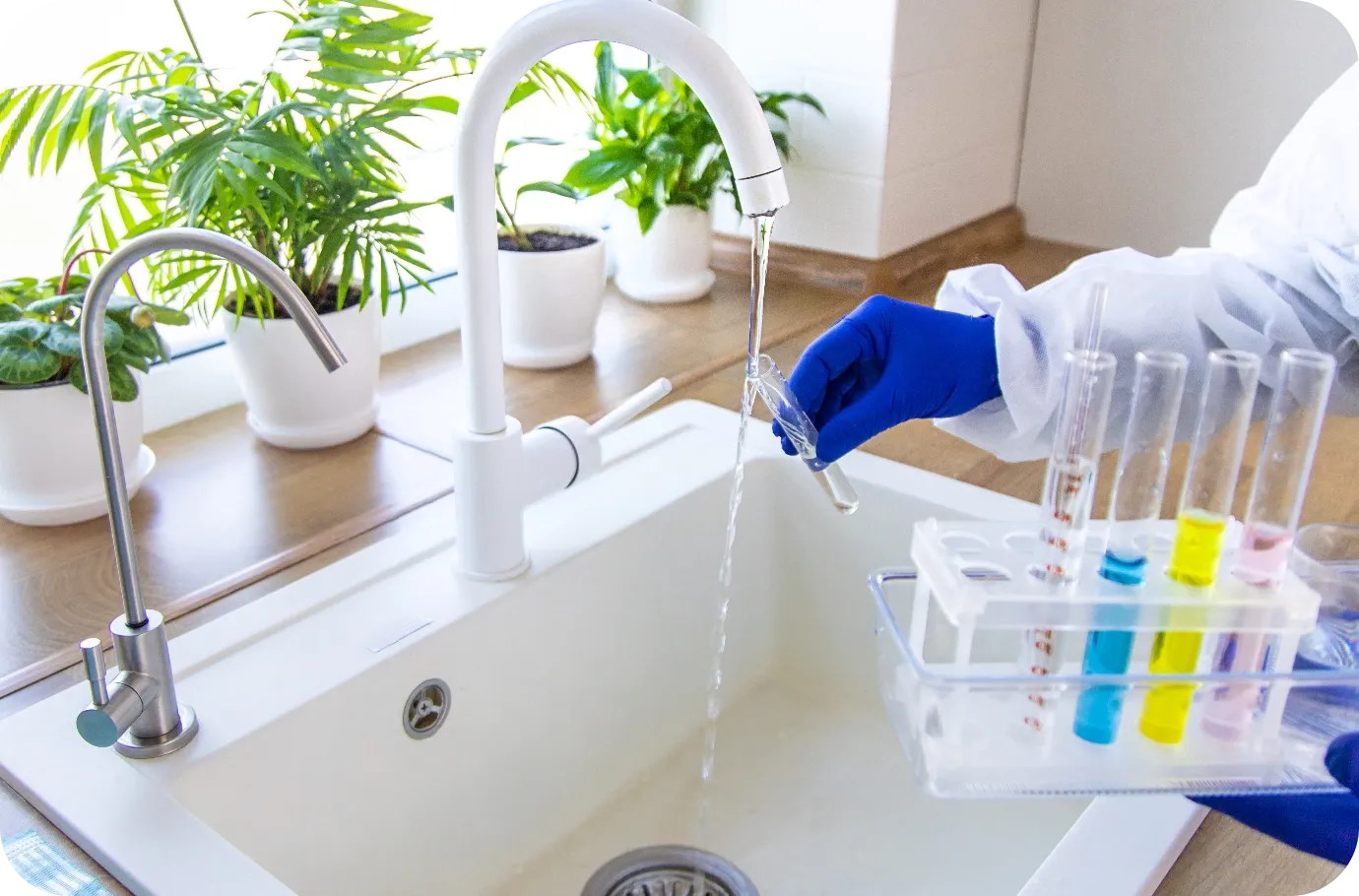
Water samples collected at a kitchen tap in test tubes for manganese analysis

How Manganese Is Removed From Water

Test the water first, correct low pH if you find it, oxidize the dissolved manganese (and any iron riding with it), then filter it out through media matched to that chemistry. Cesare's, a third-generation Murrysville company, engineers whole-house systems for well and city water across all 13 Southwestern Pennsylvania counties.

GET MY WATER FIXED

What Black Stains Are Telling You

What you seeLikely causeReference levelTypical next step
Black or brownish-black staining on sinks, tubs, and fixturesManganese0.05 mg/LTest, oxidize, and filter
Black specks in ice, water, or the dishwasherOxidized manganese0.05 mg/LManganese-capable filtration
Dark slime in the toilet tankManganese or iron bacteriaTesting requiredBacteria check and staged treatment
Dingy, gray, or spotted laundryManganese, often with iron0.05 mg/LDedicated filtration ahead of the softener
Bitter or metallic tasteManganese, sometimes with ironVariesComplete water analysis

The EPA's secondary standard for manganese is just 0.05 mg/L — far below the 0.3 mg/L it takes for iron to show — so manganese leaves black marks at levels most people would never expect. It's an aesthetic standard, not a health limit, and it covers staining, color, and taste. Plenty of Southwestern Pennsylvania wells run well over it, which is why laundry, fixtures, and the dishwasher pick up black staining even when the water looks clear at the tap.

How Manganese Removal Works

Test Your Water First

Professional manganese removal starts with comprehensive water testing. We measure manganese concentration, pH, hardness, iron, sulfur, TDS, and flow rate to engineer a treatment system specifically for your water. Every well is different, so accurate testing is the foundation of long-term manganese removal.

Correct Low pH First

Low pH can keep dissolved manganese stable in the water, making it much more difficult to remove. If your water is acidic, we correct the pH before installing manganese filtration so every stage of treatment performs as designed while helping protect your plumbing.

Oxidize the Dissolved Manganese

Dissolved manganese must first be converted into solid particles through oxidation. Depending on your water chemistry, this may be accomplished using air injection, ozone, chlorine, or another oxidation method selected specifically for your water. Proper oxidation is what allows the filtration media to capture manganese effectively.

Filter and Verify Performance

Once oxidized, the manganese particles are removed using filtration media engineered for your water chemistry, household flow rate, and daily water demand. After installation, we verify system performance with follow-up testing to confirm the manganese has been successfully removed and your water treatment system is operating correctly.
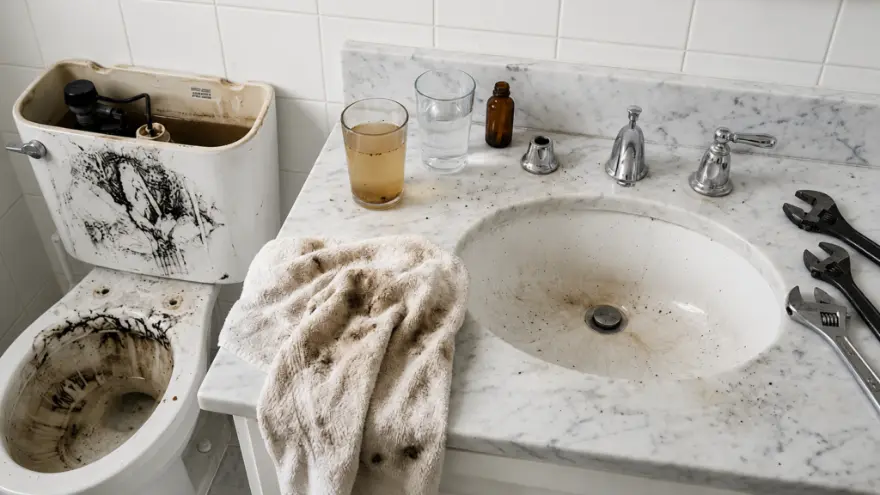
Clear tap water next to black manganese stains on a bathroom sink — a common sign of manganese in Southwestern Pennsylvania water

Signs You Have Manganese in Your Water

  • Black or brownish-black stains in sinks, tubs, and toilets
  • Black stains or specks on dishes and inside the dishwasher
  • Dark slime in the toilet tank
  • Bitter or metallic taste in drinking water
  • Gray, dingy, or spotted laundry that won't come clean
  • Black specks in ice cubes or filtered water
  • Discolored water after heavy rain

Any of these signs point to manganese and warrant professional water testing. Because staining can begin around 0.05 mg/L, water may look clear at the tap while still leaving black stains throughout your home. Learn more in our Iron & Manganese Knowledge Center.
WATER TESTING & TREATMENT CONSULTATION
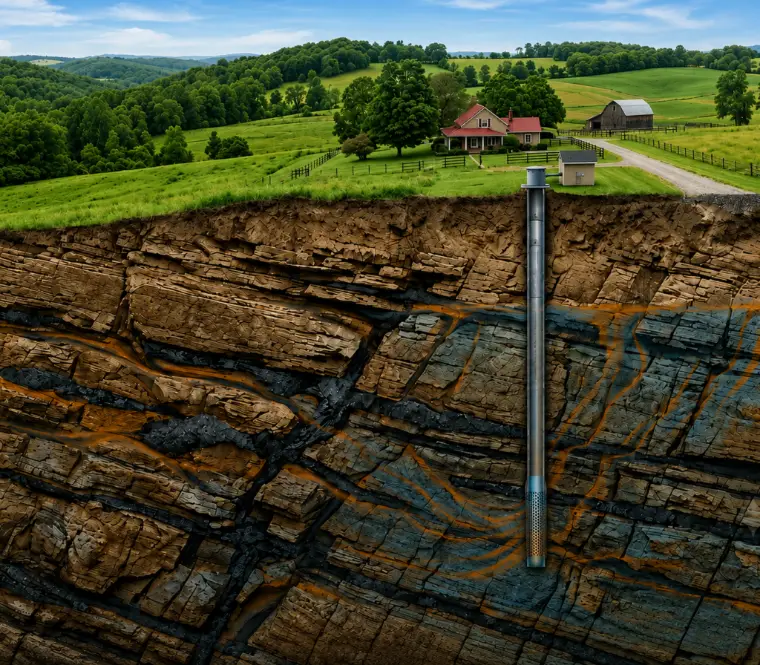
Illustration of how manganese enters private wells from bedrock and groundwater in Southwestern Pennsylvania

Why Manganese Is Common in Southwestern Pennsylvania

Manganese occurs naturally in the bedrock and soils throughout Southwestern Pennsylvania, and our region's groundwater is especially good at picking it up. As water moves slowly through manganese-bearing rock — and through aquifers shaped by the area's long coal-and-mining history — it dissolves manganese and carries it straight into private wells. Because that groundwater is often low in oxygen and slightly acidic, the manganese stays dissolved and invisible right up until it reaches air at your fixtures, where it oxidizes and turns black.

That is why so many wells across Westmoreland, Allegheny, Washington, Butler, and the surrounding counties come back over the 0.05 mg/L standard — sometimes many times over — even when a neighbor on the same road tests completely differently. Manganese is local, it is common here, and the only way to know your number is to test your own tap.
FREE CONSULTATION
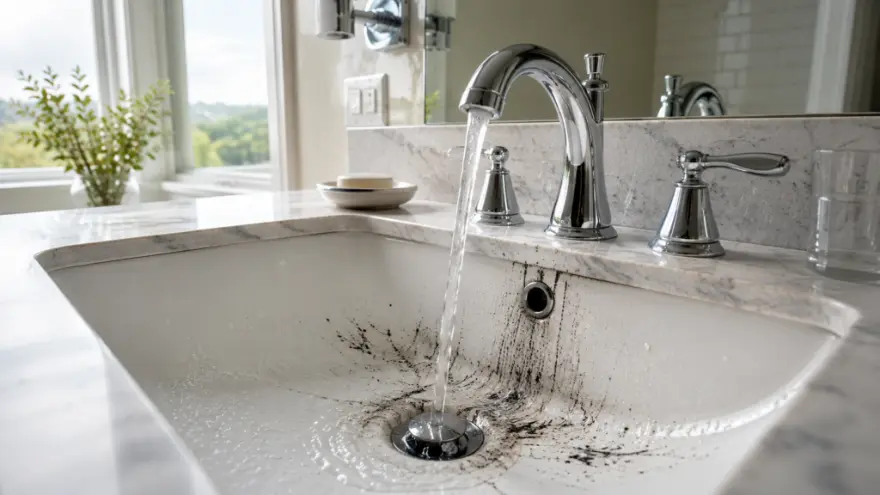
Why black manganese stains keep coming back — dissolved manganese slipping through untreated water and oxidizing on fixtures

Why the Black Stains Keep Coming Back

Scrubbing never wins because the black you see is only the manganese that has already oxidized. The rest is still dissolved and invisible in your water, and it slips right past a plain softener or a basic filter — then oxidizes later, on the next fixture, the next load of laundry, the next glass of ice. Clean today, black again next week.

Real manganese removal has to deal with the dissolved form before it ever reaches your tap: correct the pH so manganese will drop out of solution, oxidize the dissolved manganese on purpose, and filter it through media matched to your water. Handle only what you can see and the staining always returns; treat the dissolved manganese at the source and it stays gone.

Schedule My Water Test

Manganese Removal Case Study in Southwestern Pennsylvania

Rick — Southwestern PAPrivate Well • Completed

This private well shows what extreme manganese looks like: raw water carrying 4.2 mg/L of manganese — more than 80 times the EPA aesthetic limit — along with elevated iron, very hard water, and bacterial contamination.

Problem

Rick’s raw well water tested at 4.2 ppm manganese and 2.2 ppm iron with 15 gpg hardness. On-site analysis also found coliform and E. coli along with iron and sulfur bacteria — and sediment and scale buildup were already showing in the home.

Treatment

A custom whole-home system built from the complete analysis: Cesare’s own filtration engineered for the manganese and iron, custom softening for the hardness, and disinfection for microbiological protection.

Verified Result

Follow-up testing at the kitchen sink found no detectable manganese and no detectable iron. The water tested soft, and no coliform or E. coli remained in the sampled water.

Manganese at this level stains everything it touches long before the water reaches the faucet — and it never fixes itself. Treatment designed from verified water chemistry took this well from more than 80 times the limit to not detectable.

The Test Results: Before and After

MeasurementBefore treatmentAfter treatmentTest typeApplicable reference
Manganese4.2 mg/LBelow the field method’s 0.01 mg/L reporting limitOn-site field analysisEPA secondary guideline, 0.05 mg/L — aesthetic, not health-based
Iron2.2 mg/LBelow the field method’s 0.05 mg/L reporting limitOn-site field analysisEPA secondary guideline, 0.3 mg/L
Hardness (as CaCO₃)15 gpgBelow 1 gpgOn-site field analysisNo federal drinking-water limit
Total dissolved solids314 ppm289 ppmOn-site field analysisEPA secondary guideline, 500 ppm
Coliform and E. coliNot published — bacteria results require an accredited laboratoryAccredited laboratory onlyZero detection is the goal for public systems

Raw water tested July 14, 2026 · verified at the kitchen sink July 31, 2026. *EPA Secondary Standards are non-enforceable guidelines for aesthetic qualities (taste, odor, color, staining). Coliform and E. coli are health-based: any presence is a failure.

Sources & References

Every claim on this page traces back to a primary source — regulators, accredited standards bodies and the utilities that publish local water quality.

PENN STATE

Manganese in Well Water

  • Iron and manganese in Pennsylvania drinking water
  • Black staining, slime and filter fouling
EPA

Federal Standards

  • Secondary guideline for manganese, 0.05 mg/L — aesthetic
  • Lifetime health advisory of 0.3 mg/L and a shorter-term advisory for infants — advisory, not enforceable
PA DOH

Public Health Guidance

  • Private well water and health guidance for Pennsylvania households
  • Health questions belong with a healthcare provider, not a treatment company
PA DEP

State Program

  • Safe Drinking Water Program requirements for public water systems
  • Private wells are not regulated at the state level in Pennsylvania
NSF/ANSI

Treatment Certification

  • NSF/ANSI 42 and 44 standards for filtration and ion exchange
  • Oxidizing media and contact-time references
USGS

Regional Geology

  • Manganese in Appalachian Plateau groundwater
  • Why manganese often accompanies iron in Southwestern PA wells

Reviewed July 2026 by Lance Cesare, third-generation water-treatment specialist. Water testing referenced on this page is on-site field analysis performed by Cesare’s Quality Water Solutions, not certified laboratory analysis. Bacteria, lead, nitrate, PFAS and disinfection by-product results require an accredited laboratory and are not published from field methods.

Manganese Removal FAQs

What causes black stains in sinks, tubs, and toilets?
Black or brownish-black stains are one of the most common signs of manganese in drinking water. When dissolved manganese is exposed to oxygen, it oxidizes and leaves dark deposits on plumbing fixtures, toilets, tubs, showers, and sinks. Iron can create similar staining, so professional water testing is the only way to identify which metals are present and design the correct treatment system.
Is manganese in my water something I should test for?
Yes — you can't tell how much manganese is in your water by looking at it. The EPA sets a secondary (aesthetic) standard of 0.05 mg/L for staining and taste, EPA also publishes a lifetime health advisory of 0.3 mg/L for manganese and a shorter-term advisory for infants; those are advisory values, not enforceable limits, and health questions belong with a healthcare provider or your county health department rather than a water treatment company. A professional or laboratory test tells you your actual number so the system can be engineered around real data instead of a guess.
What are the black specks or slime in my toilet tank and dishwasher?
Black specks are usually oxidized manganese, while a slimy black film often points to manganese or iron bacteria. Manganese stains at levels as low as 0.05 mg/L, and because these problems look similar, professional water testing is needed to determine the true source before treatment is recommended.
Why does my water turn dark or discolored after heavy rain?
Heavy rainfall can disturb groundwater conditions, allowing more dissolved manganese, iron, sediment, or organic material to enter a private well. If your water changes color after storms, the well should be tested — ideally while the discoloration is present — before selecting treatment equipment.
What manganese level is considered a problem?
The EPA's Secondary Maximum Contaminant Level (SMCL) for manganese is 0.05 mg/L (50 µg/L). Above this level, homeowners commonly experience black staining, discoloration, metallic taste, sediment, and buildup inside plumbing and appliances. Many private wells in Southwestern Pennsylvania exceed this level, sometimes many times over.
Do you treat manganese bacteria?
Yes. Manganese bacteria require a different approach than dissolved manganese alone. Depending on the water chemistry, treatment may include oxidation, specialized filtration, disinfection, and in some cases ultraviolet (UV) treatment. Every system is custom engineered after water testing.
Will a water softener remove manganese?
Sometimes — but not always. A water softener can remove small amounts of dissolved manganese when water chemistry falls within specific limits. Higher manganese concentrations, low pH, iron, sulfur, or manganese bacteria usually require oxidation and dedicated filtration ahead of softening. Proper testing determines the correct treatment sequence.
Can city water have manganese?
Yes. Municipal water systems can contain manganese from natural groundwater sources, reservoirs, aging water mains, or changes within the distribution system. Even treated municipal water may develop black staining if manganese reaches your home's plumbing.
Can iron and manganese be removed with one system?
Yes, in many homes they can. Because iron and manganese frequently occur together, properly engineered treatment systems often remove both contaminants using oxidation followed by specialized filtration media. The exact design depends on manganese concentration, iron levels, pH, sulfur, bacteria, flow rate, and overall water chemistry.
How much does manganese removal cost?
There is no universal price because manganese treatment depends on the entire water profile. Factors such as manganese concentration, iron, sulfur, bacteria, pH, flow rate, and household water demand all affect system design. Professional testing allows an accurate recommendation without oversizing or undersizing the equipment. Financing and leasing are available on larger systems.
Do you provide manganese removal near Pittsburgh?
Yes. Cesare's Quality Water Solutions designs and installs manganese removal systems throughout Southwestern Pennsylvania, including Allegheny, Westmoreland, Washington, Butler, Beaver, Fayette, Armstrong, Indiana, Greene, Somerset, Cambria, Lawrence, and Mercer counties. Every system is engineered using the home's actual water chemistry.
Why does my water look clear but still leave black stains?
Manganese often stays dissolved while water is inside your plumbing. Once it contacts oxygen at the faucet or dries on fixtures, it oxidizes and forms black or brownish-black staining. This is why water can appear perfectly clear in a glass but still stain sinks, tubs, toilets, dishes, and laundry over time.
What is the best filter for manganese in well water?
There isn't one universal filter — the right system depends on your water. The correct solution is determined by manganese concentration, pH, iron, sulfur, bacteria, and household water demand. Most effective setups use oxidation followed by specialized filtration media selected for the home's specific water chemistry, which is why every system starts with a professional water test.
How is manganese removed from drinking water?
Effective treatment begins with water testing. From there we correct low pH if needed, oxidize the dissolved manganese into solid particles, filter those particles out with properly selected media, and add softening or polishing stages when appropriate. Every system is engineered around the actual water chemistry rather than a one-size-fits-all filter.
Homeowner filling a glass with fresh, clean drinking water from a kitchen faucet after whole-home water treatment.

Ready for Better Water at Home?

Get a professional water analysis and a custom treatment plan—clear answers, no pressure.

Address(Required)

What You’ll Get