- Pittsburgh & Southwestern PA • Custom-Engineered Water Treatment
- Fully Licensed & Insured
- 24/7 Emergency Water Service
- 3rd Generation Water Treatment Experts

Beaver County water depends on which supply reaches your street. Beaver Falls treats river water with chloramine, Ambridge draws from a reservoir, Aliquippa pumps groundwater, and much of the county runs on private wells. Cesare’s identifies which one is yours, tests the water at your tap, and engineers treatment around what it finds.

About 166,000 people live in Beaver County, and no single answer covers their water. Beaver Falls Municipal Authority treats Beaver River water and disinfects with chloramine. Ambridge Water Authority draws from Service Creek Reservoir, a lake built in the 1950s specifically to get away from wells that ran high in iron and manganese. Aliquippa pumps groundwater from wells along the west bank of the Ohio. Outside those service areas, much of the county is on private wells. Four different supplies, four different problems.
Beaver River water at Beaver Falls, reservoir water at Ambridge, groundwater at Aliquippa and a private well are not interchangeable — and should not get the same treatment recommendation.
Beaver Falls Municipal Authority treats Beaver River water at two filtration plants and disinfects with chloramine, serving about 50,000 people across 23 municipalities and 60 square miles.
Ambridge Water Authority draws from the spring-fed Service Creek Reservoir, built in the 1950s to replace borough wells that ran high in iron and manganese. It serves just under 30,000 people.
Aliquippa pumps groundwater from wells along the Ohio River and treats it for partial iron and manganese removal, softening and disinfection. Beyond the service areas, most homes are on private wells.
Penn State’s Agricultural Analytical Services Laboratory has summarized 220 Beaver County drinking-water submissions collected between October 2007 and June 2025. These laboratory results describe the samples submitted to Penn State and are not a representative survey of all homes, wells or public water supplies in the county.
Aesthetic water conditions
Health-related indicators
About the data: Individual parameters were tested on different numbers of samples. These results describe the samples submitted — they cannot determine what is present at an individual property. Test the water at the property before treatment is selected.
Source: Penn State Agricultural Analytical Services Laboratory — Beaver County Drinking Water Test Summary.
Manganese was above the secondary standard in 29.8% of tested Penn State samples and iron in 20.7%. Here manganese is the more common of the two.
Beaver Falls disinfects with chloramine, which is more persistent than free chlorine and needs a properly sized Cesare’s carbon filter to remove.
Median hardness in tested samples is about 9.0 grains per gallon — hard enough to scale fixtures, glassware and water heaters.
Concerned about lead? In Penn State’s Beaver County samples, 7 of 48 first-draw results were above the action level while running-water results were 0 of 72 — a plumbing pattern rather than a source pattern. Testing at the tap is how you know what your house does.
Whole-home filtration matched to the system that serves you — Cesare’s chloramine carbon for Beaver Falls, metals and hardness elsewhere.
Sized to measured hardness — about 9.0 grains per gallon at the median in Beaver County samples.
Point-of-use treatment for taste, dissolved minerals and laboratory-confirmed drinking-water concerns.
Manganese and iron are the most common metal findings in Beaver County samples — 29.8% and 20.7% above the secondary standards.
Rotten-egg odor traced to its source — water supply, plumbing or water heater — before treatment is chosen.
Inspection, repair and service for existing equipment — including systems Cesare’s didn’t install.
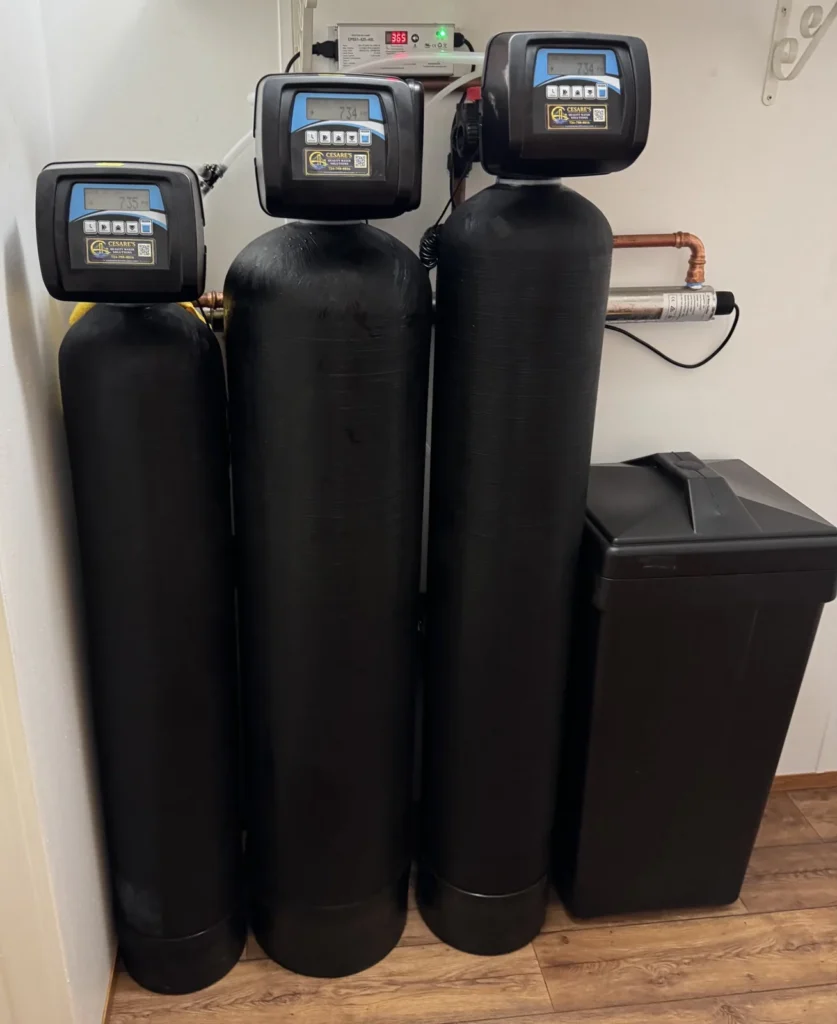
BEAVER FALLS, PA • MUNICIPAL WATER
BEAVER COUNTY CASE STUDY
On-Site Water Conditions
Total chloramine: 2.4 mg/L
Hardness: 8.6 gpg
TDS at the kitchen tap: 302 ppm
Concern: disinfectant taste and scale
Cesare’s Treatment Design
Our whole-house chloramine-capable carbon filtration, an ion-exchange softener for hardness, and reverse osmosis for drinking water at the kitchen.
Follow-Up Results
Total chloramine: below 0.10 mg/L
Hardness: 0.7 gpg
TDS at the RO tap: 18 ppm
Reduction: 94.0%
Measured before and after treatment
Disinfectant taste and scale on the Beaver Falls municipal system
A Beaver Falls homeowner wanted better-tasting water, less disinfectant odor, less scale and a purified drinking supply without buying bottled water. Testing measured 2.4 mg/L total chloramine, 8.6 grains per gallon of hardness and 302 ppm TDS at the kitchen tap. Because the Beaver Falls supply is disinfected with chloramine rather than free chlorine, the build used a Cesare’s chloramine-capable carbon bed, a softener, and a separate reverse osmosis system at the sink. Afterward chloramine measured below 0.10 mg/L, hardness 0.7 gpg, and the RO tap 18 ppm — a 94.0% reduction.
BEAVER COUNTY, PA • PRIVATE WELL
IRON, MANGANESE + SULFUR CASE STUDY
On-Site Water Conditions
Iron: 4.2 mg/L
Manganese: 0.18 mg/L
Hardness: 13.2 gpg
Hydrogen sulfide: 1.4 mg/L
pH: 7.1
Cesare’s Treatment Design
Oxidation-based iron, manganese and sulfur filtration, then a dedicated softener for the 13.2 gpg hardness, with UV disinfection where the analysis called for it.
Follow-Up Results
Iron: below 0.05 mg/L
Manganese: below 0.01 mg/L
Hardness: below 1 gpg
Hydrogen sulfide: non-detect
pH: 7.1, unchanged
Measured before and after treatment
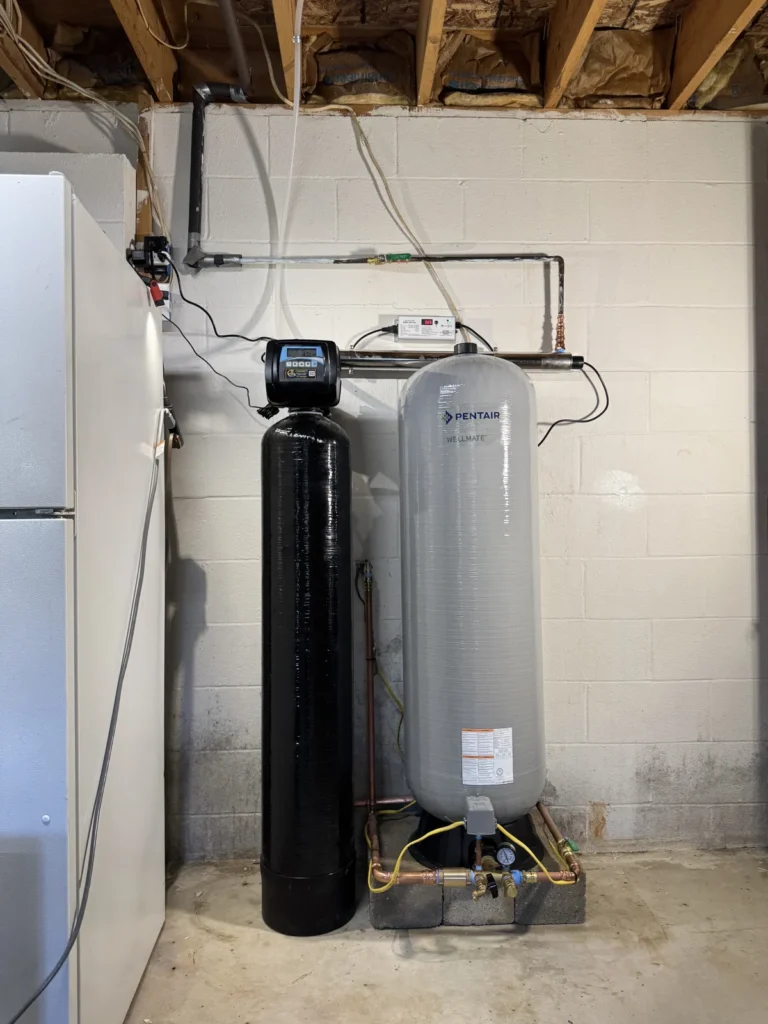
Orange staining, dark deposits, sulfur odor and scale on a Beaver County well
A Beaver County homeowner called Cesare’s about orange staining, dark staining around the fixtures, a rotten-egg odor and heavy mineral buildup. Testing measured 4.2 mg/L iron — fourteen times the 0.3 mg/L secondary standard — along with 0.18 mg/L manganese, 13.2 grains per gallon of hardness and 1.4 mg/L hydrogen sulfide, at a neutral pH of 7.1.
Four problems at once meant no single piece of equipment would do. Oxidation-based filtration handled the iron, manganese and sulfide together, a dedicated softener took the hardness, and UV was added as a final stage. Iron finished below 0.05 mg/L, manganese below 0.01, hardness below 1 grain per gallon and sulfide non-detect, with pH steady at 7.1.
The Beaver and Ohio river corridors run on three different public supplies — river water at Beaver Falls, reservoir water at Ambridge, groundwater wells at Aliquippa. Filtration, softening and drinking-water systems built for the supply that actually reaches your street.
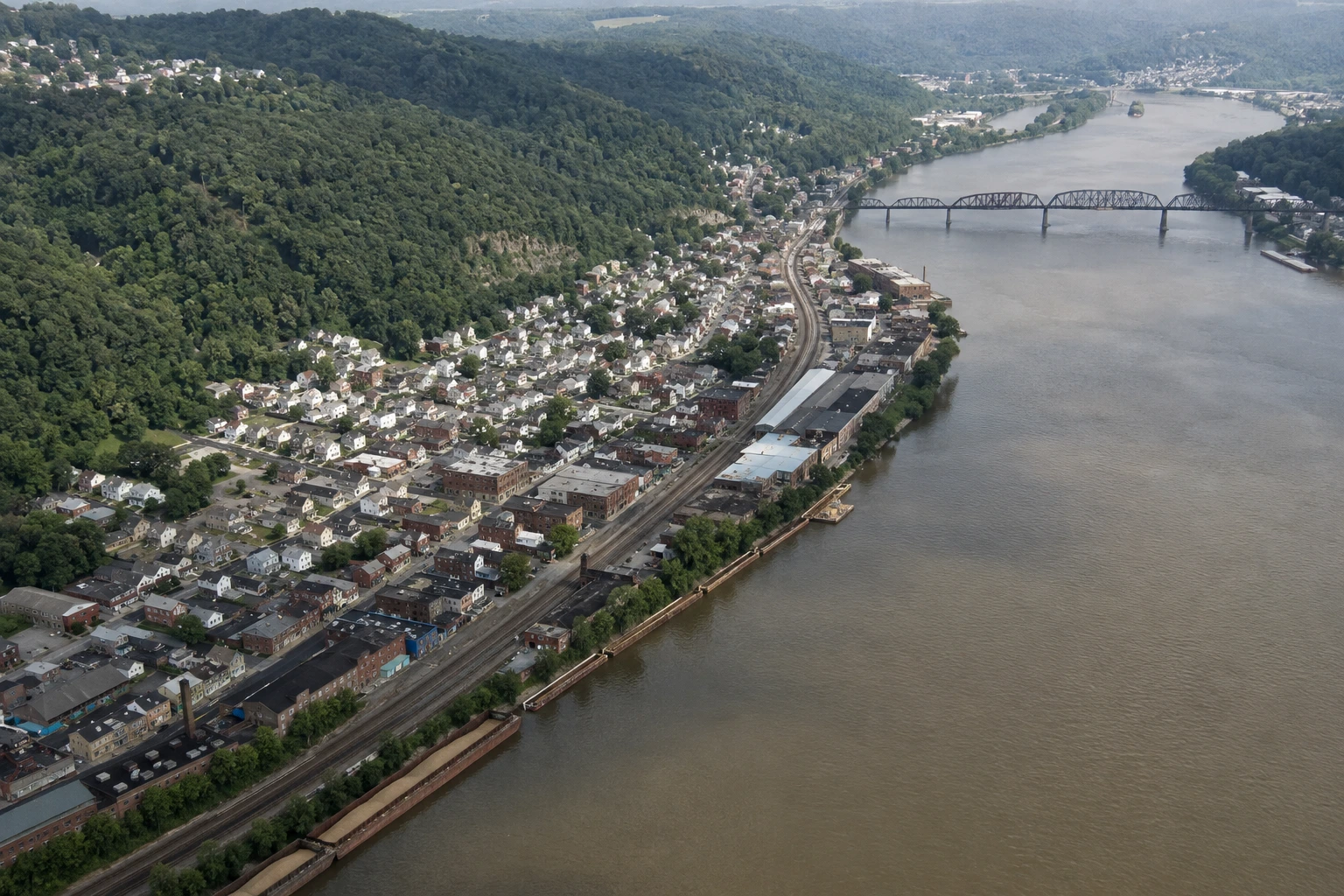
Beaver Falls New Brighton Chippewa Township Patterson Township Daugherty Township White Township North Sewickley Township Fallston
Beaver Bridgewater Monaca Rochester Aliquippa Ambridge Baden Economy
West and south of the river towns, Beaver County is well country — farmland, wooded ridges and small villages where most homes run on their own supply. Iron, manganese, hardness and bacteria treatment here starts with what the tap test shows.
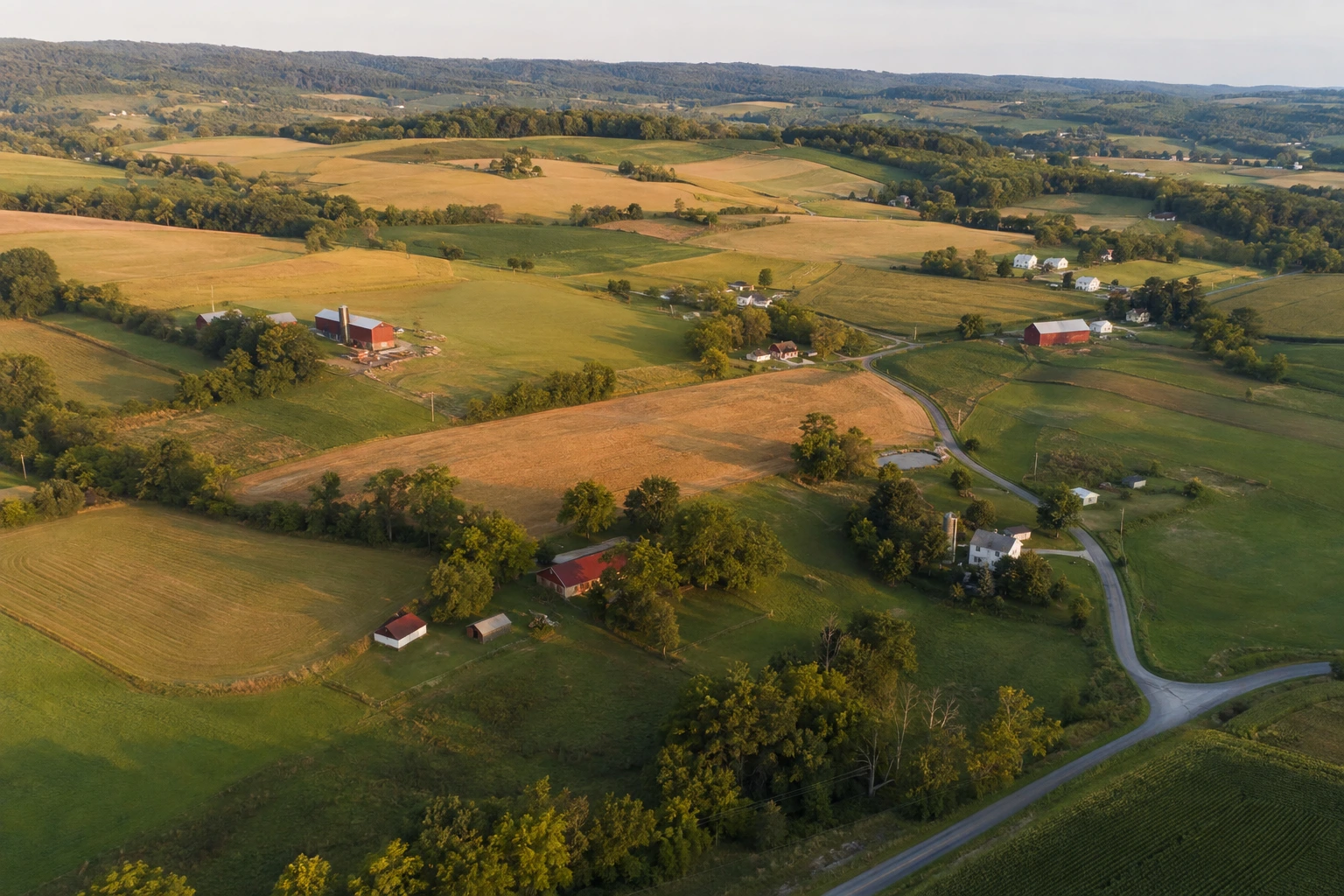
Darlington South Beaver Township Ohioville Industry Midland Glasgow Greene Township Hanover Township
Hookstown Raccoon Township Potter Township Independence Township Frankfort Springs Georgetown Hopewell Township Center Township
Cesare’s Quality Water Solutions designs, installs and services water treatment across Beaver County, for homes on municipal water and homes on private wells. That includes water testing, whole-house filtration, water softening, iron and manganese removal, sulfur treatment, UV disinfection and reverse osmosis. We identify the water source and test at the tap first, because Beaver County runs on several separate public systems plus a lot of wells.
All of it. Beaver Falls, Beaver, New Brighton, Rochester, Aliquippa, Ambridge, Baden, Monaca, Economy, Chippewa, Center Township, Hopewell Township, Brighton Township, New Sewickley, Darlington, Ohioville, Midland and the rural townships between them. Which utility serves your address, or whether you are on a well, changes the answer more here than in most counties.
Penn State’s water lab summarizes 220 drinking-water samples submitted from Beaver County between October 2007 and June 2025. Among the samples tested, manganese was over the 0.05 mg/L limit in 28 of 94, iron was over 0.3 mg/L in 18 of 87, total coliform bacteria turned up in 108 of 207, and E. coli in 25 of 207. Median hardness ran 153.7 mg/L, about 9.0 grains per gallon. These are homeowner-submitted samples, not a survey of every property, which is why we start with water testing at your tap.
No — this is one of the most divided counties we serve. Beaver Falls Municipal Authority treats Beaver River water. Ambridge Water Authority uses Service Creek Reservoir. The Municipal Water Authority of Aliquippa runs on groundwater. New Sewickley Township buys from three different authorities depending on the neighborhood. And private wells cover much of the rest. The supplier, not the county, decides what treatment makes sense.
The Beaver River, which the authority describes as formed by the confluence of the Mahoning and Shenango rivers near New Castle, with Connoquenessing Creek, Pymatuning Creek and Brush Creek feeding the watershed above its plant. Beaver Falls Municipal Authority serves roughly 50,000 people across 23 municipalities, so a large share of the county is drinking treated Beaver River water.
Chloramine normally — but not year-round. Beaver Falls Municipal Authority temporarily switches to free chlorine during its annual DEP-required system flushing, then returns to chloramine when the flushing is finished; after the 2026 program it announced going back to chloramine on July 27. That matters for filtration, because chloramine and free chlorine call for different carbon. A filter sized only for chlorine will disappoint you the rest of the year.
Ambridge Water Authority draws from Service Creek Reservoir, which its report describes as a spring-fed, surface-water-influenced upland reservoir about seven miles from the treatment plant. Ambridge uses chlorine, not chloramine, added before and after filtration, with a distribution residual reported between 0.25 and 1.56 mg/L. It also sells water to Baden, Edgeworth and parts of New Sewickley, so the chlorine profile reaches past Ambridge itself.
Groundwater, which makes it the odd one out among Beaver County’s larger systems. The Municipal Water Authority of Aliquippa serves Aliquippa plus portions of Hopewell, Raccoon and Potter townships, and it completed a new water filtration plant replacing a facility built in the 1940s. Groundwater behaves differently from river or reservoir supplies, so treatment designed for a Beaver Falls home is not automatically right for an Aliquippa one.
It is worth doing. The authority has issued public notices about lead: in the sampling round covered by its notice, five of the 34 homes sampled came back above the federal action level of 0.015 mg/L, with a 90th-percentile result of 0.0223 mg/L. The utility has been running corrosion-control work and built the new treatment plant in response. Its own guidance is practical — run the tap about 60 seconds before drinking or cooking, and use cold water for cooking and infant formula. Because lead usually enters from the service line and the home’s own plumbing, a first-draw test at your faucet is the only thing that answers the question for your house.
Three different authorities, depending on where you live. New Sewickley Township Municipal Authority’s report says it purchases from Beaver Falls Municipal Authority for the 9th Street and Harvey Run Road area, from Ambridge Water Authority for Liberty Hills, and from West View Water Authority for the Tri-County Commerce area. Three neighborhoods, three source waters, potentially three different disinfectants. It is the clearest argument in the county for designing treatment from the address rather than the township.
Generally yes, and harder than most of the region. The median across Penn State’s Beaver County samples is 153.7 mg/L, about 9.0 grains per gallon, with individual results ranging from under 1 up to 678 mg/L. At 9 grains you will see scale on fixtures, spotting on glassware and shorter appliance life. A softener still gets sized from the hardness measured at your home, not the county median.
Black or dark staining usually points to manganese, and orange or rust-colored staining to iron. Manganese is the more common finding here: Penn State found it over the limit in 28 of 94 Beaver County samples tested, against iron in 18 of 87. That ordering matters, because manganese needs different handling than iron and is easy to under-treat. The fix is iron and manganese filtration matched to what the test actually finds.
It is the county’s most-failed test: 54 of 80 corrosivity-index samples in Penn State’s Beaver County submissions — 67.5% — fell outside the acceptable range — some on the corrosive side, others scale-forming — and submitted pH ran all the way from 4.6 to 9.3. Corrosive water eats at copper and galvanized plumbing and raises the odds of metals leaching from your own pipes, solder and fixtures. Since corrosion potential depends on more than pH, the treatment gets designed from the full analysis, usually a neutralizer ahead of the plumbing.
That smell usually points to hydrogen sulfide or another sulfur condition, and where it shows up narrows it down. If the odor is in both hot and cold water, the well or supply is likely involved; if it only appears on the hot side, the water heater may be contributing. Sulfur often travels with iron and manganese around here, so we test for all of it before choosing an approach.
Pennsylvania DEP recommends testing private well water every year for total coliform bacteria, nitrates, total dissolved solids and pH, through a state-certified lab, plus anything else you have reason to suspect. In Beaver County it is worth adding manganese, iron, hardness and sulfur whenever there is staining, scale or odor. Nitrate has been the quiet good news locally — none of the 53 Penn State samples tested exceeded the standard.
Treat it as a safety issue. DEP’s guidance is not to consume the water unless it has been brought to a rolling boil for one minute, or to use bottled water for drinking and food preparation while the problem is investigated. Then the well gets evaluated for how contamination is entering, disinfected or repaired, and retested. Properly designed UV disinfection gives continuous protection for water passing through the reactor — but it does not repair a contaminated well or stop new contamination from entering, so the evaluation is what fixes the cause. Locally this comes up often: 108 of 207 submitted samples tested positive for total coliform and 25 of 207 for E. coli.
Public systems now monitor for PFAS and publish what they find. Ambridge Water Authority’s current report, for example, lists PFOA detected at 2.5 parts per trillion from its 2024 sampling, below the applicable limit. For a home with a confirmed concern, the EPA identifies granular activated carbon, ion exchange and reverse osmosis as technologies capable of reducing PFAS, and recommends equipment carrying an appropriate third-party PFAS-reduction certification. A utility result describes the system, not your faucet, so treatment decisions still start from testing.
It depends on which water you have. A Beaver Falls home needing Cesare’s chloramine-capable carbon is a different project from an Ambridge home on chlorine, an Aliquippa home focused on drinking-water treatment, or a rural well carrying manganese, hardness and corrosive water at once. Flow rate, plumbing and the number of stages all factor in. Cesare’s prices a system after testing the water and identifying what the property actually requires — not before.
Straight answers to the water questions we hear most in Beaver County.
See how Beaver County compares with 12 other Southwestern Pennsylvania counties for hardness, iron, manganese, bacteria and corrosivity in the 2026 Southwestern PA Water Quality Report.
2026 Southwestern PA Water Quality Report →
Get a professional water analysis and a custom treatment plan—clear answers, no pressure.