
Well Water Iron & Manganese Solutions
Iron & Manganese Removal
Stop the Stains at the Source
Orange rings in the toilet. Rust stains in the shower. Black deposits in the dishwasher. If your well water has iron or manganese, you’re seeing the evidence everywhere. We design whole-house filtration systems that target iron and manganese at the levels actually present in your water—not a guess, not a generic filter, but Custom-Designed media engineered for your exact chemistry.
The Problem
What Iron and Manganese Do to Your Home
Iron and manganese are naturally present in groundwater throughout Southwestern Pennsylvania. They’re not typically dangerous at the levels found here, but even small concentrations create serious cosmetic and practical problems.
Iron Problems
Visible above 0.3 mg/L
- Orange/rust stains in toilets, sinks, tubs, and showers
- Rust-colored water especially noticeable in white laundry
- Metallic taste that makes water unpleasant to drink
- Stained fixtures that look dirty no matter how often you clean
- Appliance damage from iron buildup in water heaters and dishwashers
- Clogged pipes as iron deposits accumulate over time
Manganese Problems
Visible above 0.05 mg/L
- Black or brown stains in dishwashers, toilets, and on fixtures
- Dark particles in water that settle in glasses and ice trays
- Discolored laundry with dark spots or grayish tint
- Bitter taste that affects drinking water and cooking
- Slimy buildup inside pipes and on plumbing components
- Staining at lower levels than iron—even trace amounts are visible
Iron and manganese frequently occur together in Southwestern PA well water. When both are present, staining can range from orange to brown to black depending on concentrations and pH. Effective treatment must address both.
Real Results
This Is What Iron Does — And What We Fix
These aren’t stock photos. This is what iron and manganese contamination actually looks like in Southwestern PA homes — and what happens after Cesare’s installs the right system.
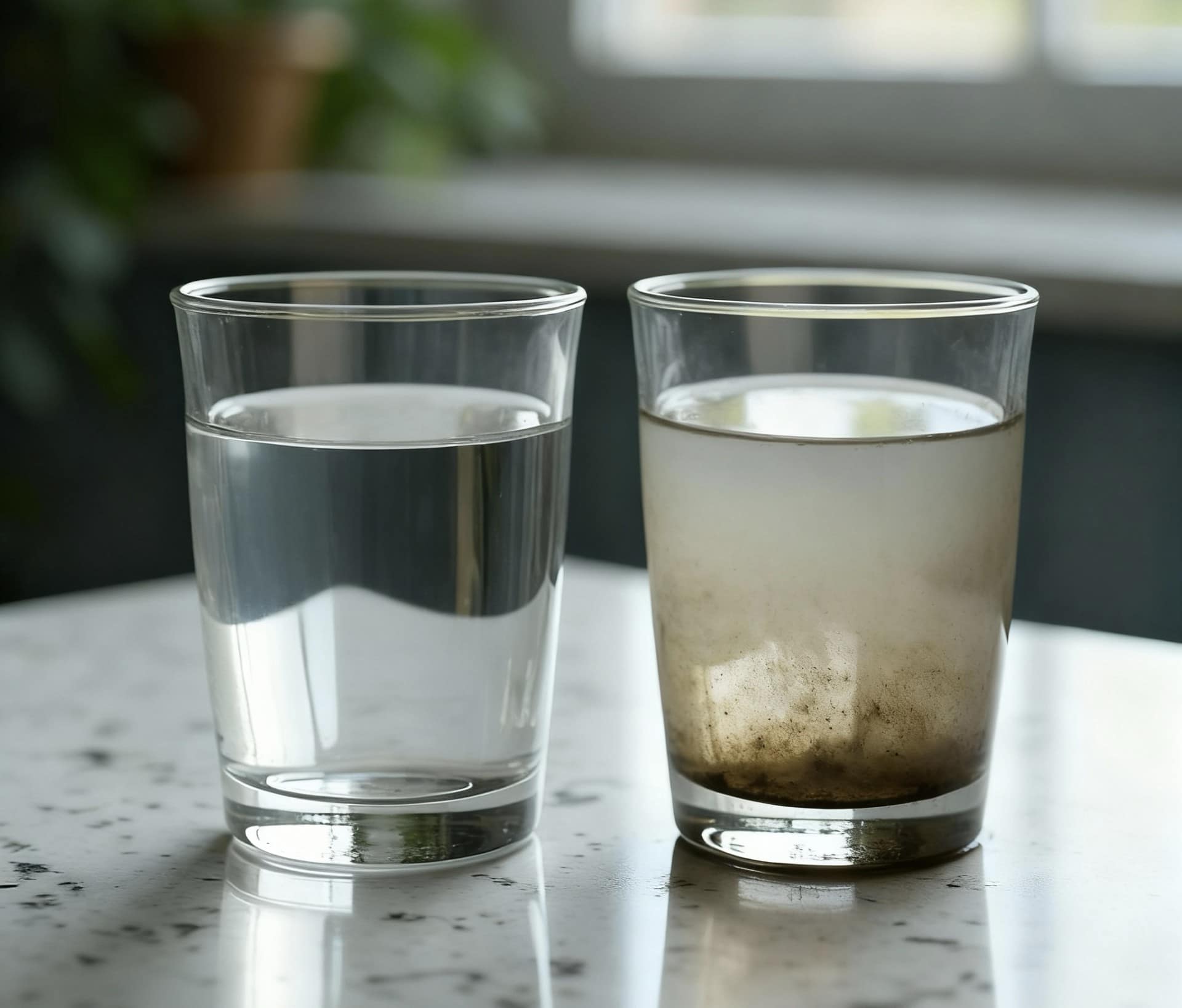
The Cesare’s Difference — One System Away
The glass on the left is what comes out of the tap before treatment. The glass on the right is after our custom-engineered iron and manganese filtration system does its job. Same well. Same water source. The only difference is the system we designed and installed based on this homeowner’s water test results. This is what properly engineered treatment looks like.
🚨 What Untreated Iron Water Looks Like
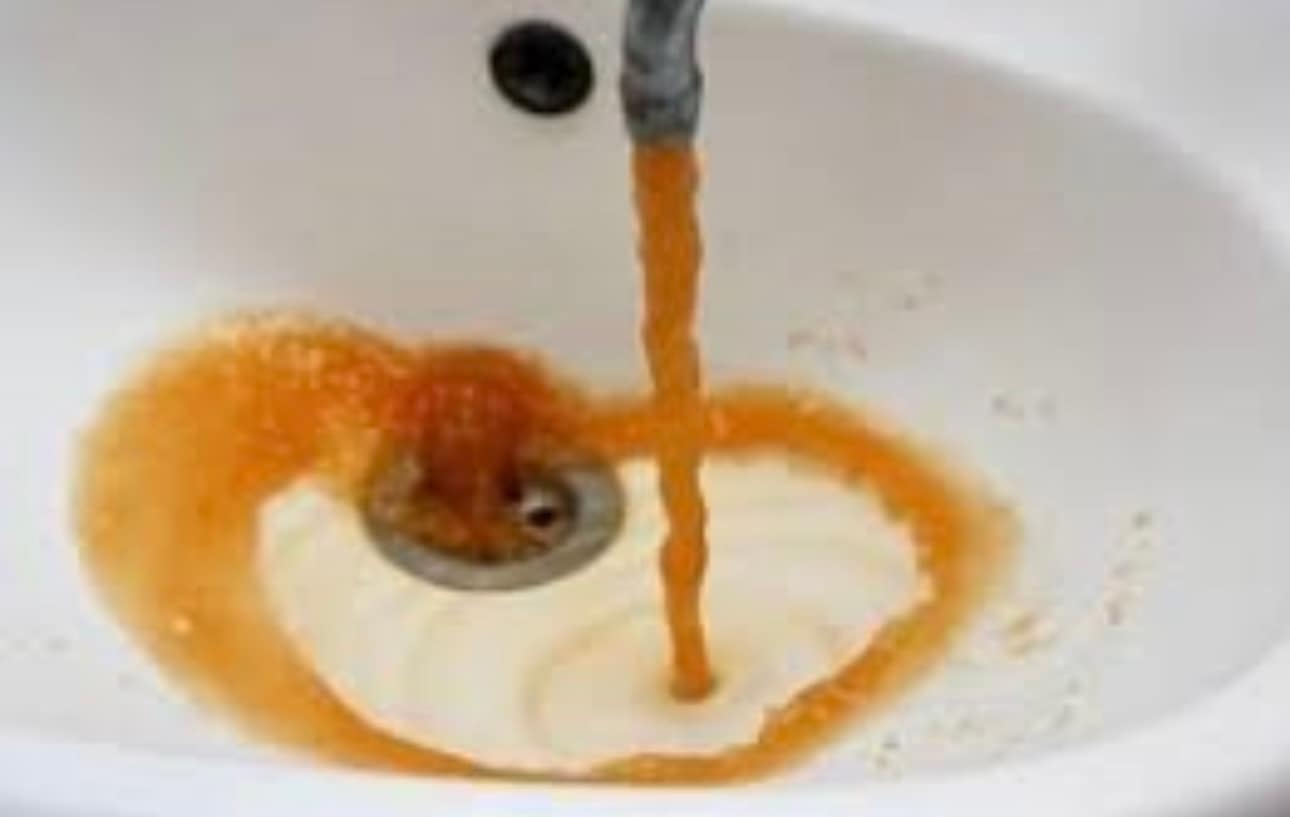
Before Treatment
This is a glass of untreated well water from a home in our service area. The orange-brown discoloration is dissolved iron that has oxidized on contact with air. This water was being used for drinking, cooking, bathing, and laundry — staining everything it touched.
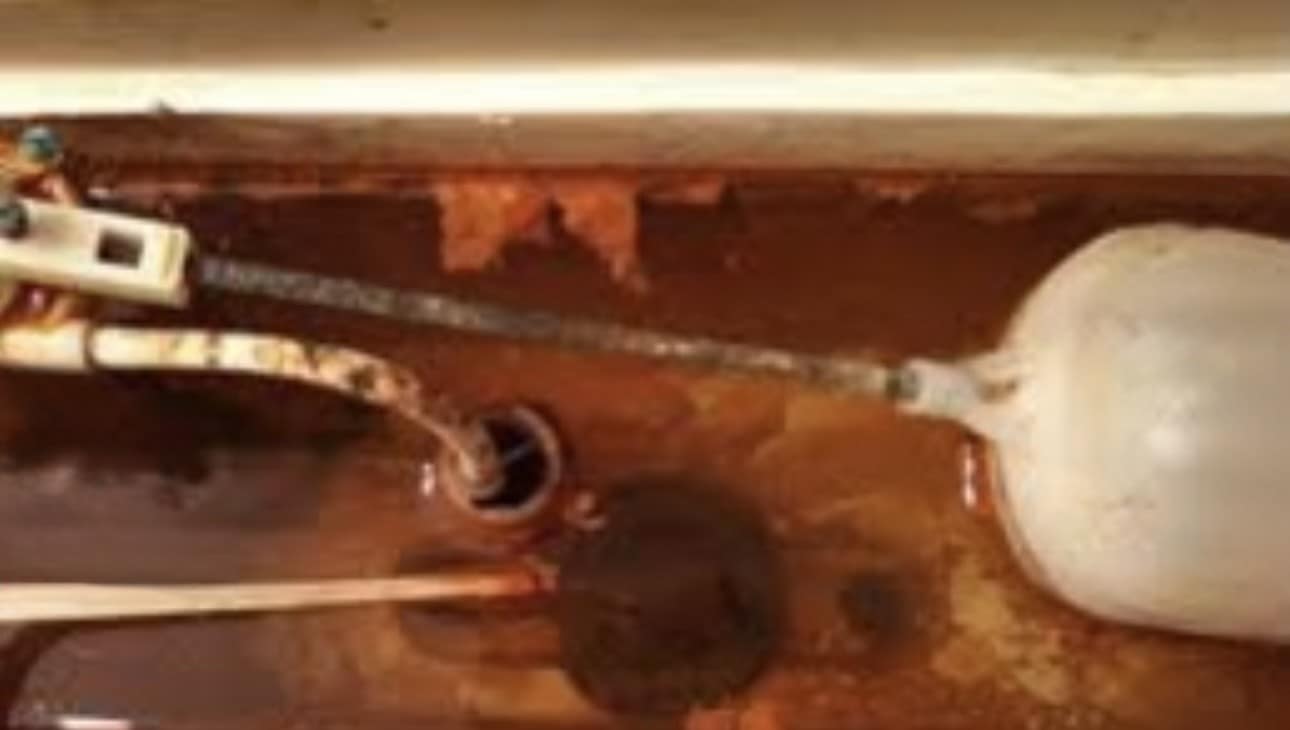
Before Treatment
Heavy rust staining in a toilet bowl caused by elevated iron levels in the home’s well water. No amount of scrubbing removes this permanently — the iron is in the water itself. Within days of cleaning, the stains return. The only real solution is treating the water before it reaches your fixtures.
Does Your Water Look Like This?
If you’re seeing orange, brown, or black staining anywhere in your home, your water has iron, manganese, or both. A single water test tells us exactly what’s in your water and at what levels — so we can design the right system to eliminate it.
Why It’s Complicated
Not All Iron Is the Same
Iron appears in well water in different forms, and each requires a different treatment approach. This is why testing matters—and why generic filters often fail.
Clear Water Iron (Ferrous)
Water looks clear from the tap but turns orange after sitting. The iron is dissolved and invisible until it contacts air. This is the most common form in PA well water.
Treatment approach: Oxidation to convert dissolved iron to filterable particles, then filtration with Custom-Designed media.
Red Water Iron (Ferric)
Water is already orange or reddish from the tap. The iron has already oxidized and is present as visible particles. Often seen when water has been exposed to air in the well or pressure tank.
Treatment approach: Filtration to capture oxidized particles. May be simpler than ferrous iron treatment depending on levels.
Iron Bacteria
Slimy, reddish-brown deposits in toilet tanks, pipes, and fixtures. A foul odor may accompany it. Iron bacteria aren’t harmful but create persistent biofilm that regular filters can’t handle alone.
Treatment approach: Requires more aggressive oxidation, often combined with UV or chlorination, plus filtration. We assess the severity and design accordingly.
Colloidal Iron
Very fine iron particles that stay suspended in water and resist settling. Water appears hazy or tea-colored. Standard filters may not capture these ultra-fine particles.
Treatment approach: Requires specialized oxidation and filtration media selection. Testing determines particle size and appropriate media.
Our Approach
Custom-Engineered, Not Guesswork
We test your water to determine exactly what forms of iron and manganese are present, at what concentrations, and at what pH. Then we design a system matched to those results.
Comprehensive Water Testing
We measure dissolved iron, oxidized iron, manganese, pH, hydrogen sulfide, hardness, and other parameters that affect treatment design. Iron type matters as much as iron level.
System Design Around Your Data
Based on test results, we select the right oxidation method and Custom-Designed media configuration. Systems may include pre-oxidation, filtration, softening, or multi-stage treatment depending on what your water needs.
Professional Installation
We install the complete system—plumbing connections, backwash drain routing, bypass valves, and controller programming. Everything is pressure-tested and calibrated before we leave.
Verification & Documentation
We verify treated water quality, walk you through the system, and document baseline conditions. Your test results are on file for warranty coverage and future reference.
Local Ongoing Support
Based in Murrysville, we’re available for maintenance, media replacement, and questions. Our systems are backed by up to a 10-year warranty (terms apply).
Our Systems
Iron & Manganese Filtration Systems We Install
Every system is custom-engineered based on your water test results. Here’s a look at the iron and manganese treatment configurations we design and install across Southwestern PA.
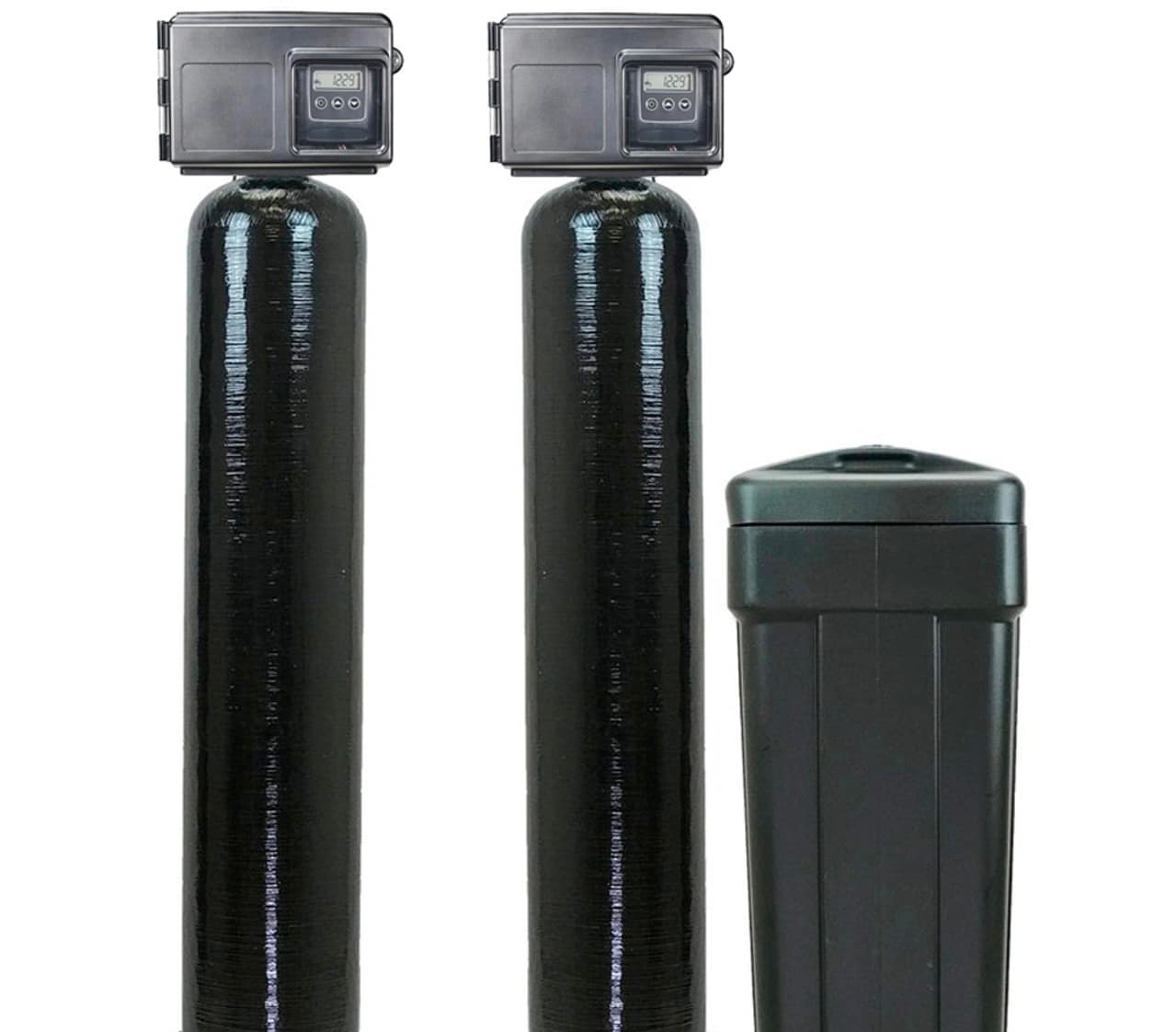
Multi-Stage Configuration
Iron & Manganese Filter + Multi-Stage Softener
This configuration pairs a dedicated iron and manganese filtration tank on the left with a multi-stage water softener system on the right. The iron filter uses Custom-Designed media to oxidize and capture dissolved iron and manganese before the water reaches the softener — protecting the softener resin from fouling and ensuring both systems perform at their best. This is our most common setup for well water homes with high iron and hard water.
Dual-Tank Configuration
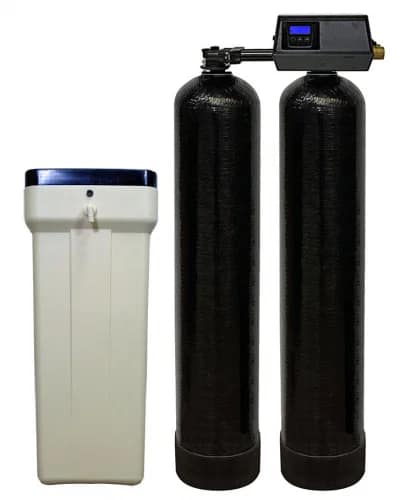
Dual-Tank Iron & Manganese System
Two filtration tanks connected by a shared control valve, working together to handle elevated iron and manganese levels. The dual-tank design provides greater media capacity and longer service cycles between backwashes — ideal for homes with higher contamination levels or greater water demand. The shared valve simplifies operation while giving us the flexibility to load each tank with the specific media your water chemistry requires.
Cesare’s Install
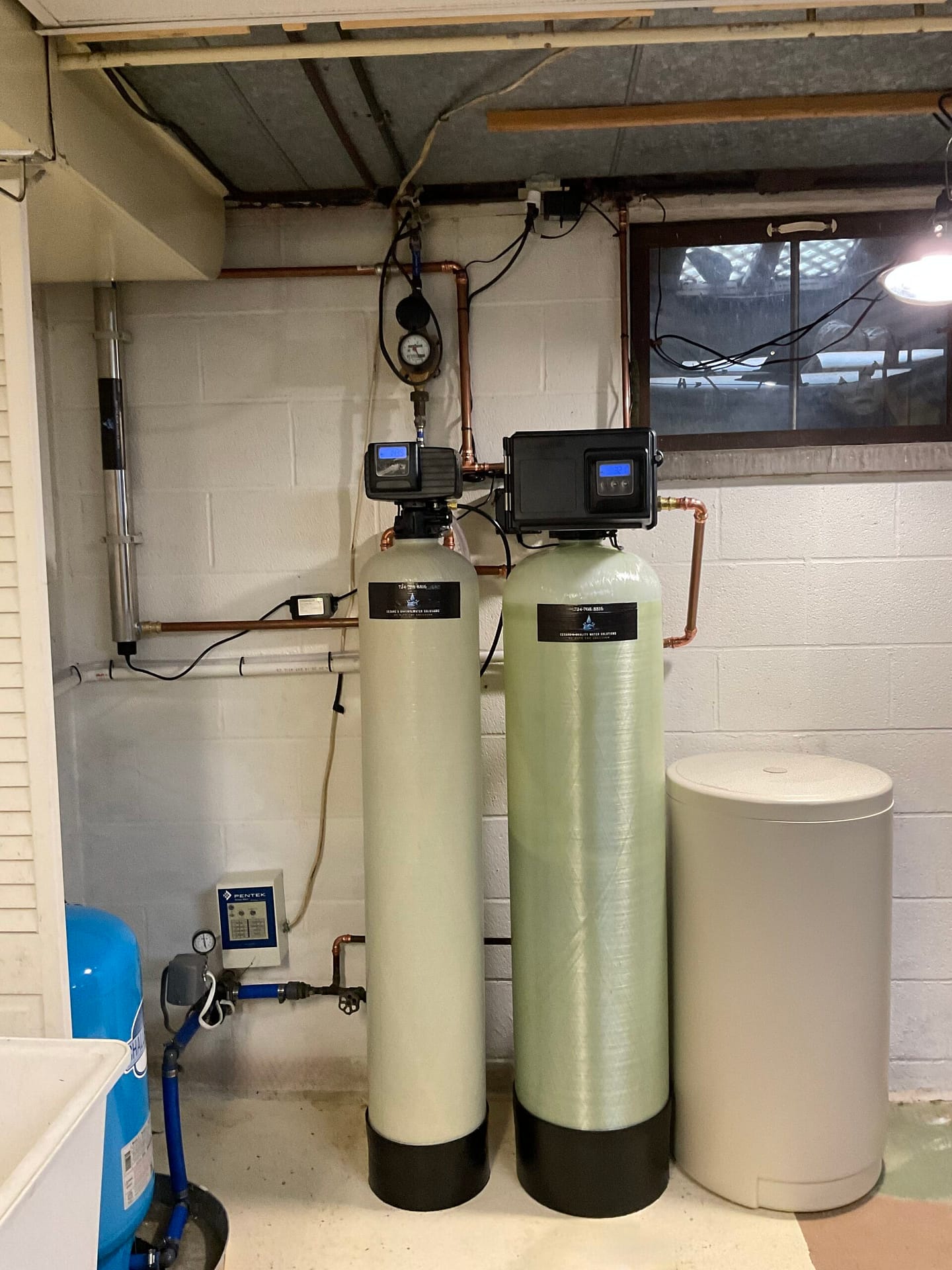
Complete Treatment System — Real Installation
This is an actual Cesare’s installation in a local homeowner’s basement. On the left, a multi-stage iron and manganese filtration system with its brine tank. On the right, a multi-stage water softener with its own brine tank. A UV disinfection light is also integrated to help inactivate microorganisms. Every component is plumbed with proper bypass valves, drain routing, and individual programming calibrated to this homeowner’s water test results.
Cesare’s Install
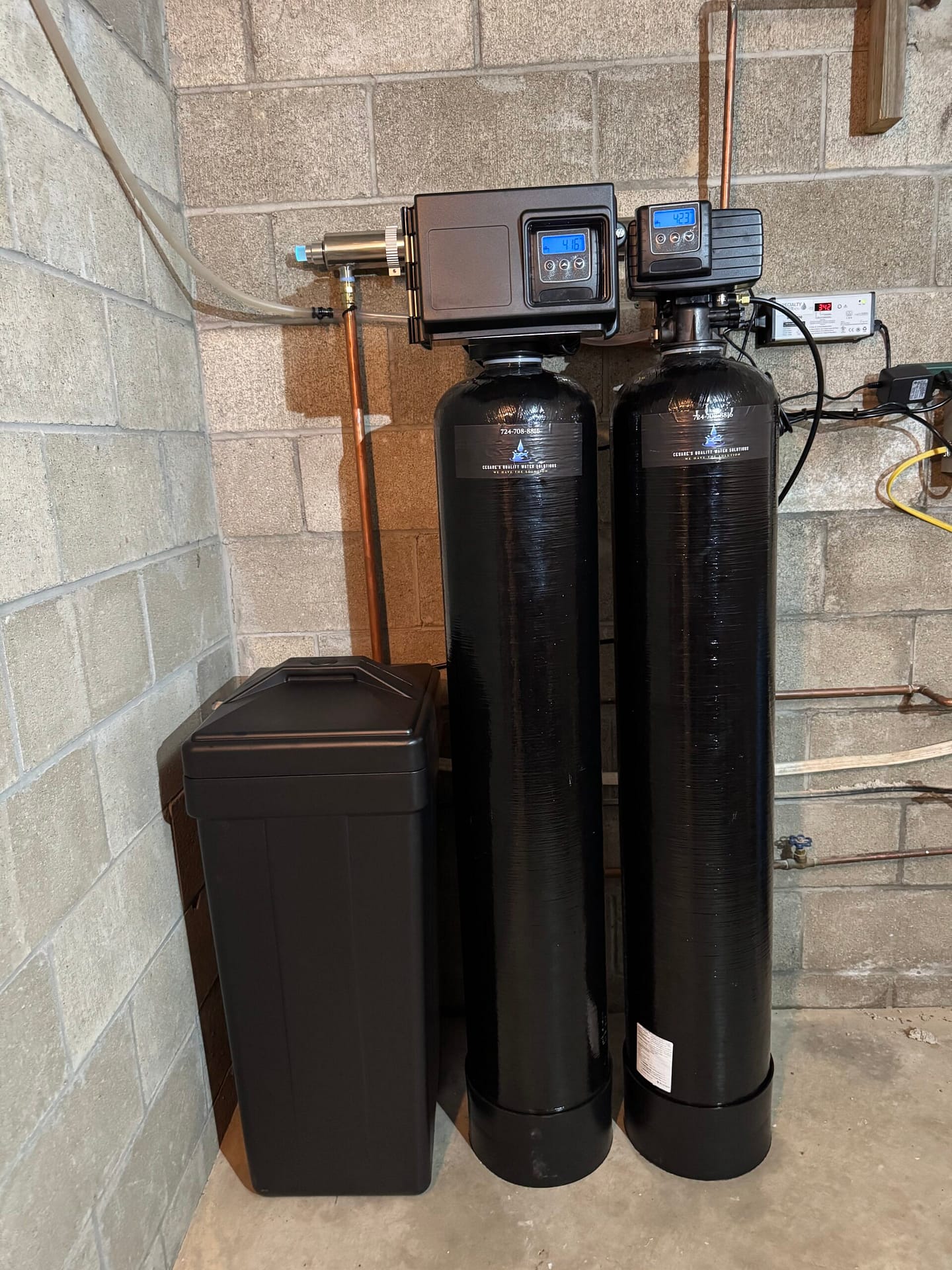
Multi-Stage System With UV Protection — Real Installation
Another complete Cesare’s installation featuring the same proven approach — multi-stage iron and manganese filtration on the left, multi-stage softener on the right, each with dedicated brine tanks, and a UV disinfection system integrated into the water line. This is what whole-house water treatment looks like when it’s designed around actual test data: clean plumbing, organized layout, and every component sized and programmed for the home’s specific water chemistry.
Critical Factor
Why pH Matters for Iron Removal
Many iron filters fail not because they’re bad products, but because the installer didn’t account for pH. Iron oxidation and filtration depend heavily on water pH:
- Low pH (acidic water) keeps iron dissolved, making it harder to filter. Many oxidizing media require a minimum pH to function properly.
- Neutral to slightly alkaline pH allows iron to oxidize readily and be captured by filtration media.
- Very low pH can also corrode copper pipes, creating blue-green stains that get misdiagnosed as iron problems.
This is why we test pH as part of every iron removal consultation. If your pH is low, we may recommend pH correction before or alongside iron filtration—otherwise the iron filter won’t perform as expected.
Common in SW Pennsylvania
Well water in our region frequently has both high iron and low pH. A system that addresses only one will underperform. We design for the full picture.
Recognize the Signs
Does Your Water Have Iron or Manganese?
Orange or rust stains
In toilets, sinks, tubs, or on laundry
Black stains or deposits
In dishwashers, on fixtures, or in water
Brown or discolored water
From the tap, especially in the morning
Metallic taste
Water tastes like metal or pennies
Slimy reddish film
In toilet tank, pipes, or pet water bowls
Stained laundry
Whites turning orange, gray, or spotted
Seeing any of these? Water testing confirms exactly what’s in your water and at what levels—so we can design the right fix.
Coverage Area
Iron & Manganese Treatment Throughout Southwestern PA
Iron and manganese are among the most common well water issues in our 13-county service area. We install whole-house filtration systems throughout the region.
Allegheny County
Butler County
Washington County
Fayette County
Indiana County
Armstrong County
Beaver County
Lawrence County
Mercer County
Somerset County
Cambria County
Greene County
Based in Murrysville. Professional iron and manganese treatment throughout the region.
Common Questions
Iron & Manganese Removal FAQs
Can a water softener remove iron?
Water softeners can handle low levels of dissolved iron—typically under 1-2 mg/L depending on conditions. But most well water in Southwestern PA has iron levels above that threshold, often 3-10+ mg/L. At those concentrations, iron fouls the softener resin and reduces its effectiveness. A dedicated iron filtration system with Custom-Designed media is the proper solution for moderate to high iron.
Why does my water look clear but still stain?
You have “clear water iron” (ferrous iron)—it’s dissolved and invisible in the water. When it contacts air (like when water splashes on a surface), it oxidizes and turns orange. This is the most common form in our area and requires an oxidation step before filtration to convert the dissolved iron into particles that can be captured.
What’s the difference between iron and iron bacteria?
Iron in water is a dissolved mineral. Iron bacteria are living organisms that feed on iron and create slimy, reddish-brown biofilm inside pipes, toilet tanks, and fixtures. Iron bacteria also produce unpleasant odors. Treatment for iron bacteria is more involved—it typically requires aggressive oxidation (sometimes chlorination) combined with filtration, not just filtration alone.
How much iron is too much?
The EPA secondary standard for iron is 0.3 mg/L—above that, staining becomes noticeable. Manganese staining starts even lower at 0.05 mg/L. These aren’t health-based standards (iron and manganese at typical well water levels aren’t dangerous), but they represent the point where cosmetic and practical problems begin. Most of our customers have iron between 1-10 mg/L.
Will a whole-house filter slow down my water pressure?
A properly sized system should not noticeably reduce water pressure. We design systems around your well’s flow rate and your household demand. Undersized systems cause pressure drops; that’s why we test flow rate as part of our assessment. The system we install matches your actual capacity.
How does the backwash cycle work?
Iron filters periodically backwash—reversing water flow through the media to flush out captured iron and manganese particles. This happens automatically on a programmed schedule (usually overnight). The backwash water goes to drain. A properly programmed backwash cycle keeps the media clean and effective for years.
How long does the filter media last?
Custom-Designed filtration media typically lasts several years before needing replacement, depending on iron and manganese levels, water usage, and proper maintenance. We’ll give you a realistic timeline based on your specific water chemistry. Media replacement is a standard service call—not a full system replacement.
Can you fix my existing iron filter that isn’t working?
Yes. We service iron removal systems regardless of who installed them. Common issues include exhausted media, improper programming, insufficient backwash, or pH problems that prevent the media from working correctly. We’ll test your water, evaluate your equipment, and give you honest options—repair, reprogramming, media replacement, or system redesign if needed.
Do I need iron removal AND a water softener?
Often, yes. Iron filtration handles iron and manganese; a water softener handles hardness (calcium and magnesium). In our region, well water frequently has both problems. We design multi-stage systems where iron is treated first, then hardness—each stage optimized for its specific job.
How do I get started?
Call us at 724-708-8816 or fill out the form below. We’ll schedule a water test to measure your iron, manganese, pH, and other relevant parameters. From there, we design a system matched to your actual water chemistry. No guessing, no pressure.
Stop the Stains for Good
Iron and manganese staining won’t go away on its own—and no amount of cleaning products can fix a water chemistry problem. The solution starts with testing. Contact us for a professional water analysis and custom system recommendation.

Best Purification Company
2026 BusinessRate Award Winner
End Iron and Manganese Staining Permanently
Custom-engineered filtration systems built for your exact water chemistry. Professional installation. Local support. Up to 10-year warranty.