
Well Water Disinfection & Bacteria Removal
Bacteria Treatment Systems
UV Disinfection & Continuous Chlorination for Safe Well Water
Bacteria in well water is one of the most common — and most serious — water quality problems affecting private wells in Pennsylvania. Whether you’re dealing with coliform bacteria, E. coli, or the persistent biofilm buildup from iron bacteria, the right treatment approach depends on what’s actually in your water. We test, diagnose, and install professional-grade disinfection systems engineered for your specific situation.
of PA Private Wells
Test Positive for Coliform
Pennsylvanians on
Private Well Water
Continuous Protection
With Proper Treatment
Understanding the Problem
Two Different Bacteria Problems — Two Different Solutions
Not all bacteria problems in well water are the same. The treatment that works for coliform or E. coli is different from what’s needed for iron bacteria. Getting it right starts with understanding what you’re dealing with.
Coliform & E. Coli Bacteria
Disease-Causing Organisms in Your Water Supply
Coliform bacteria are surface organisms that indicate your well may have a pathway allowing contamination to enter your groundwater. E. coli — a more specific indicator — signals fecal contamination, meaning potentially dangerous pathogens like Salmonella, Giardia, Cryptosporidium, and viruses may also be present.
Signs & Risks
- Often invisible — no taste, smell, or color change
- Can cause stomach cramps, diarrhea, nausea, and fever
- Infants, elderly, and immunocompromised at highest risk
- Positive test means water is unsafe to drink without treatment
- Can appear after heavy rain, spring thaw, or well work
Iron Bacteria
Biofilm-Forming Organisms That Clog and Stain
Iron bacteria are naturally occurring organisms that feed on dissolved iron and manganese in groundwater. They produce a thick, slimy biofilm — a reddish-brown or orange deposit — that clings to well casings, pump intakes, pipes, filters, and fixtures. While not typically a direct health risk, they create conditions where harmful organisms can grow and cause severe damage to wells and plumbing.
Signs & Symptoms
- Reddish-brown, orange, or yellow slime on fixtures and toilet tanks
- Rainbow-colored or oily sheen on standing water
- Swampy, musty, or sewage-like odors
- Clogged pump intakes, filters, and reduced well yield
- Recurring staining that returns after shock chlorination
- Gets worse over time — biofilm builds in layers
Solution 1 — Chemical-Free Disinfection
UV Disinfection Systems
Ultraviolet disinfection is one of the most effective methods for treating coliform bacteria, E. coli, and other waterborne pathogens in private well water. UV light disrupts the DNA of microorganisms as water flows through a stainless steel chamber — preventing them from reproducing and rendering them inactive. No chemicals, no taste changes, no residue.
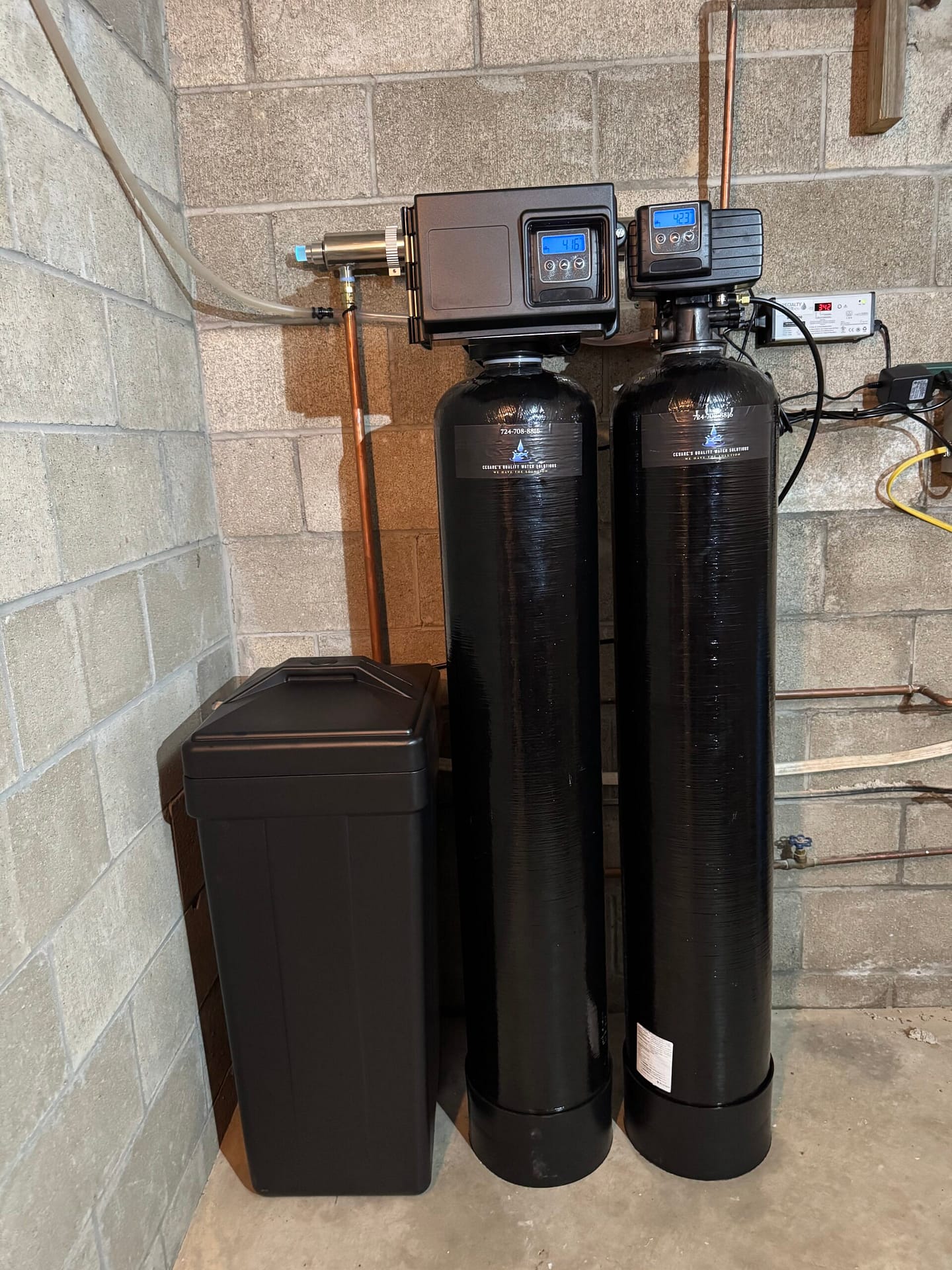
One of our UV disinfection installations — integrated with whole-house filtration and conditioning
How UV Disinfection Works
Water enters a stainless steel chamber housing a specialized UV-C lamp emitting light at 254 nanometers — the wavelength most effective at disrupting microbial DNA. As water passes the lamp, microorganisms absorb UV energy that damages their genetic material, preventing reproduction. The process is immediate: properly sized systems help inactivate microorganisms as water flows through in real time, providing continuous disinfection every time you turn on a tap.
The germicidal wavelength proven most effective against bacteria, viruses, and protozoa
The dose recognized by regulatory bodies for effective pathogen inactivation
Corrosion-resistant, food-grade construction for continuous residential use
Uses roughly the energy of a 60-watt bulb — annual lamp replacement is the primary upkeep
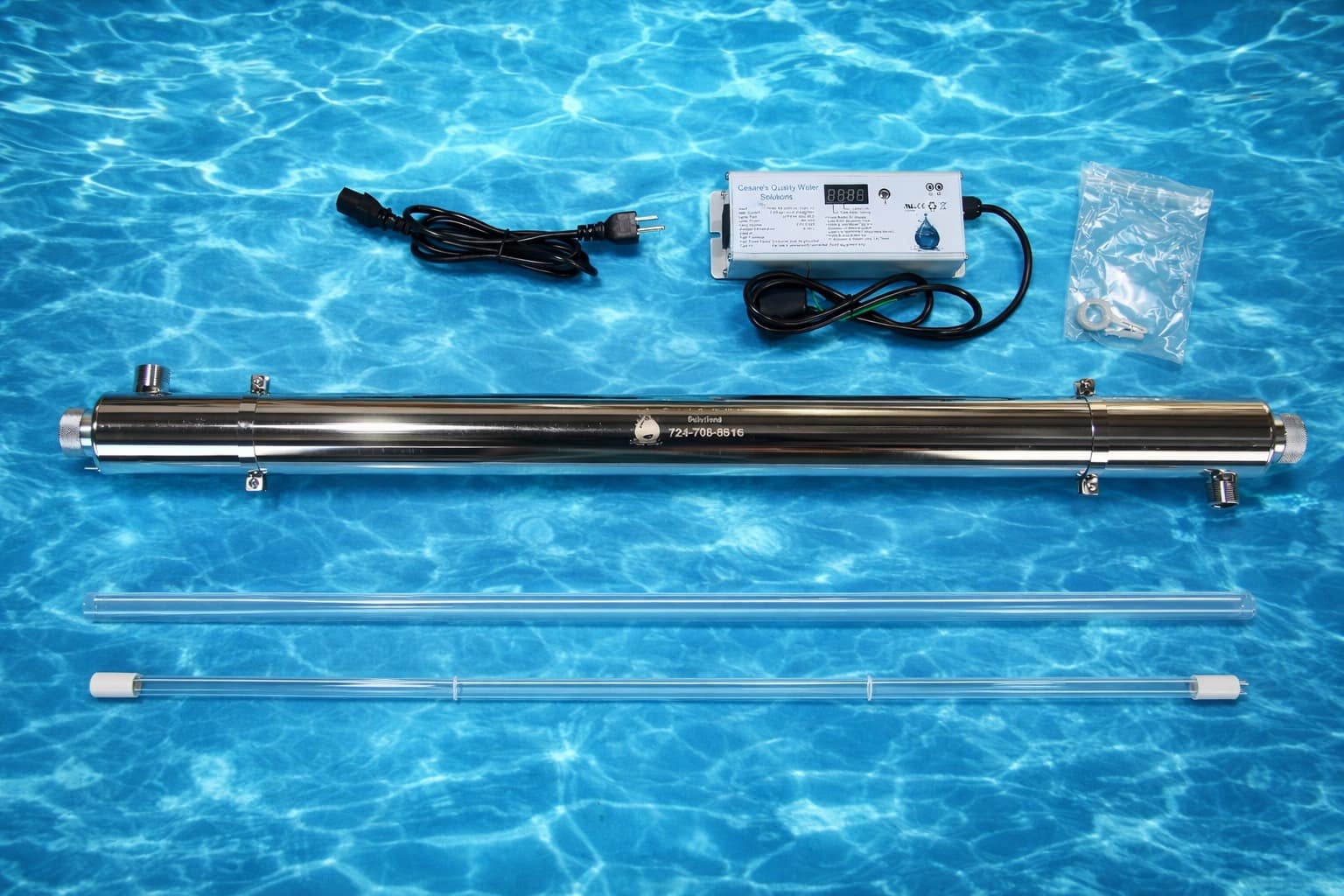
Complete treatment train with UV as the final disinfection stage — installed by our team
Installed as Part of a Complete Treatment Train
UV is always the final stage in a properly designed treatment system. We position the UV chamber after all pre-treatment — filtration, conditioning, and softening — so the water reaching the lamp is clear, clean, and free of anything that could shield bacteria from the UV light. This is the difference between a UV system that works on paper and one that actually protects your family around the clock.
Every installation is sized to your home’s actual flow rate — not a generic estimate. Undersized UV systems are one of the most common failures we see in the field. We measure, calculate, and install correctly the first time.
UV Disinfection Helps Inactivate:
⚠️ Critical: UV Pre-Treatment Requirements
UV disinfection is highly effective — but only when the water reaching the UV chamber is properly conditioned first. Iron, hardness, sediment, manganese, and turbidity can physically shield bacteria from UV light, making the system unreliable. This is a common mistake made by inexperienced installers.
Before we install a UV system, your water must be free of:
We design complete treatment trains — not just a UV lamp bolted onto untreated water. If your water has iron, hardness, or sediment issues, we address those first with the appropriate filtration and conditioning, then install UV as the final disinfection stage.
Why UV for Coliform & E. Coli?
No chlorine, no byproducts, no chemical taste or odor added to your water.
Disinfection happens in real time as water flows — every glass, every shower, every use.
UV helps inactivate Cryptosporidium and Giardia — organisms that can survive chemical disinfection.
The U.S. EPA recognizes UV as an effective drinking water disinfection method.
Annual lamp replacement and periodic sleeve cleaning — that’s the primary maintenance.
No chemical storage, no hazardous byproducts, no discharge concerns.
Solution 2 — Iron Bacteria Elimination
Continuous Automated Chlorination
Iron bacteria require a fundamentally different, more aggressive approach than standard coliform treatment. Shock chlorination alone is temporary — the biofilm regrows within weeks from organisms living in the aquifer. The only long-term solution is continuous, automated chlorine delivery directly into the well, calibrated to maintain a consistent residual that prevents iron bacteria from re-establishing.
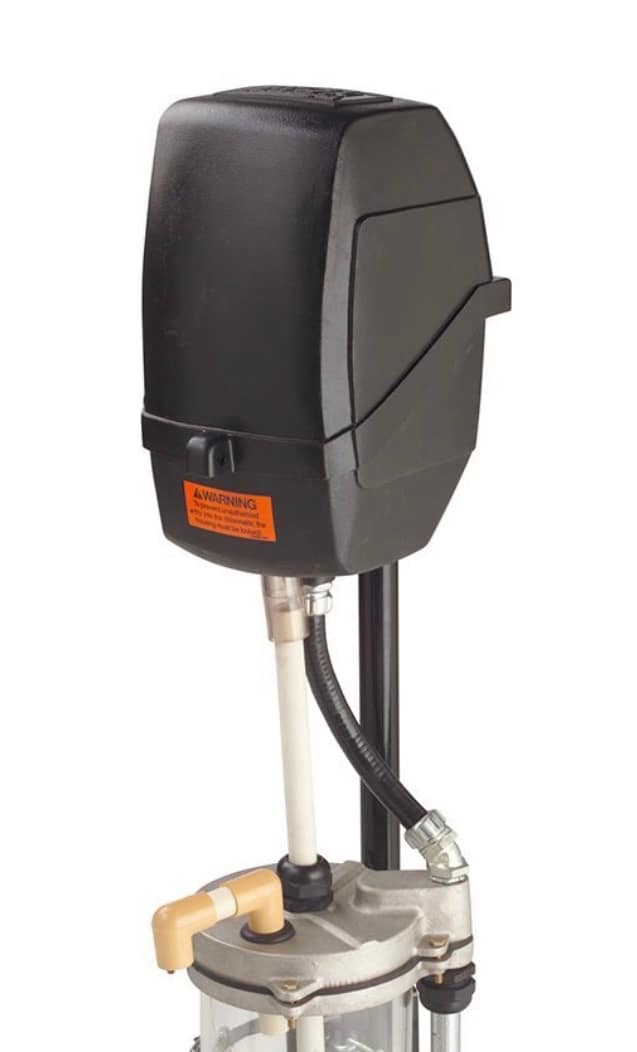
Our automated well chlorination unit — available in 115V and 230V configurations
How Our Well Chlorination System Works
We install a professional-grade automated chlorinator directly at the wellhead. The system automatically dispenses measured doses of chlorine into the well each time the well pump activates. This ensures chlorine is present every time water moves through the system — continuously disrupting iron bacteria biofilm and preventing new colonies from forming inside the well casing, pump components, and supply lines.
The chlorine contacts the water as it rises through the well casing, providing contact time to oxidize dissolved iron and break down the sticky biofilm that iron bacteria produce. After the well, we treat the water with whole-house filtration and conditioning to remove the oxidized iron, chlorine residual, and any remaining contaminants — so the water that reaches your fixtures and faucets is clean, clear, and chlorine-free.
Self-dosing system activates with the well pump — no manual intervention needed
Configured to match your well pump’s electrical supply for seamless integration
Calibrated dosing maintains a steady residual — not too much, not too little
Periodic chlorine refills and simple inspections — we handle service and support
Why Continuous Chlorination — Not Just Shock Chlorination?
❌ Shock Chlorination Alone
- Temporary fix — bacteria return within weeks
- Iron bacteria in the aquifer recolonize the well
- Biofilm deep in casing may survive a single treatment
- Must be repeated 2-3 times per year minimum
- No protection between treatments
- Dissolved iron absorbs chlorine before it reaches bacteria
✅ Continuous Automated Chlorination
- Permanent, ongoing protection — works every day
- Prevents regrowth from aquifer organisms
- Consistently breaks down biofilm layers over time
- Maintains a chlorine residual that verifies effectiveness
- Oxidizes dissolved iron simultaneously
- Paired with filtration so chlorine never reaches your home
The Complete Iron Bacteria Treatment Train
Chlorination alone isn’t the full solution. We design a complete system that kills the bacteria, removes the oxidized iron, filters the chlorine out, and conditions the water for your household.
Well Chlorination
Automated chlorinator at the wellhead dispenses chlorine into the well each time the pump runs. Chlorine contacts the water in the casing, oxidizing iron and disrupting bacteria biofilm.
Contact & Oxidation Time
The pressure tank provides contact time for chlorine to react with dissolved iron, iron bacteria, and other contaminants. Iron precipitates out of solution, making it removable by filtration.
Whole-House Filtration
Custom-Designed filtration media removes oxidized iron, sediment, and other particulates. Backwashing systems keep the media clean and performing at peak efficiency.
Chlorine Removal & Conditioning
Water passes through conditioning stages that remove the chlorine residual along with any remaining taste or odor — so the water throughout your home is clean, clear, and chlorine-free.
UV Final Safety Net (Optional)
For additional peace of mind, we can add a UV disinfection stage after filtration as a final barrier — helping inactivate any microorganisms that may have survived the chlorination process.
Our Approach
How We Solve Bacteria Problems — The Right Way
Every bacteria problem is different. We don’t guess, and we don’t sell generic systems. Our process starts with testing and ends with verified, ongoing protection.
Test Your Water
We perform on-site testing for hardness, iron, pH, TDS, chlorine, and other parameters — plus laboratory bacteria testing to identify exactly what organisms are present and at what levels.
Evaluate Your Well & Plumbing
We inspect your well, pressure system, existing equipment, and household plumbing to understand the full picture — including potential contamination pathways and flow rate requirements.
Design a Custom System
Based on your water chemistry and household needs, we engineer a treatment solution specific to your situation — whether that’s UV disinfection, continuous chlorination, or a combination approach with full pre-treatment.
Professional Installation
Our team installs every component — from wellhead equipment to final-stage disinfection. We commission the system, verify performance, and walk you through operation and maintenance.
Ongoing Support & Service
We don’t disappear after installation. Your system is backed by up to a 10-year warranty (terms apply), and we’re available for service, lamp replacements, chlorine refills, and follow-up testing.
Service Coverage
Serving Southwestern Pennsylvania
We install and service bacteria treatment systems throughout the greater Pittsburgh region and surrounding counties. If you’re on private well water in southwestern PA, we can help.
Not sure if you’re in our service area? Call us at 724-708-8816 — we’ll let you know.
Common Questions
Bacteria Treatment FAQ
The only way to confirm bacteria in your well water is through laboratory testing. Coliform and E. coli bacteria are often invisible — they don’t change your water’s appearance, taste, or smell. Iron bacteria, on the other hand, produce visible signs: reddish-brown slime on fixtures, an oily sheen on standing water, or a musty, swampy odor. We perform comprehensive on-site and lab testing to identify exactly what’s in your water and at what levels, so the treatment we design is targeted and effective.
Total coliform is a broad group of bacteria commonly found in soil, surface water, and vegetation. Their presence in well water indicates a potential contamination pathway — meaning your well may not be properly sealed against surface intrusion. E. coli is a specific type of coliform found only in the intestinal tracts of warm-blooded animals. A positive E. coli test means fecal contamination has reached your water supply, which is a more serious health concern requiring immediate treatment.
No. UV disinfection is specifically designed to help inactivate living microorganisms — bacteria, viruses, and protozoa. It does not remove dissolved minerals like iron or hardness, nor does it filter out chemicals, sediment, or other contaminants. That’s why we always install UV as the final stage of a complete treatment train that first addresses iron, hardness, sediment, and other water quality issues through appropriate filtration and conditioning.
UV light must physically reach every microorganism in the water to be effective. Iron particles, sediment, hardness scale, and turbidity can all shield bacteria from UV exposure — creating shadows where organisms survive. Iron also absorbs UV energy, reducing the dose that reaches pathogens. Hardness minerals create buildup on the quartz sleeve that houses the UV lamp, blocking light output over time. Proper pre-treatment ensures the UV chamber receives clean, clear water so the system performs as designed.
UV lamps should be replaced annually — typically every 12 months — even if they still appear to be illuminated. UV-C output degrades over time, and a lamp that visibly glows may no longer be producing the germicidal wavelength intensity needed for effective disinfection. The quartz sleeve should also be inspected and cleaned during lamp replacement to ensure maximum UV transmission. We offer service plans that include lamp replacement and system inspection.
Shock chlorination — pouring a high concentration of chlorine into the well — can temporarily reduce iron bacteria, but the organisms live in the surrounding aquifer and well formations, not just in the water column. After the chlorine dissipates, iron bacteria migrate back into the well casing and begin rebuilding biofilm within days to weeks. The biofilm itself can be many layers deep, and a single shock treatment often fails to penetrate completely. Continuous automated chlorination provides ongoing protection that prevents regrowth rather than repeatedly treating the symptoms.
Yes — in fact, combining both technologies provides the most comprehensive protection available for well water. In a combined system, the well chlorinator addresses iron bacteria at the source, oxidizes dissolved iron, and provides primary disinfection. After whole-house filtration removes the oxidized iron and chlorine residual, a UV system serves as the final safety net — helping inactivate any organisms that may have survived the chlorination process. This layered approach is particularly effective for wells with both iron bacteria and coliform issues.
Cost depends on your specific water chemistry, the type and severity of bacteria present, your home’s flow rate requirements, and what pre-treatment is needed. A simple UV system added to an existing treatment train is a different investment than a complete iron bacteria treatment system with wellhead chlorination, filtration, and conditioning. We provide detailed proposals after testing your water — no surprises. Financing Available for qualified customers.
A standalone UV installation can often be completed in a single day. A complete iron bacteria treatment system with wellhead chlorination, filtration, and conditioning typically takes one to two days depending on the complexity of the installation and any modifications needed to your existing plumbing. We schedule installations at times that minimize disruption to your household water use and walk you through the entire system before we leave.
Properly designed and maintained treatment systems provide continuous, ongoing protection — bacteria should not return during normal operation. UV systems help inactivate microorganisms in real time, and continuous chlorination prevents iron bacteria regrowth. If a follow-up test shows bacteria, it typically indicates a maintenance issue (expired UV lamp, depleted chlorine supply) or a change in well conditions that we need to investigate. Our systems are backed by up to a 10-year warranty (terms apply), and we provide follow-up testing and service support to ensure long-term performance.
Get Started
Schedule Your Water Testing & Treatment Consultation
If you suspect bacteria in your well water — or you’ve already received a positive test — don’t wait. Bacteria problems don’t resolve on their own, and the longer iron bacteria goes untreated, the more damage it causes to your well and plumbing. Contact us for professional testing and a custom treatment recommendation.
724-708-8816
support@cesareswater.com

Fill out the form below and we’ll reach out to schedule your consultation.
Stop Bacteria at the Source
Whether it’s coliform, E. coli, or iron bacteria — we have the testing, technology, and experience to solve the problem for good. Custom-engineered systems designed for your water, installed by our team, backed by our warranty.